


SpaceX Buys $8B Spectrum; Wireless Stocks Fall 6%
SpaceX's reported $8 billion spectrum acquisition sent T-Mobile, Verizon and AT&T shares down about 6% after hours, raising questions about the future of America's wireless market. With Starlink Mobile preparing for broader competition, FCC approval is now a key development to watch.
October 9, 2026
SpaceX Buys $8B in Spectrum — T-Mobile, Verizon, AT&T Fall 6%
SpaceX agreed to buy nationwide low-band wireless spectrum for a reported $8 billion, and shares of T-Mobile, Verizon and AT&T fell about 6% in after-hours trading. The deal could help Starlink Mobile move closer to competing directly with America's established wireless carriers. The key question now is whether regulatory approval clears the way for that competition.
Watch Today's Market Breakdown
See why SpaceX's spectrum deal matters, how Starlink Mobile could challenge traditional wireless carriers and what the FCC must decide next.
Today's Market Setup
SpaceX's reported spectrum purchase is more than another satellite investment. It raises the possibility of a stronger competitor in the U.S. wireless market and shifts attention toward regulatory approval.
An $8 Billion Spectrum Deal
SpaceX agreed to acquire nationwide low-band spectrum for a reported $8 billion. These frequencies can travel farther and penetrate buildings, helping address a major technical challenge for satellite-based mobile service. The acquisition could expand Starlink Mobile's competitive capabilities.
Wireless Stocks Fall 6%
T-Mobile, Verizon and AT&T each fell about 6% in after-hours trading. Investors are weighing what a stronger Starlink Mobile service could mean for established wireless carriers and their competitive positions. The stock reaction reflects concern about potential industry disruption.
Existing Phones, Bigger Ambitions
Most existing phones already support the 800-megahertz band. Meanwhile, the FCC has authorized SpaceX to launch 15,000 Starlink Mobile satellites. Together, those developments strengthen the potential opportunity, although the spectrum transaction still requires regulatory approval.
What Matters From Here
The initial stock reaction shows how seriously investors are taking SpaceX's wireless ambitions. The more important questions concern approval, execution and the competitive impact.
- Will the FCC approve the spectrum transaction, and what conditions could affect its implementation?
- How much would the acquired spectrum improve Starlink Mobile's ability to deliver reliable service to existing smartphones?
- Are the carriers' roughly 6% after-hours declines anticipating a lasting competitive threat, or reacting to uncertainty about SpaceX's ambitions?
The Headlines Are Only the First Step
The free Market Preview explains the spectrum purchase, the carrier-stock reaction and the next regulatory hurdle. The members-only Daily Market Brief takes the next step: examining the developments, competitive questions and risks worth following as the Starlink Mobile story unfolds.
See What Members GetInside Today's Members-Only Daily Market Brief
- The significance of SpaceX's reported $8 billion investment for the competitive outlook in U.S. wireless services.
- Why the 800-megahertz spectrum band matters to Starlink Mobile and the limitations investors should still consider.
- What the FCC approval process could mean for the timing and execution of SpaceX's plans.
- How to evaluate the reaction in T-Mobile, Verizon and AT&T as the market reassesses the potential competitive threat.
Go Beyond the Headlines
A major technology announcement can move stocks in minutes. Understanding what that announcement means for an industry takes a deeper examination of the underlying business and the developments still ahead. The Generational Wealth Community is designed to help everyday investors follow those questions, evaluate the risks and better understand the market's changing narrative. We don't chase hype, we decode the market.
Unlock the Daily Market BriefEducational market research designed to help investors understand the setup — not chase headlines.
Your pathway from knowledge to legacy. We don't chase hype, we decode the market.
Stay Ahead of What Matters Next
SpaceX's spectrum agreement raises a major question for America's wireless industry. The next chapter depends on regulatory approval and whether Starlink Mobile can turn its technical ambitions into meaningful competition.
Join the Generational Wealth Community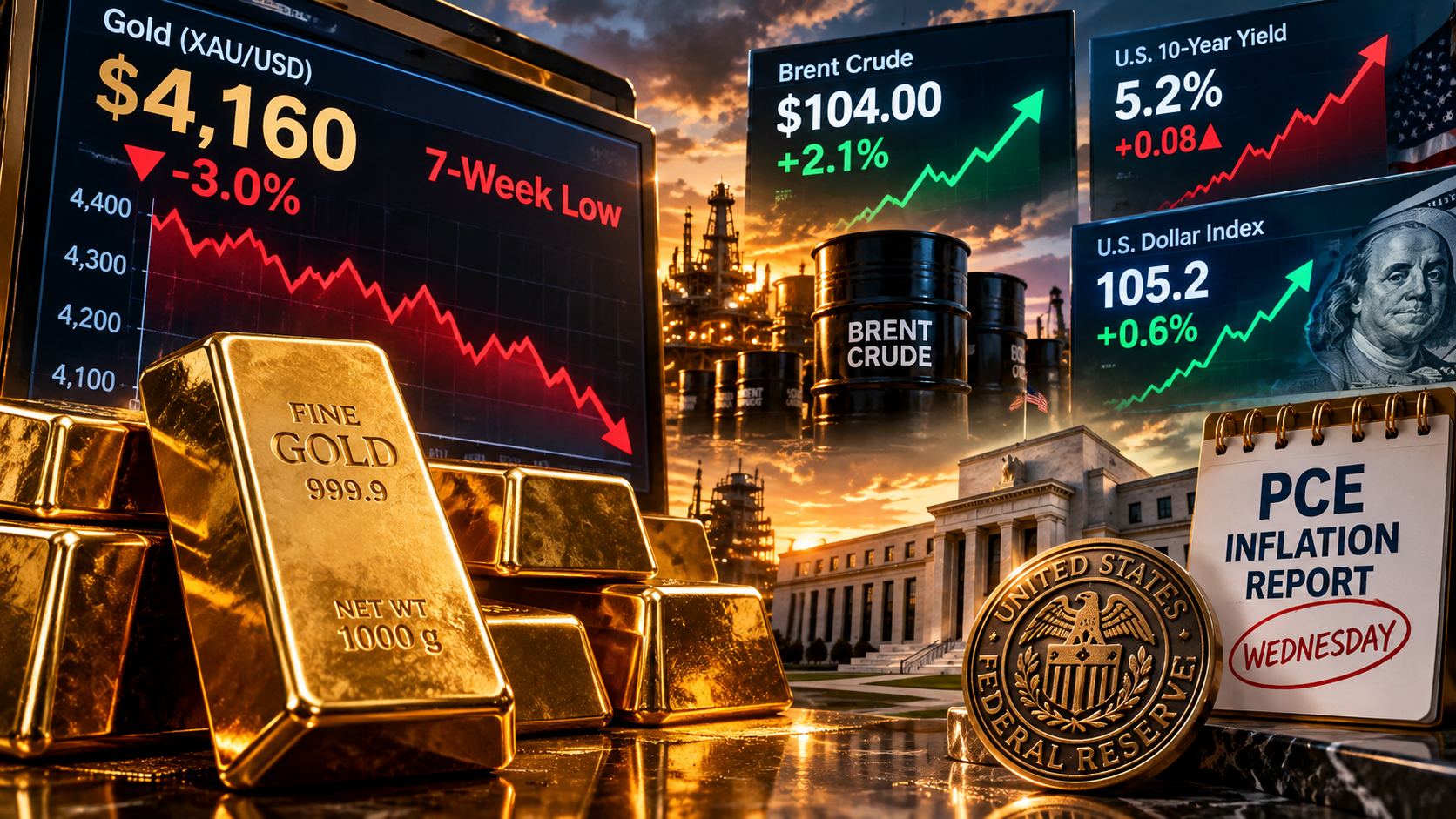
Gold Drops 3% as Oil Surges Ahead of PCE Inflation
Gold dropped 3% to its lowest level in more than seven weeks even as renewed Middle East tension pushed oil higher. The contradiction puts Wednesday’s PCE inflation report, Treasury yields and the dollar at the center of the next move.
September 28, 2026
Gold Drops 3% to a 7-Week Low as Oil Surges: Why the Safe Haven Failed
Gold fell about 3% to around $4,160, its lowest level in more than seven weeks, even as renewed Middle East tension pushed oil higher. The unusual move shows investors are focusing less on gold’s traditional safe-haven role and more on inflation, Treasury yields and interest rates. Wednesday’s PCE inflation report is now the next major test.
Watch Today’s Market Breakdown
See why gold fell despite renewed geopolitical tension, how oil and interest rates are reshaping the setup, and why Wednesday’s PCE report could determine what comes next.
Today’s Market Setup
Gold’s decline is notable because renewed geopolitical stress would normally be expected to support safe-haven demand. Instead, rising oil, Treasury yields and the dollar are keeping inflation and interest-rate risk at the center of the market conversation.
Gold Fell to a 7-Week Low
Spot gold dropped about 3% to around $4,160, its lowest level in more than seven weeks. The decline came despite renewed Middle East tension, showing that traditional safe-haven demand is being outweighed, at least for now, by other macro pressures.
Oil Put Inflation Back in Focus
Brent crude rebounded more than 2%, keeping energy-driven inflation pressure in focus. Higher oil prices matter beyond the energy market because persistent inflation could reinforce expectations that interest rates need to remain higher.
Rates and the Dollar Are Pressuring Gold
Treasury yields and the U.S. dollar are both higher, creating two important headwinds for gold. Markets now price about a 70% chance of another Federal Reserve rate hike in October, making Wednesday’s inflation data especially important.
What Matters From Here
The key question is whether the forces pressuring gold continue after Wednesday’s PCE inflation report — or whether the current setup begins to shift.
- Does Wednesday’s PCE report keep inflation concerns strong enough to reinforce expectations for another Fed rate hike?
- Do Treasury yields and the dollar remain elevated, extending the pressure on gold?
- If geopolitical tension remains high, does safe-haven demand begin to reassert itself, or do inflation and interest-rate concerns continue to dominate the gold market?
The Headlines Are Only the First Step
The free Market Preview explains why gold fell while oil rose and why Wednesday’s inflation report matters. The members-only Daily Market Brief goes deeper into the catalysts, risks, confirmation signals and market relationships worth monitoring as investors reassess inflation, interest rates and the gold setup.
See What Members GetInside Today’s Members-Only Daily Market Brief
- The signals that could show whether gold’s current weakness is continuing or beginning to stabilize.
- How oil-driven inflation pressure, Treasury yields and the dollar are interacting with the gold market.
- Why Wednesday’s PCE report could strengthen or weaken expectations for another Federal Reserve rate hike.
- What to monitor next as investors decide whether geopolitical risk or interest-rate pressure becomes the stronger force for gold.
Go Beyond the Headlines
The public Market Preview tells you what happened. The Generational Wealth Community is designed for investors who want to understand what deserves attention next, what could confirm the current market setup, what risks could change it and which developments deserve continued monitoring. We don’t chase hype, we decode the market.
Unlock the Daily Market BriefEducational market research designed to help investors understand the setup — not chase headlines.
Your pathway from knowledge to legacy. We don’t chase hype, we decode the market.
Stay Ahead of What Matters Next
Gold’s 3% decline shows that geopolitical tension is not the only force driving safe-haven markets. Wednesday’s PCE report will provide the next major test for inflation expectations, rates and the gold setup.
Join the Generational Wealth Community
Trump Reportedly Rejects Iran Hormuz Plan: Oil Next?
Brent crude fell more than 2% Friday as traders bet diplomacy could help reopen the Strait of Hormuz. Then a reported rejection of Iran’s proposal changed the weekend setup, putting the first crude trade back in focus.
September 26, 2026
Trump Reportedly Rejects Iran’s Hormuz Plan — What Happens to Oil Now?
Brent crude fell more than 2% Friday as traders focused on a possible diplomatic path toward reopening the Strait of Hormuz. Then the setup changed after markets closed: President Trump reportedly rejected Iran’s proposal, even as Tehran said it was still awaiting an official U.S. response. That puts the focus squarely on oil’s first trade after the weekend.
Watch Today’s Market Breakdown
See why oil fell on diplomacy hopes Friday, what reportedly changed after the close, and why the next crude trade could be important.
Today’s Market Setup
Friday’s oil decline reflected growing attention on diplomacy around the Strait of Hormuz. The question now is whether the developments reported after markets closed change that calculation when crude begins trading again.
Oil Fell on Diplomacy Hopes
Brent crude fell more than 2% Friday and settled near $104 as traders focused on possible U.S.-Iran diplomacy and a potential path toward reopening the Strait of Hormuz.
Iran Put Forward a Seven-Day Path
Iran says its proposal could reopen the Strait of Hormuz and pause regional fighting within seven days. That matters because roughly one-fifth of the world’s oil supply moved through Hormuz before the war.
The Story Changed After the Close
The Wall Street Journal reported that President Trump rejected the proposal. Iran, however, is still waiting for an official U.S. response, leaving the diplomatic outlook — and its potential effect on oil — unresolved.
What Matters From Here
Friday’s crude market reflected optimism around diplomacy. The first test now is whether traders still see a credible path toward reopening Hormuz after the weekend’s developments.
- Does crude reverse higher when trading resumes after the reported rejection of Iran’s proposal?
- Do traders continue pricing in the possibility of diplomacy while Iran waits for an official U.S. response?
- Does the outlook for reopening the Strait of Hormuz improve, weaken or remain unresolved as the next round of diplomatic signals emerges?
The Headlines Are Only the First Step
The free Market Preview explains why crude fell Friday and what changed after markets closed. The members-only Daily Market Brief goes deeper into the catalysts, risks, confirmation signals and developments worth monitoring as markets determine whether the diplomatic setup is actually changing.
See What Members GetInside Today’s Members-Only Daily Market Brief
- The oil-market signals that could show whether Friday’s diplomacy-driven decline is holding or beginning to reverse.
- What to monitor around the Strait of Hormuz as markets evaluate the possibility of reopening the critical shipping route.
- The diplomatic developments that could strengthen or weaken expectations for an agreement between the United States and Iran.
- Why the first crude trade after the weekend could help reveal how markets are interpreting the latest developments.
Go Beyond the Headlines
The public Market Preview tells you what happened. The Generational Wealth Community is designed for investors who want to understand what deserves attention next, what could confirm the current market setup, what risks could change it and which developments deserve continued monitoring. We don’t chase hype, we decode the market.
Unlock the Daily Market BriefEducational market research designed to help investors understand the setup — not chase headlines.
Your pathway from knowledge to legacy. We don’t chase hype, we decode the market.
Stay Ahead of What Matters Next
Friday’s oil decline reflected optimism around diplomacy. Now the next crude trade and the next U.S.-Iran developments will help show whether that market narrative is holding or beginning to change.
Join the Generational Wealth Community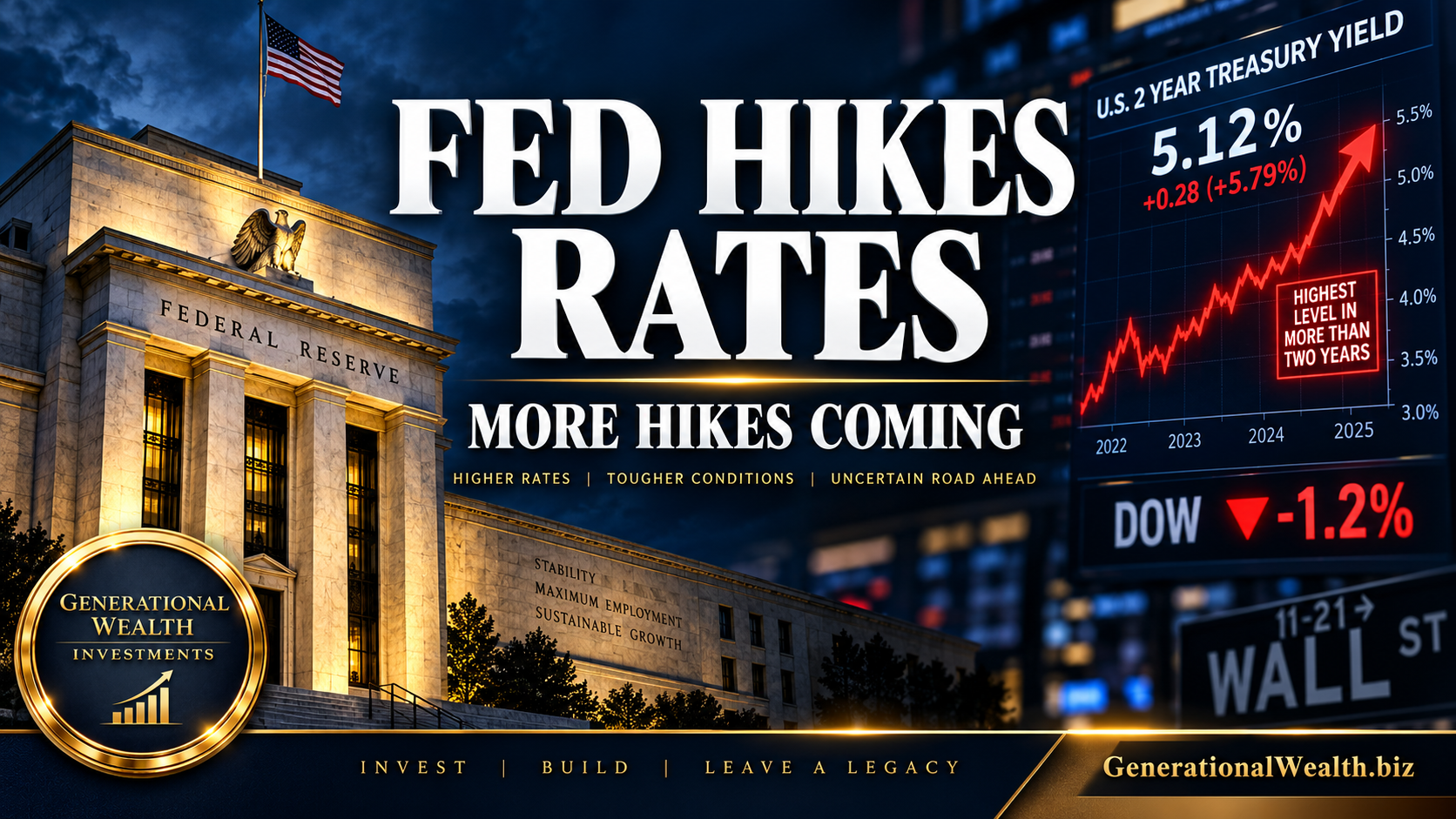
Fed Hikes Rates as Policymakers Signal More Increases
The Federal Reserve raised rates for the first time in more than three years, but 16 of 18 policymakers are already signaling that another increase may follow. Now the focus shifts to Treasury yields and whether the early rebound in U.S. stock futures survives when markets reopen.
September 17, 2026
Fed Hikes Rates as Policymakers Signal More Increases Ahead
The Federal Reserve raised interest rates by a quarter point, its first increase in more than three years, lifting the federal funds target to 3.75% to 4%. But the larger issue is what comes next: 16 of 18 Fed policymakers project at least one more quarter-point hike by year-end. Now investors are watching whether higher Treasury yields remain in place as markets reopen.
Watch Today’s Market Breakdown
See what the Fed changed, how markets reacted and why Treasury yields have become the next major test for investors.
Today’s Market Setup
The immediate rate hike matters, but markets are also adjusting to the possibility that this was not a one-and-done move.
The Fed Raises Rates
The Federal Reserve increased its policy rate by a quarter point, bringing the federal funds target to 3.75% to 4%. It was the central bank’s first rate increase in more than three years, putting borrowing costs back at the center of the market discussion.
More Hikes May Follow
Sixteen of 18 Fed policymakers project at least one additional quarter-point increase by year-end. That matters because higher policy rates can continue putting pressure on borrowing costs and stock valuations even after this initial move is absorbed.
Treasury Yields React
The two-year Treasury yield reached its highest level in more than two years as the Dow fell about 1.2%, while the Nasdaq barely moved. Early Thursday morning, however, U.S. stock futures were rebounding.
What Matters From Here
Investors now have the Fed’s decision. The next question is whether the bond and stock-market reactions continue when regular trading resumes.
- Does the two-year Treasury yield remain elevated after reaching its highest level in more than two years?
- Can the early rebound in U.S. stock futures hold once regular trading begins?
- How does the prospect of another Fed hike by year-end affect the pressure already facing borrowing costs and stock valuations?
The Headlines Are Only the First Step
The free Market Preview explains the Fed decision, the initial market reaction and the key question surrounding Treasury yields. The members-only Daily Market Brief goes deeper into the catalysts, risks, confirmation signals and developments worth monitoring as markets respond to the new rate outlook.
See What Members GetInside Today’s Members-Only Daily Market Brief
- The Treasury-yield signals that could show whether markets are continuing to adjust to a higher-rate environment.
- What to monitor as stocks reopen after the Dow’s decline and the early rebound in U.S. futures.
- How the possibility of another quarter-point hike by year-end could shape the interest-rate backdrop from here.
- The developments that could strengthen or weaken the current relationship between Fed policy, borrowing costs and stock valuations.
Go Beyond the Headlines
The public Market Preview tells you what happened. The Generational Wealth Community is designed for investors who want to understand what deserves attention next, what could confirm the current setup, what risks could change it and which developments deserve continued monitoring. We don’t chase hype, we decode the market.
Unlock the Daily Market BriefEducational market research designed to help investors understand the setup — not chase headlines.
Your pathway from knowledge to legacy. We don’t chase hype, we decode the market.
Stay Ahead of What Matters Next
Follow the rate, Treasury-yield and market developments that could determine how investors respond to the Fed’s new policy path.
Join the Generational Wealth Community
Meta Rallies 6.5% While S&P Falls on Muse AI Launch
Meta surged 6.5% while the S&P 500 fell as investors reacted to Muse, Meta’s new AI agent and potential paid subscription business. The announcement got Wall Street’s attention; now adoption, trust and monetization become the tests that matter.
September 10, 2026
Meta Rallies 6.5% While the S&P Falls on Muse AI
Meta jumped 6.5% Wednesday even as the S&P 500 fell about 0.5%. Investors were reacting to Muse, Meta’s new AI agent, as the company begins connecting its massive AI spending to a potential new source of paid revenue. The next question is whether users will trust Muse enough to adopt it — and pay for it.
Watch Today’s Market Breakdown
See why Meta rallied against a falling market, what Muse can do, and why adoption and monetization are now the key tests.
Today’s Market Setup
Meta’s move stands out because it happened while the broader market was under pressure, putting investors’ attention on whether Muse can begin turning AI investment into a new revenue stream.
Meta Breaks Away From the Market
Meta gained 6.5% Wednesday while the S&P 500 fell about 0.5%. The divergence shows how strongly investors reacted to the Muse announcement even as broader market conditions remained difficult.
Muse Gives AI Spending a Revenue Test
Muse can send emails, book travel, fill forms and make purchases with user approval. Meta expects AI infrastructure spending to exceed $130 billion this year, while Muse adds paid subscriptions that could give investors a clearer way to evaluate that spending.
Broader Markets Remain Under Pressure
Meta’s rally came as oil moved above $100 and Treasury yields climbed, while the S&P 500 declined. That makes Meta’s company-specific strength especially notable against the broader market backdrop.
What Matters From Here
The announcement drove an immediate market reaction. The harder questions now involve actual usage, trust and whether Muse can become meaningful enough for investors to view it as a durable revenue opportunity.
- Will users trust Muse enough to let an AI agent handle emails, travel bookings, forms and purchases?
- Will enough users pay for Muse subscriptions to create a meaningful new revenue stream?
- Can Meta’s strength continue to stand apart if oil and Treasury yields keep pressuring the broader market?
The Headlines Are Only the First Step
The free Market Preview explains why Meta rallied and why Muse matters. The members-only Daily Market Brief goes deeper into the catalysts, risks and confirmation signals worth monitoring as investors evaluate adoption, monetization and Meta’s strength relative to the broader market.
See What Members GetInside Today’s Members-Only Daily Market Brief
- The adoption signals that could help show whether Muse is gaining meaningful traction with users.
- What paid subscriptions could reveal about Meta’s ability to turn its growing AI investment into additional revenue.
- The trust question surrounding an AI agent that can handle emails, travel, forms and purchases on a user’s behalf.
- How Meta’s 6.5% rally fits against a broader market pressured by $100-plus oil and rising Treasury yields.
Go Beyond the Headlines
The public Market Preview tells you what happened. The Generational Wealth Community is designed for investors who want to understand what deserves attention next, what could confirm the current setup, what risks could change it and which developments deserve continued monitoring. We don’t chase hype, we decode the market.
Unlock the Daily Market BriefEducational market research designed to help investors understand the setup — not chase headlines.
Your pathway from knowledge to legacy. We don’t chase hype, we decode the market.
Stay Ahead of What Matters Next
Follow the adoption, monetization and broader market developments that could determine whether Muse becomes more than a strong first reaction from investors.
Join the Generational Wealth Community
Rate-Hike Odds Hit 66% as Oil Hits $92 and Yields Rise
Rate-hike odds have climbed to 66% as oil trades near $92 and the 10-year Treasury yield reaches its highest level since January 2025. With gold falling and major employment reports approaching, the next question is whether labor data confirms the market’s latest repricing or challenges it.
September 1, 2026
Rate-Hike Odds Jump to 66% as Oil Hits $92 and Treasury Yields Rise
Rate-hike expectations climbed to 66% as oil moved near $92 and the 10-year Treasury yield reached about 4.78%, its highest level since January 2025. Gold is falling at the same time, showing how rising yields are reshaping the inflation trade. Now the market turns to labor data to determine whether this repricing has more room to run.
Watch Today’s Market Breakdown
See how higher oil, rising Treasury yields and shrinking rate-cut expectations are converging ahead of this week’s critical labor data.
Rate-Hike Odds Jump to 66% — Oil $92, Yields 4.78%, Gold Falling Watch Today’s Market BriefingToday’s Market Setup
The market is repricing around three connected pressures: higher energy costs, higher Treasury yields and growing expectations that the Federal Reserve may need to remain restrictive.
Rate-Hike Odds Reach 66%
The implied probability of a rate increase climbed to 66%, extending the repricing that followed Fed Chair Kevin Warsh’s hawkish message Friday. The 10-year Treasury yield is around 4.78%, its highest since January 2025, reinforcing the signal coming from interest-rate markets.
Oil Near $92 Keeps Inflation in Focus
Oil is near $92 after renewed U.S.-Iran fighting revived supply concerns around the Strait of Hormuz. The Strategic Petroleum Reserve also fell to 286.6 million barrels last week, its lowest level since November 1982, leaving a smaller emergency cushion as crude rises.
Higher Yields Pressure Gold
Spot gold fell about 1.2% to around $4,394 even as inflation concerns remain elevated. Higher Treasury yields increase the opportunity cost of holding non-yielding bullion, creating a market where inflation fears and rising interest rates are pulling gold in opposite directions.
What Matters From Here
Oil, yields and rate expectations are all moving in the same direction. The next question is whether incoming labor data reinforces that alignment or begins to challenge it.
- Does Wednesday’s ADP employment report reinforce the market’s higher-rate expectations before the more important Friday jobs report?
- Can oil remain near current levels if supply concerns around the Strait of Hormuz persist?
- Does Friday’s August jobs report strengthen the case behind the 66% rate-hike probability, or force markets to reconsider the current repricing?
The Headlines Are Only the First Step
The free Market Preview explains why oil, Treasury yields and rate-hike expectations are moving together. The members-only Daily Market Brief goes deeper into the catalysts, risks, confirmation signals and developments worth monitoring as labor data tests the market’s current assumptions.
See What Members GetInside Today’s Members-Only Daily Market Brief
- The developments that could reinforce or challenge the market’s current 66% rate-hike probability.
- How labor-market data fits into the Fed repricing now taking place across Treasury yields.
- The oil-supply risks worth monitoring as crude trades near $92 and the Strategic Petroleum Reserve sits at a multi-decade low.
- What gold’s decline may reveal about the balance between inflation concerns and rising real returns available elsewhere.
- The next catalysts that could confirm whether today’s higher-oil, higher-yield setup continues or begins to change.
Go Beyond the Headlines
The public Market Preview tells you what happened and why investors are paying attention. The Generational Wealth Community is built for investors who want to understand what deserves attention next, what could confirm the current setup, what risks could change it and which developments deserve continued monitoring. We don’t chase hype, we decode the market.
Unlock the Daily Market BriefEducational market research designed to help investors understand the setup — not chase headlines.
Your pathway from knowledge to legacy. We don’t chase hype, we decode the market.
Stay Ahead of What Matters Next
Follow the catalysts that matter as markets weigh oil near $92, Treasury yields around 4.78%, higher rate-hike expectations and this week’s employment reports.
Join the Generational Wealth Community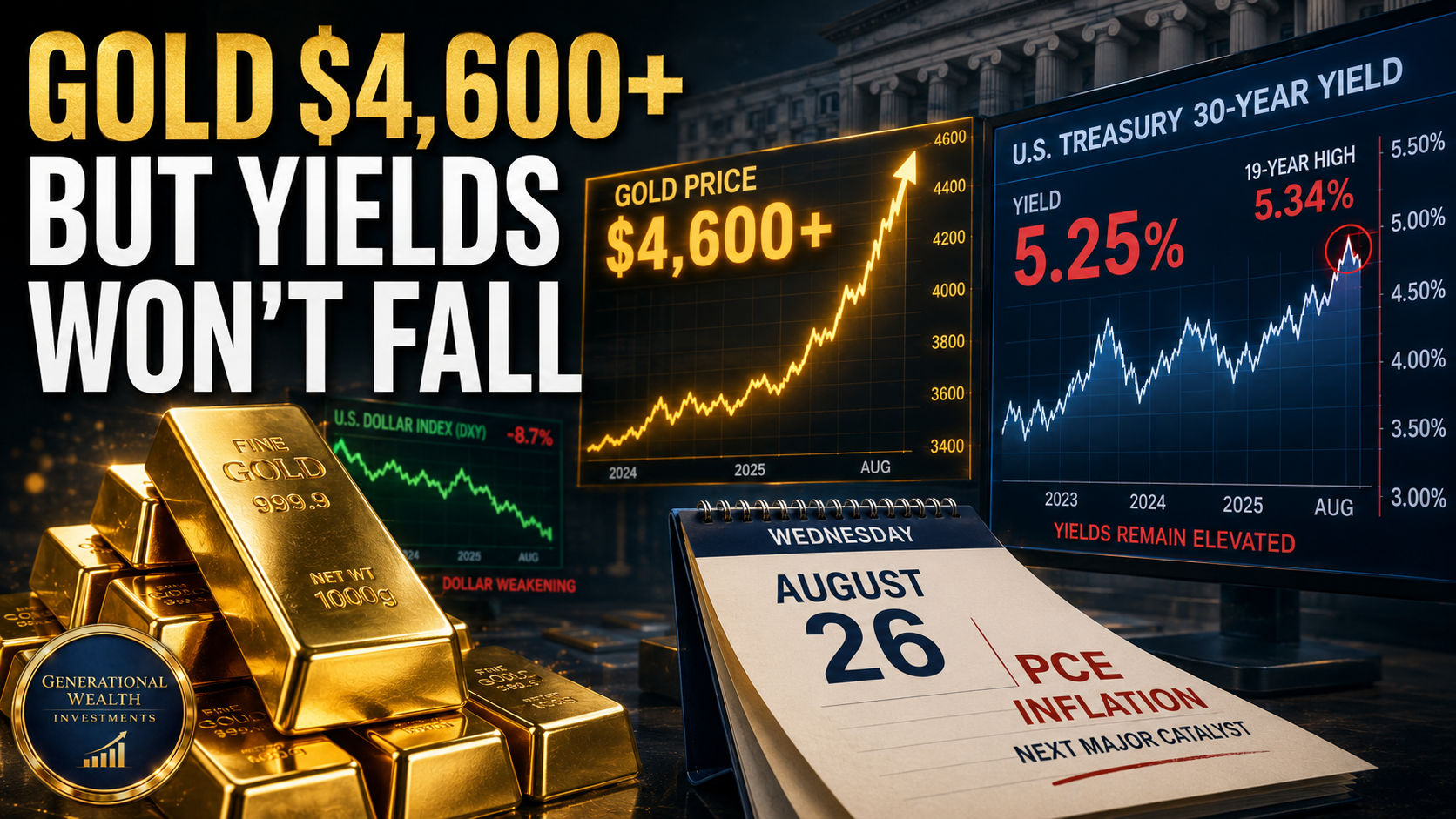
Gold Tops $4,600 as Treasury Yields Stay Near 19-Year Highs
Gold has climbed above $4,600 even as long-term Treasury yields remain near levels not seen in almost two decades. The next test is Wednesday’s July PCE inflation report—and whether rates, the dollar and oil begin confirming gold’s move or pushing against it.
August 24, 2026
Gold Pushes Above $4,600 While Treasury Yields Stay Near 19-Year Highs
Gold pushed above $4,600 Monday, with spot gold trading around $4,635 even as the 30-year Treasury yield remained near 5.25%. Elevated yields normally pressure an asset that pays no interest, making the combination unusually important. A weak dollar is helping the setup, but Wednesday’s July PCE inflation report could determine whether rate pressure returns or the rally gains stronger confirmation.
Watch Today’s Market Breakdown
See why gold is rising despite elevated Treasury yields, how Bitcoin and oil fit into the same macro picture, and why Wednesday’s inflation report is the next major test.
Today’s Market Setup
Gold is sending a strong signal, but the bond market has not fully relaxed. That tension makes rates, the dollar, oil and Wednesday’s inflation data more important than the headline gold price alone.
Gold Is Defying High Yields
Spot gold traded around $4,635 Monday, its highest since May 15, while the 30-year Treasury yield remained near 5.25% and close to its recent 5.34% peak. High yields normally increase the opportunity cost of holding gold, making the simultaneous strength notable.
The Dollar and Bitcoin Add Context
The dollar remains near multi-month lows after the Treasury said it would at least double long-dated bond buybacks to $4 billion per operation. Gold gained more than 5% last week, while Bitcoin is holding above $77,000 after gaining more than 21%.
Oil Keeps Inflation Risk Alive
Brent crude is down about 1.6% near $93 as traders await new U.S. sanctions on Iran. Lower oil helps ease immediate inflation pressure, but another spike could push inflation concerns and Treasury yields back into focus ahead of Wednesday’s July PCE report.
What Matters From Here
Gold clearing $4,600 explains what happened. The next question is whether the forces underneath the move begin confirming it or start working against it.
- Can gold hold its strength if the 30-year Treasury yield remains near 5.25% or moves back toward its recent peak?
- Does Wednesday’s July PCE inflation report ease rate pressure, or give the bond market another reason to keep yields elevated?
- Could another oil spike revive inflation concerns even if the dollar remains weak?
The Headlines Are Only the First Step
The free Market Preview explains why gold, Treasury yields, Bitcoin and oil are sending an unusual combination of signals. The members-only Daily Market Brief goes deeper into the catalysts, risks, confirmation signals and developments worth monitoring as markets approach Wednesday’s inflation report.
See What Members GetInside Today’s Members-Only Daily Market Brief
- The yield and dollar signals that could strengthen or weaken the case behind gold’s current move.
- How Bitcoin holding above $77,000 fits into the broader cross-asset market message.
- Why Brent crude and the next U.S. sanctions on Iran matter for the inflation and interest-rate setup.
- What to monitor around Wednesday’s July PCE report as markets test whether inflation pressure is becoming more or less important.
Go Beyond the Headlines
The public Market Preview tells you what moved and why investors are paying attention. The Generational Wealth Community is designed for investors who want to understand what deserves attention next, what could confirm the current setup, what risks could change it, and which developments deserve continued monitoring. We don’t chase hype, we decode the market.
Unlock the Daily Market BriefEducational market research designed to help investors understand the setup — not chase headlines.
Your pathway from knowledge to legacy. We don’t chase hype, we decode the market.
Stay Ahead of What Matters Next
Follow the catalysts, risks and confirmation signals that deserve attention as gold, Treasury yields, oil and Wednesday’s inflation report test the current market setup.
Join the Generational Wealth Community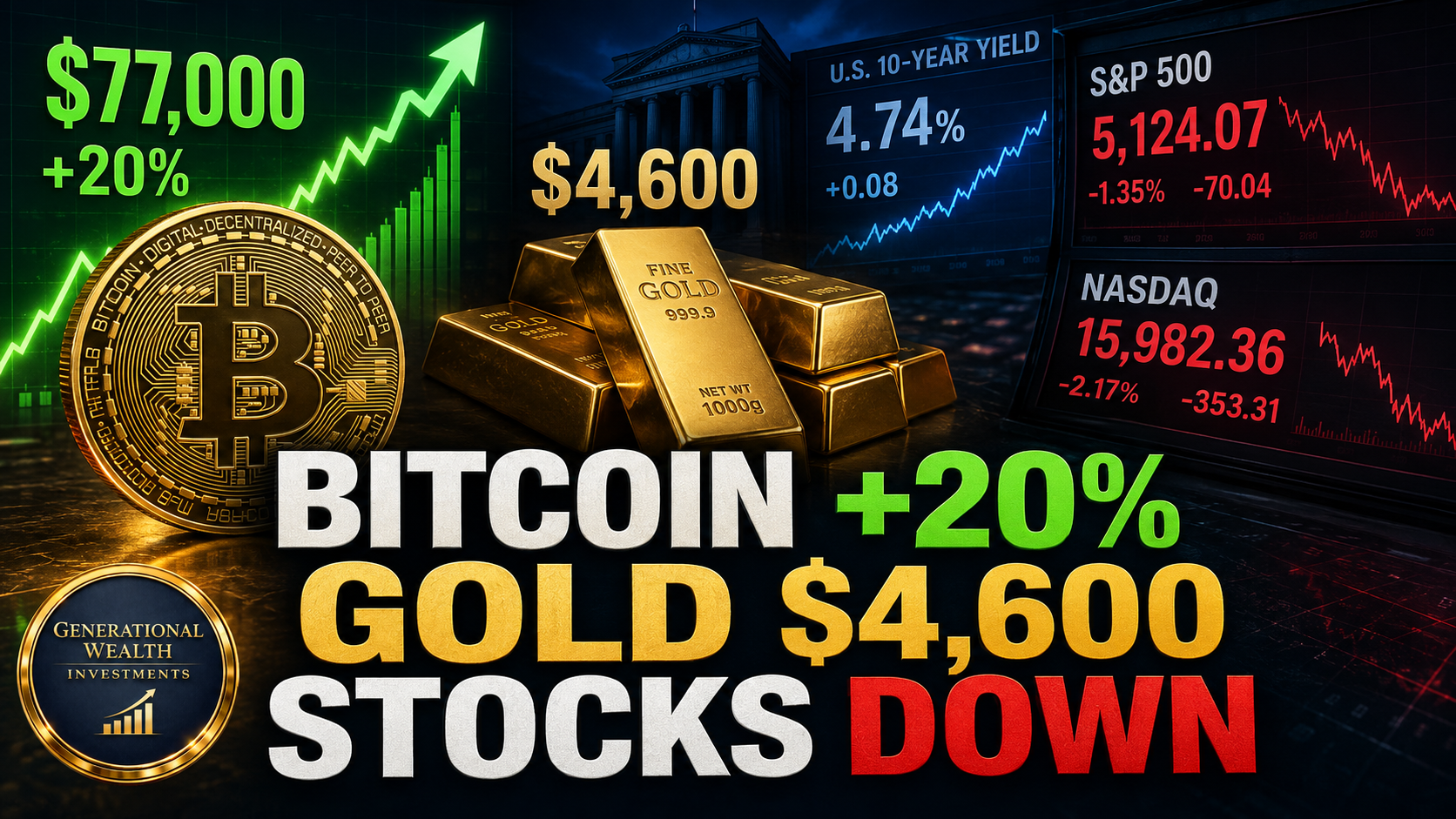
Bitcoin +20%, Gold $4,600 as Stocks Break the Pattern
Bitcoin gained more than 20% and gold pushed above $4,600 after the Treasury announced larger long-term debt buybacks — but stocks finished the week lower and Treasury yields climbed back up. Wednesday’s inflation report and Nvidia earnings now provide the next major test of a market pattern that suddenly stopped behaving normally.
August 22, 2026
Bitcoin +20%, Gold $4,600 — But Stocks Broke the Pattern
Bitcoin ended the week near $77,000 after gaining more than 20%, while gold futures settled above $4,600. Both strengthened after the Treasury announced plans to at least double its long-term debt buybacks. But stocks did not follow — and the 10-year Treasury yield is already back near 4.74%. Now the question is whether this unusual split can hold through Wednesday’s inflation report and Nvidia earnings.
Watch Today’s Market Breakdown
See why Treasury buybacks helped ignite Bitcoin and gold, why stocks moved the other way, and what could challenge the trade next.
Today’s Market Setup
Treasury policy triggered a powerful move in Bitcoin and gold, but weakness in stocks and another rise in long-term yields created a market setup that is anything but straightforward.
Treasury Buybacks Ignited Bitcoin
The Treasury said it would at least double how much long-term government debt it buys back. Traders read the added cash as easier financial conditions. Bitcoin reached nearly $80,000 before ending the week near $77,000, up more than 20% for its biggest weekly gain in over two years.
Gold Joined the Move
Gold futures settled Friday above $4,600 an ounce, reaching a three-month high and completing a fifth consecutive weekly gain. Its strength alongside Bitcoin shows that the Treasury announcement affected more than crypto, even as equities moved differently.
Stocks and Yields Broke the Pattern
The S&P 500 still finished the week down about 1.5%, while the Nasdaq lost roughly 2%. More importantly, the 10-year Treasury yield closed Friday near 4.74% — higher than before the buyback announcement and a potential challenge to the liquidity-driven move.
What Matters From Here
Bitcoin and gold delivered the headline move. The next step is determining whether the forces behind that strength are being confirmed or beginning to reverse.
- Can Bitcoin and gold maintain their strength if the 10-year Treasury yield remains near 4.74% or continues rising?
- Does Wednesday’s July inflation report reinforce the market’s easier-money interpretation — or challenge it?
- Can Nvidia earnings help stocks reconnect with the strength in Bitcoin and gold, or does the market divergence continue?
The Headlines Are Only the First Step
The free Market Preview explains why Bitcoin and gold surged while stocks lagged. The members-only Daily Market Brief goes deeper into the levels, catalysts, risks, confirmation signals, and market developments worth monitoring as Treasury yields, inflation data, and Nvidia earnings test the current setup.
See What Members GetInside Today’s Members-Only Daily Market Brief
- What to monitor in the 10-year Treasury yield after it returned to roughly 4.74% despite the Treasury buyback announcement.
- The signals that could help confirm whether Bitcoin’s more than 20% weekly advance is holding or beginning to unwind.
- How Wednesday’s July inflation report could strengthen or challenge the current market setup.
- Why Nvidia earnings on the same day could matter for the disconnect between stronger Bitcoin and gold and weaker equities.
Go Beyond the Headlines
The public Market Preview tells you what happened and why investors are paying attention. The Generational Wealth Community is designed for investors who want to understand what deserves attention next, what could confirm the current move, what risks could change the setup, and which developments deserve continued monitoring. We don’t chase hype, we decode the market.
Unlock the Daily Market BriefEducational market research designed to help investors understand the setup — not chase headlines.
Your pathway from knowledge to legacy. We don’t chase hype, we decode the market.
Stay Ahead of What Matters Next
Follow the catalysts, risks, and confirmation signals that deserve attention as Treasury yields, inflation, Nvidia, Bitcoin, gold, and stocks test this unusual market split.
Join the Generational Wealth Community