


SpaceX Seeks $40B for Nvidia AI Chips — Who Pays?
SpaceX reportedly wants $40 billion in financing to fund Nvidia AI chips, showing how quickly the AI infrastructure race is becoming a capital-markets story. The next question is what lenders and investors will demand to finance the buildout.
October 7, 2026
SpaceX Wants $40 Billion for Nvidia AI Chips — Who’s Paying?
SpaceX reportedly wants $40 billion in outside financing to fund Nvidia AI chips — a deal that turns the AI spending boom into a borrowing story. The reported package would combine bank loans with investment-grade debt, putting investor demand and borrowing costs at the center of what happens next.
Watch Today’s Market Breakdown
See how SpaceX reportedly plans to finance $40 billion of Nvidia AI hardware, who may provide the capital and why financing costs are becoming part of the AI story.
Today’s Market Setup
AI infrastructure spending is increasingly becoming a capital-markets story as companies look for enormous amounts of financing to build out computing capacity.
A Reported $40 Billion Financing Package
SpaceX reportedly wants $10 billion in bank loans plus $30 billion in investment-grade debt. Apollo is expected to lead the financing, making the scale and structure of the borrowing an important part of the AI infrastructure story.
The Money Is Going Toward Nvidia Hardware
SpaceX plans to build its data centers exclusively with Nvidia hardware. Nvidia rose about 0.5% after the report, reinforcing how demand for AI infrastructure can connect chipmakers directly to major corporate financing decisions.
AI Spending Meets the Debt Market
The financing is expected to close in 2027. That puts borrowing terms and investor demand in focus as the cost of financing becomes part of the economics behind increasingly large AI infrastructure projects.
What Matters From Here
The size of the proposed financing is clear. The bigger question is what lenders and bond investors will demand to fund it.
- What borrowing terms will SpaceX ultimately receive on the reported loan and debt package?
- How strong will investor demand be for financing tied to such a large AI infrastructure buildout?
- If lenders require a bigger premium, how much more important does the cost of capital become to the broader AI spending story?
The Headlines Are Only the First Step
The free Market Preview explains the reported $40 billion financing plan and why it matters. The members-only Daily Market Brief goes deeper into the catalysts, risks, financing signals and developments worth monitoring as AI investment increasingly meets the debt market.
See What Members GetInside Today’s Members-Only Daily Market Brief
- The financing terms that could help show how aggressively lenders are pricing the reported SpaceX borrowing.
- What investor demand could reveal about appetite for debt tied to large-scale AI infrastructure spending.
- How Nvidia hardware demand connects the chip boom with the financing required to build new AI capacity.
- The risks worth monitoring as the expected 2027 closing approaches and the cost of capital becomes part of the AI investment equation.
Go Beyond the Headlines
The public Market Preview tells you what happened. The Generational Wealth Community is designed for investors who want to understand what deserves attention next, what could confirm the current setup, what risks could change it and which developments deserve continued monitoring. We don’t chase hype, we decode the market.
Unlock the Daily Market BriefEducational market research designed to help investors understand the setup — not chase headlines.
Your pathway from knowledge to legacy. We don’t chase hype, we decode the market.
Stay Ahead of What Matters Next
AI spending is becoming a financing story. The next phase depends not only on how much companies want to invest, but also on what lenders and investors demand to provide the capital.
Join the Generational Wealth Community
Oil Tops $100 as OPEC+ Holds Targets — Shipping Risk
Oil is above $100, but unchanged OPEC+ production targets may not be the number that matters most. With major producers already below pre-war output, the next test is whether physical supply can move and whether Brent holds above $100 when trading reopens.
October 4, 2026
Oil Tops $100 as OPEC+ Holds Targets — Shipping Lanes Matter More
Global oil remains above $100 even as OPEC+ prepares to keep its November production targets unchanged. But the headline target may matter less than actual barrels reaching the market: core producers were already pumping roughly five million barrels a day below pre-war levels in August. The immediate test comes when oil trading reopens tonight.
Watch Today’s Market Breakdown
See why unchanged OPEC+ targets may have limited impact, why constrained Gulf production matters and why shipping lanes are becoming the bigger issue for oil markets.
Today’s Market Setup
OPEC+ production targets are drawing attention, but the gap between official targets, actual output and the ability to move oil is shaping the more important market question.
OPEC+ Keeps November Targets Unchanged
OPEC+ meets today, and delegates say the group has agreed in principle to leave its November production targets unchanged. That removes an immediate target increase, but it does not necessarily mean current physical supply conditions are changing.
Actual Production Is Already Lower
Because of the Iran war, core OPEC+ producers were pumping roughly five million barrels a day below pre-war levels in August. Gulf producers are already well short of their targets, limiting how much impact a higher target alone could have.
Brent Is Still Above $100
Brent crude settled Friday near $102, while national gasoline averages about $4.37 a gallon. The next immediate signal arrives when oil trading reopens tonight and markets test whether Brent can remain above $100.
What Matters From Here
Production targets matter, but today’s setup raises a more practical question: how much oil can producers actually supply and move into the global market?
- Does Brent hold above $100 when oil trading reopens tonight?
- Can OPEC+ targets meaningfully change supply while major Gulf producers remain well below those targets?
- Do shipping constraints continue to matter more than announced production targets for the amount of oil reaching the market?
The Headlines Are Only the First Step
The free Market Preview explains why unchanged OPEC+ targets do not tell the whole story. The members-only Daily Market Brief goes deeper into the catalysts, risks, confirmation signals and developments worth monitoring as markets weigh production capacity against physical oil flows.
See What Members GetInside Today’s Members-Only Daily Market Brief
- The signals that matter for whether Brent can maintain its move above $100 after trading reopens.
- How the gap between OPEC+ production targets and actual Gulf output changes the interpretation of today’s decision.
- The shipping developments that could determine whether available oil can actually reach the global market.
- What to monitor as higher crude prices and national gasoline near $4.37 a gallon keep energy costs in focus.
Go Beyond the Headlines
The public Market Preview tells you what happened. The Generational Wealth Community is designed for investors who want to understand what deserves attention next, what could confirm the current setup, what risks could change it and which developments deserve continued monitoring. We don’t chase hype, we decode the market.
Unlock the Daily Market BriefEducational market research designed to help investors understand the setup — not chase headlines.
Your pathway from knowledge to legacy. We don’t chase hype, we decode the market.
Stay Ahead of What Matters Next
OPEC+ may be keeping its targets unchanged, but the next market signal is whether Brent holds above $100 and whether physical oil can reach the market.
Join the Generational Wealth Community
Jobs Report Misses Badly as Stocks Rally on Fed Hopes
The September jobs report badly missed expectations, yet the S&P 500 and Nasdaq rallied as investors sharply reduced the odds of another Federal Reserve rate hike. Now attention turns to the October 14 CPI report and whether inflation confirms — or challenges — the market’s new rate outlook.
October 3, 2026
Jobs Report Misses Badly — Stocks Rally as Fed Hike Odds Fall
U.S. employers added just 29,000 jobs in September, far below the 90,000 economists expected, while July and August were revised down by another 60,000 jobs combined. Yet stocks moved higher because the weaker hiring data reduced pressure on the Federal Reserve to raise rates again. The bigger question now is whether October inflation data reinforces that shift — or reverses it.
Watch Today’s Market Breakdown
See why a major jobs miss helped stocks rally, how Fed rate-hike expectations changed and why the October 14 CPI report is the next important test.
Today’s Market Setup
The jobs report was much weaker than expected, but the market reaction was driven by what that weakness could mean for Federal Reserve policy rather than by the headline jobs number alone.
Hiring Misses by a Wide Margin
U.S. employers added just 29,000 jobs in September compared with the 90,000 economists expected. July and August were also revised down by a combined 60,000 jobs, adding to evidence that hiring has cooled.
Fed Hike Odds Drop
Weaker hiring reduced pressure on the Federal Reserve to raise rates again. By Friday’s close, traders put the chance of an October hike near 23%, down sharply from 64% just one week earlier.
Stocks Rally — Without a Labor Collapse
The S&P 500 gained about 0.7% and the Nasdaq rose roughly 1.2%. At the same time, unemployment only edged up to 4.2%, and layoffs are not broadly surging, keeping the report from looking like a full labor-market collapse.
What Matters From Here
Friday’s rally reflects a major shift in rate expectations. The next question is whether incoming inflation data allows that lower-rate-risk narrative to hold.
- Does the September CPI report on October 14 reinforce the decline in Fed rate-hike expectations?
- Could hotter inflation revive October hike risk even after the sharp slowdown in hiring?
- Can hiring remain weak without unemployment and layoffs deteriorating enough to change the broader economic picture?
The Headlines Are Only the First Step
The free Market Preview explains why weak jobs data helped stocks rally. The members-only Daily Market Brief goes deeper into the catalysts, risks, confirmation signals and developments worth monitoring as investors move from the jobs report toward the next inflation test.
See What Members GetInside Today’s Members-Only Daily Market Brief
- The signals that matter for whether the drop in October rate-hike expectations continues to hold.
- How the weak September jobs number, downward revisions and 4.2% unemployment rate fit together in the current market setup.
- What investors should monitor as markets move from the jobs report toward September CPI on October 14.
- The inflation risk that could challenge Friday’s stock-market reaction and revive pressure for another Fed hike.
Go Beyond the Headlines
The public Market Preview tells you what happened. The Generational Wealth Community is designed for investors who want to understand what deserves attention next, what could confirm the current setup, what risks could change it and which developments deserve continued monitoring. We don’t chase hype, we decode the market.
Unlock the Daily Market BriefEducational market research designed to help investors understand the setup — not chase headlines.
Your pathway from knowledge to legacy. We don’t chase hype, we decode the market.
Stay Ahead of What Matters Next
The jobs report changed the market’s expectations for the Fed. September CPI on October 14 is the next major test of whether that shift can continue.
Join the Generational Wealth Community
Why Oil Fell Below $100: Diesel Supply Is the Key
Brent crude fell back below $100 after Thursday’s 4.4% surge, as talk of emergency stock releases hit the part of the market that is tightest: diesel. The proposal could add 50 million barrels of diesel and 50 million barrels of crude, but no supply has been released yet — and potential G7 discussions are the next test.
October 2, 2026
Oil Falls Below $100 as Diesel Supply Plan Changes the Market
Brent crude fell back below $100 after Thursday’s 4.4% surge carried it above $102. The reversal followed discussions about emergency stock releases that could add 50 million barrels of diesel and another 50 million barrels of crude through IEA members. The key distinction: refined fuel — especially diesel — is the tightest part of this market, and those proposed barrels have not been released yet.
Watch Today’s Market Breakdown
See why Brent moved back below $100, why diesel is at the center of the reversal and what the proposed emergency stock release could mean next.
Today’s Market Setup
Oil’s reversal is not simply a story about more crude potentially reaching the market. The sharper reaction in European gasoil shows why refined-fuel supply — particularly diesel — is central to the current setup.
Brent Falls Back Below $100
Brent moved back below $100 after surging 4.4% Thursday and trading above $102. That earlier jump followed China’s fuel-export halt and renewed Middle East supply fears, but discussion of emergency stock releases has now reversed part of the move.
Diesel Is Driving the Reaction
European governments are discussing releases that could add 50 million barrels of diesel and another 50 million barrels of crude through IEA members. European gasoil futures fell more than 5% as the talks surfaced, highlighting the pressure in refined fuels.
The Barrels Have Not Been Released
The potential stock release remains a proposal rather than actual new supply. Markets are reacting to the possibility of additional barrels before any coordinated release has occurred. A potential G7 discussion later today is the next test.
What Matters From Here
The immediate price reaction is clear. The bigger question is whether the proposed response turns into actual supply and whether the relief in refined-fuel markets holds.
- Do emergency stock-release discussions develop into a coordinated release through IEA members?
- Can the decline in European gasoil futures continue if the proposed diesel barrels are not released immediately?
- Does a potential G7 discussion move the proposal closer to actual implementation — or leave the market trading primarily on expectations?
The Headlines Are Only the First Step
The free Market Preview explains why oil reversed and why diesel matters more than the Brent headline alone suggests. The members-only Daily Market Brief goes deeper into the catalysts, risks, confirmation signals and developments worth monitoring as the stock-release proposal evolves.
See What Members GetInside Today’s Members-Only Daily Market Brief
- The signals that matter for whether the proposed emergency releases move from discussion toward implementation.
- What the more-than-5% move in European gasoil futures says about the importance of diesel in the current energy-market setup.
- How the potential 50 million barrels of diesel and 50 million barrels of crude fit into the market’s response to recent supply concerns.
- The developments from a potential G7 discussion that deserve continued monitoring.
Go Beyond the Headlines
The public Market Preview tells you what happened. The Generational Wealth Community is designed for investors who want to understand what deserves attention next, what could confirm the current setup, what risks could change it and which developments deserve continued monitoring. We don’t chase hype, we decode the market.
Unlock the Daily Market BriefEducational market research designed to help investors understand the setup — not chase headlines.
Your pathway from knowledge to legacy. We don’t chase hype, we decode the market.
Stay Ahead of What Matters Next
Oil has moved back below $100, but the emergency stock-release plan remains a proposal. The next developments will show whether expectations begin turning into actual supply.
Join the Generational Wealth Community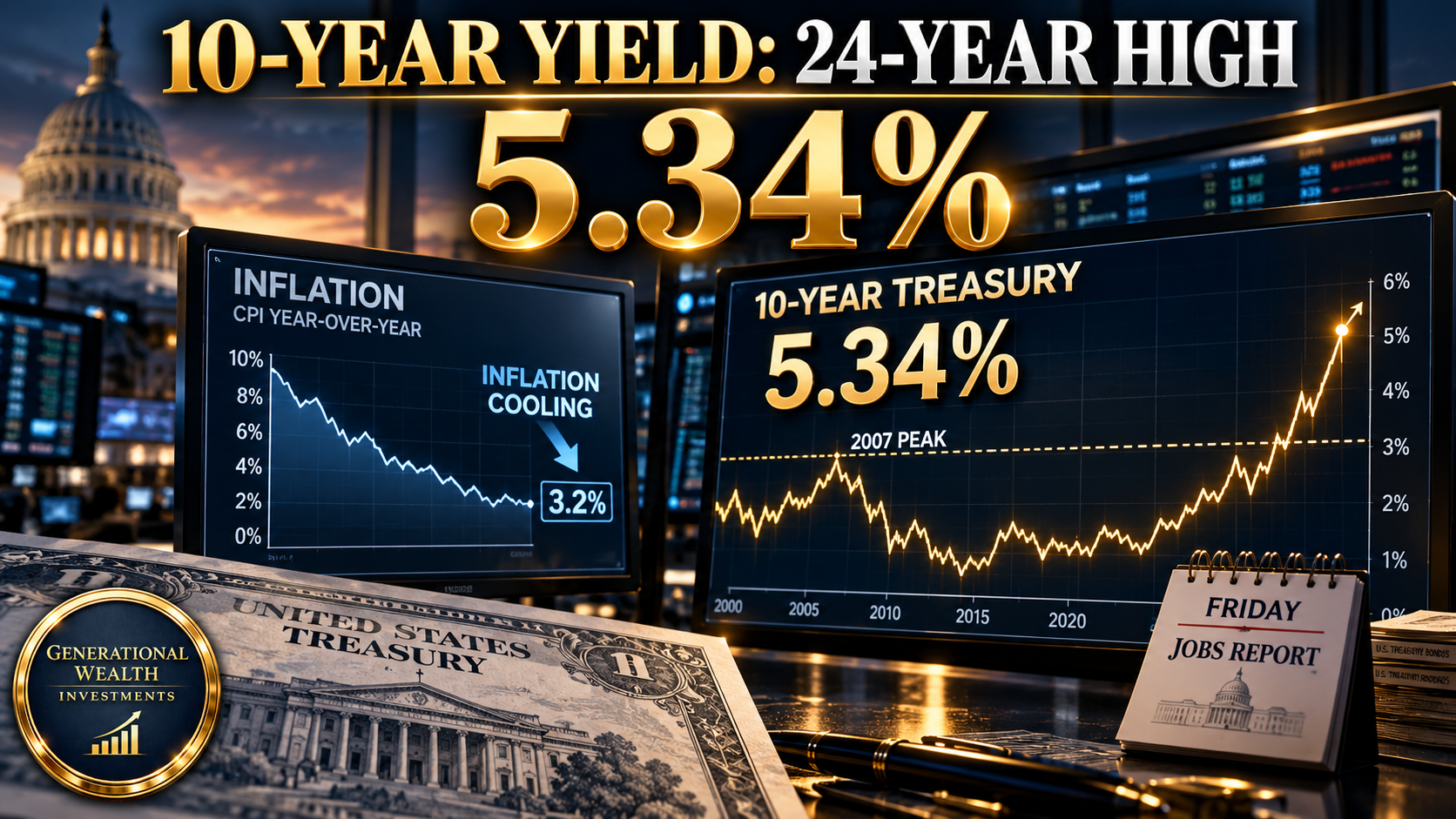
10-Year Treasury Yield Hits Highest Level in 24 Years
The 10-year Treasury yield climbed to about 5.34%, breaking above its 2007 peak even after a softer-than-expected inflation report. Now Friday’s jobs report becomes the next major test for whether pressure on long-term borrowing costs continues.
October 1, 2026
10-Year Treasury Yield Breaks 2007 Peak — Highest in 24 Years
The 10-year Treasury yield climbed to about 5.34% overnight, breaking above its 2007 peak and reaching its highest level in 24 years. The surprising part is the timing: inflation came in softer than expected and traders reduced the odds of an October Fed hike, yet long-term borrowing costs still moved higher. Friday’s jobs report is now the next major test.
Watch Today’s Market Breakdown
See why the 10-year Treasury yield is rising despite softer inflation, why the move matters across financial markets and what Friday’s jobs report could tell investors next.
Today’s Market Setup
The move in the 10-year Treasury matters beyond the bond market because it acts as a global benchmark for borrowing costs and asset prices. Today’s setup is especially notable because long-term rates are rising even as the latest inflation signal reduced expectations for another near-term Fed hike.
10-Year Yield Reaches About 5.34%
The 10-year Treasury yield climbed to about 5.34% overnight, breaking above its 2007 peak and reaching its highest level in 24 years. That pushes an important benchmark for global borrowing costs into territory not seen in more than two decades.
Softer Inflation, Higher Long-Term Rates
The move came even after inflation was softer than expected and traders reduced the odds of an October Fed hike. That disconnect puts attention on the forces influencing longer-term rates rather than simply the Federal Reserve’s next policy decision.
Energy and Growth Remain in Focus
Elevated energy costs and resilient economic growth are keeping pressure on long-term yields. Because the 10-year helps influence mortgages, corporate borrowing and asset pricing, sustained pressure can ripple well beyond Treasury markets.
What Matters From Here
Friday’s jobs report becomes the next major checkpoint for whether pressure on long-term Treasury yields continues.
- Does a strong jobs report reinforce the resilient-growth story and keep upward pressure on the 10-year Treasury yield?
- Can long-term yields remain elevated even if softer inflation keeps reducing expectations for another near-term Fed hike?
- How much does the move in Treasury yields begin feeding through to mortgages, corporate borrowing costs and broader asset prices?
The Headlines Are Only the First Step
The free Market Preview explains why the 10-year Treasury yield has moved above its 2007 peak and why investors are paying attention. The members-only Daily Market Brief goes deeper into the catalysts, risks, confirmation signals and market developments worth monitoring as the rate environment evolves.
See What Members GetInside Today’s Members-Only Daily Market Brief
- The signals in Friday’s jobs report that matter for whether long-term Treasury yields remain under pressure.
- How the relationship between softer inflation, Fed expectations and rising long-term yields shapes the current market setup.
- Why elevated energy costs and resilient economic growth remain important forces to monitor in the bond market.
- The broader borrowing-cost and asset-price channels that become increasingly important if the 10-year yield stays elevated.
Go Beyond the Headlines
The public Market Preview tells you what happened. The Generational Wealth Community is designed for investors who want to understand what deserves attention next, what could confirm the current setup, what risks could change it and which developments deserve continued monitoring. We don’t chase hype, we decode the market.
Unlock the Daily Market BriefEducational market research designed to help investors understand the setup — not chase headlines.
Your pathway from knowledge to legacy. We don’t chase hype, we decode the market.
Stay Ahead of What Matters Next
The 10-year Treasury yield has moved into territory not seen in 24 years. Friday’s jobs report now becomes an important test of whether pressure on long-term rates continues.
Join the Generational Wealth Community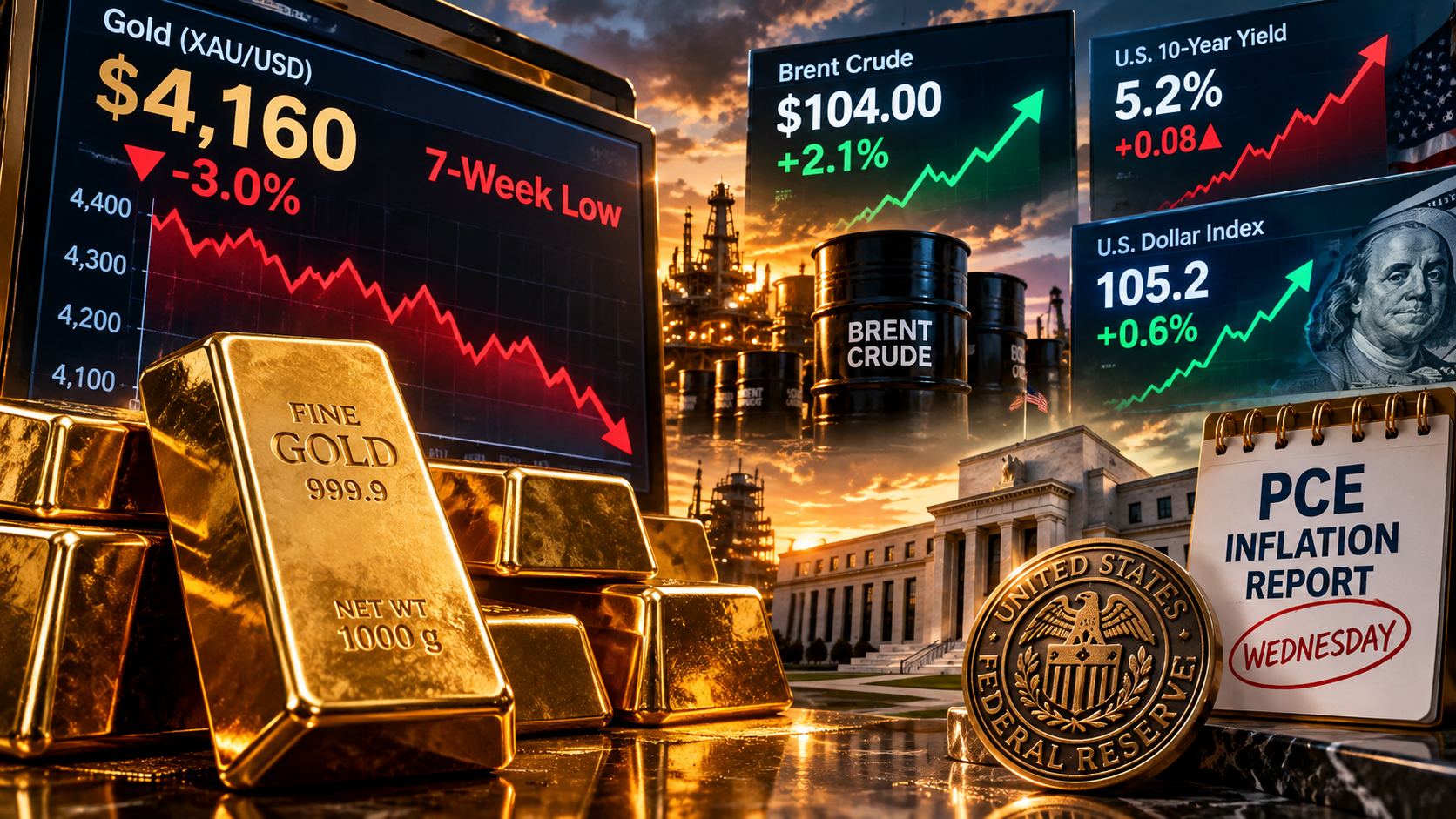
Gold Drops 3% as Oil Surges Ahead of PCE Inflation
Gold dropped 3% to its lowest level in more than seven weeks even as renewed Middle East tension pushed oil higher. The contradiction puts Wednesday’s PCE inflation report, Treasury yields and the dollar at the center of the next move.
September 28, 2026
Gold Drops 3% to a 7-Week Low as Oil Surges: Why the Safe Haven Failed
Gold fell about 3% to around $4,160, its lowest level in more than seven weeks, even as renewed Middle East tension pushed oil higher. The unusual move shows investors are focusing less on gold’s traditional safe-haven role and more on inflation, Treasury yields and interest rates. Wednesday’s PCE inflation report is now the next major test.
Watch Today’s Market Breakdown
See why gold fell despite renewed geopolitical tension, how oil and interest rates are reshaping the setup, and why Wednesday’s PCE report could determine what comes next.
Today’s Market Setup
Gold’s decline is notable because renewed geopolitical stress would normally be expected to support safe-haven demand. Instead, rising oil, Treasury yields and the dollar are keeping inflation and interest-rate risk at the center of the market conversation.
Gold Fell to a 7-Week Low
Spot gold dropped about 3% to around $4,160, its lowest level in more than seven weeks. The decline came despite renewed Middle East tension, showing that traditional safe-haven demand is being outweighed, at least for now, by other macro pressures.
Oil Put Inflation Back in Focus
Brent crude rebounded more than 2%, keeping energy-driven inflation pressure in focus. Higher oil prices matter beyond the energy market because persistent inflation could reinforce expectations that interest rates need to remain higher.
Rates and the Dollar Are Pressuring Gold
Treasury yields and the U.S. dollar are both higher, creating two important headwinds for gold. Markets now price about a 70% chance of another Federal Reserve rate hike in October, making Wednesday’s inflation data especially important.
What Matters From Here
The key question is whether the forces pressuring gold continue after Wednesday’s PCE inflation report — or whether the current setup begins to shift.
- Does Wednesday’s PCE report keep inflation concerns strong enough to reinforce expectations for another Fed rate hike?
- Do Treasury yields and the dollar remain elevated, extending the pressure on gold?
- If geopolitical tension remains high, does safe-haven demand begin to reassert itself, or do inflation and interest-rate concerns continue to dominate the gold market?
The Headlines Are Only the First Step
The free Market Preview explains why gold fell while oil rose and why Wednesday’s inflation report matters. The members-only Daily Market Brief goes deeper into the catalysts, risks, confirmation signals and market relationships worth monitoring as investors reassess inflation, interest rates and the gold setup.
See What Members GetInside Today’s Members-Only Daily Market Brief
- The signals that could show whether gold’s current weakness is continuing or beginning to stabilize.
- How oil-driven inflation pressure, Treasury yields and the dollar are interacting with the gold market.
- Why Wednesday’s PCE report could strengthen or weaken expectations for another Federal Reserve rate hike.
- What to monitor next as investors decide whether geopolitical risk or interest-rate pressure becomes the stronger force for gold.
Go Beyond the Headlines
The public Market Preview tells you what happened. The Generational Wealth Community is designed for investors who want to understand what deserves attention next, what could confirm the current market setup, what risks could change it and which developments deserve continued monitoring. We don’t chase hype, we decode the market.
Unlock the Daily Market BriefEducational market research designed to help investors understand the setup — not chase headlines.
Your pathway from knowledge to legacy. We don’t chase hype, we decode the market.
Stay Ahead of What Matters Next
Gold’s 3% decline shows that geopolitical tension is not the only force driving safe-haven markets. Wednesday’s PCE report will provide the next major test for inflation expectations, rates and the gold setup.
Join the Generational Wealth Community
Trump Reportedly Rejects Iran Hormuz Plan: Oil Next?
Brent crude fell more than 2% Friday as traders bet diplomacy could help reopen the Strait of Hormuz. Then a reported rejection of Iran’s proposal changed the weekend setup, putting the first crude trade back in focus.
September 26, 2026
Trump Reportedly Rejects Iran’s Hormuz Plan — What Happens to Oil Now?
Brent crude fell more than 2% Friday as traders focused on a possible diplomatic path toward reopening the Strait of Hormuz. Then the setup changed after markets closed: President Trump reportedly rejected Iran’s proposal, even as Tehran said it was still awaiting an official U.S. response. That puts the focus squarely on oil’s first trade after the weekend.
Watch Today’s Market Breakdown
See why oil fell on diplomacy hopes Friday, what reportedly changed after the close, and why the next crude trade could be important.
Today’s Market Setup
Friday’s oil decline reflected growing attention on diplomacy around the Strait of Hormuz. The question now is whether the developments reported after markets closed change that calculation when crude begins trading again.
Oil Fell on Diplomacy Hopes
Brent crude fell more than 2% Friday and settled near $104 as traders focused on possible U.S.-Iran diplomacy and a potential path toward reopening the Strait of Hormuz.
Iran Put Forward a Seven-Day Path
Iran says its proposal could reopen the Strait of Hormuz and pause regional fighting within seven days. That matters because roughly one-fifth of the world’s oil supply moved through Hormuz before the war.
The Story Changed After the Close
The Wall Street Journal reported that President Trump rejected the proposal. Iran, however, is still waiting for an official U.S. response, leaving the diplomatic outlook — and its potential effect on oil — unresolved.
What Matters From Here
Friday’s crude market reflected optimism around diplomacy. The first test now is whether traders still see a credible path toward reopening Hormuz after the weekend’s developments.
- Does crude reverse higher when trading resumes after the reported rejection of Iran’s proposal?
- Do traders continue pricing in the possibility of diplomacy while Iran waits for an official U.S. response?
- Does the outlook for reopening the Strait of Hormuz improve, weaken or remain unresolved as the next round of diplomatic signals emerges?
The Headlines Are Only the First Step
The free Market Preview explains why crude fell Friday and what changed after markets closed. The members-only Daily Market Brief goes deeper into the catalysts, risks, confirmation signals and developments worth monitoring as markets determine whether the diplomatic setup is actually changing.
See What Members GetInside Today’s Members-Only Daily Market Brief
- The oil-market signals that could show whether Friday’s diplomacy-driven decline is holding or beginning to reverse.
- What to monitor around the Strait of Hormuz as markets evaluate the possibility of reopening the critical shipping route.
- The diplomatic developments that could strengthen or weaken expectations for an agreement between the United States and Iran.
- Why the first crude trade after the weekend could help reveal how markets are interpreting the latest developments.
Go Beyond the Headlines
The public Market Preview tells you what happened. The Generational Wealth Community is designed for investors who want to understand what deserves attention next, what could confirm the current market setup, what risks could change it and which developments deserve continued monitoring. We don’t chase hype, we decode the market.
Unlock the Daily Market BriefEducational market research designed to help investors understand the setup — not chase headlines.
Your pathway from knowledge to legacy. We don’t chase hype, we decode the market.
Stay Ahead of What Matters Next
Friday’s oil decline reflected optimism around diplomacy. Now the next crude trade and the next U.S.-Iran developments will help show whether that market narrative is holding or beginning to change.
Join the Generational Wealth Community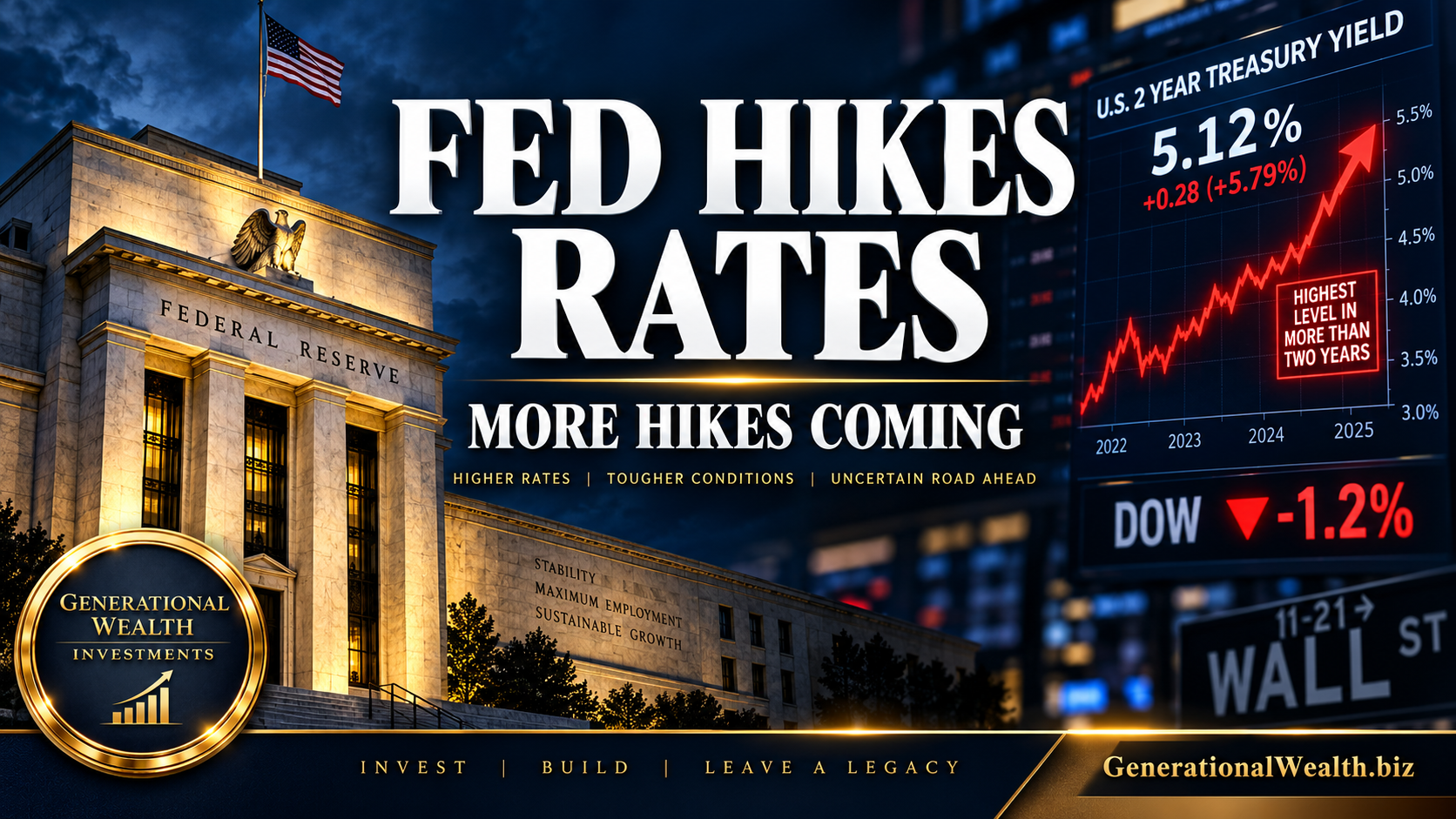
Fed Hikes Rates as Policymakers Signal More Increases
The Federal Reserve raised rates for the first time in more than three years, but 16 of 18 policymakers are already signaling that another increase may follow. Now the focus shifts to Treasury yields and whether the early rebound in U.S. stock futures survives when markets reopen.
September 17, 2026
Fed Hikes Rates as Policymakers Signal More Increases Ahead
The Federal Reserve raised interest rates by a quarter point, its first increase in more than three years, lifting the federal funds target to 3.75% to 4%. But the larger issue is what comes next: 16 of 18 Fed policymakers project at least one more quarter-point hike by year-end. Now investors are watching whether higher Treasury yields remain in place as markets reopen.
Watch Today’s Market Breakdown
See what the Fed changed, how markets reacted and why Treasury yields have become the next major test for investors.
Today’s Market Setup
The immediate rate hike matters, but markets are also adjusting to the possibility that this was not a one-and-done move.
The Fed Raises Rates
The Federal Reserve increased its policy rate by a quarter point, bringing the federal funds target to 3.75% to 4%. It was the central bank’s first rate increase in more than three years, putting borrowing costs back at the center of the market discussion.
More Hikes May Follow
Sixteen of 18 Fed policymakers project at least one additional quarter-point increase by year-end. That matters because higher policy rates can continue putting pressure on borrowing costs and stock valuations even after this initial move is absorbed.
Treasury Yields React
The two-year Treasury yield reached its highest level in more than two years as the Dow fell about 1.2%, while the Nasdaq barely moved. Early Thursday morning, however, U.S. stock futures were rebounding.
What Matters From Here
Investors now have the Fed’s decision. The next question is whether the bond and stock-market reactions continue when regular trading resumes.
- Does the two-year Treasury yield remain elevated after reaching its highest level in more than two years?
- Can the early rebound in U.S. stock futures hold once regular trading begins?
- How does the prospect of another Fed hike by year-end affect the pressure already facing borrowing costs and stock valuations?
The Headlines Are Only the First Step
The free Market Preview explains the Fed decision, the initial market reaction and the key question surrounding Treasury yields. The members-only Daily Market Brief goes deeper into the catalysts, risks, confirmation signals and developments worth monitoring as markets respond to the new rate outlook.
See What Members GetInside Today’s Members-Only Daily Market Brief
- The Treasury-yield signals that could show whether markets are continuing to adjust to a higher-rate environment.
- What to monitor as stocks reopen after the Dow’s decline and the early rebound in U.S. futures.
- How the possibility of another quarter-point hike by year-end could shape the interest-rate backdrop from here.
- The developments that could strengthen or weaken the current relationship between Fed policy, borrowing costs and stock valuations.
Go Beyond the Headlines
The public Market Preview tells you what happened. The Generational Wealth Community is designed for investors who want to understand what deserves attention next, what could confirm the current setup, what risks could change it and which developments deserve continued monitoring. We don’t chase hype, we decode the market.
Unlock the Daily Market BriefEducational market research designed to help investors understand the setup — not chase headlines.
Your pathway from knowledge to legacy. We don’t chase hype, we decode the market.
Stay Ahead of What Matters Next
Follow the rate, Treasury-yield and market developments that could determine how investors respond to the Fed’s new policy path.
Join the Generational Wealth Community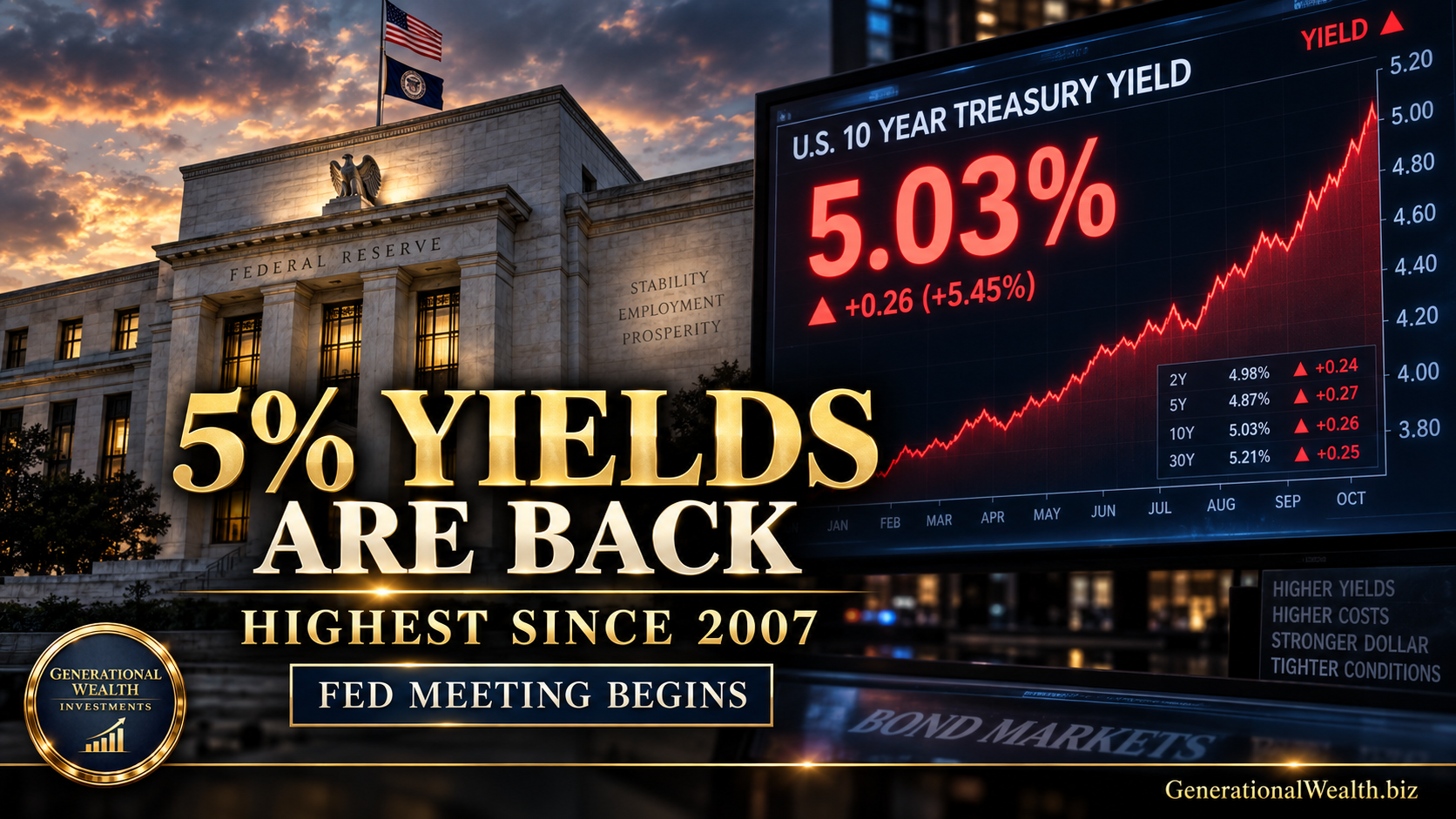
10-Year Treasury Yield Hits 5.03% as Fed Meeting Begins
The 10-year Treasury yield has climbed back above 5%, reaching its highest level since 2007 just as the Federal Reserve begins its two-day meeting. With Brent crude still near $108 and markets heavily pricing another rate hike, the bigger question is what the Fed signals comes next.
September 15, 2026
10-Year Treasury Yield Hits 5.03% as Fed Meeting Begins
The 10-year Treasury yield climbed to about 5.03% overnight, its highest level since 2007. That matters beyond the bond market because the 10-year helps influence borrowing costs across the economy and higher yields can pressure stock valuations. Now the Federal Reserve begins a two-day meeting with inflation and oil still firmly in focus.
Watch Today’s Market Breakdown
See why the return of 5% Treasury yields matters, how oil fits into the inflation picture, and the question facing the Fed as its meeting begins.
Today’s Market Setup
The immediate story is the return of 5% Treasury yields. The broader issue is how high borrowing costs, elevated oil prices and the Federal Reserve’s next decision fit together.
10-Year Yield Reaches 5.03%
The 10-year Treasury yield climbed to about 5.03% overnight, its highest level since 2007. The move matters because the benchmark influences borrowing costs across the economy, including mortgages, while higher yields can also pressure stock valuations.
Oil Keeps Inflation in Focus
Brent crude remained near $108 a barrel. With energy prices elevated, inflation remains an important part of the market backdrop just as Federal Reserve policymakers begin their two-day meeting.
Markets Expect a Fed Hike
Markets now price more than a 94% chance of a Federal Reserve rate hike Wednesday. The decision itself matters, but investors will also be watching what policymakers communicate about the path that follows.
What Matters From Here
Reaching 5% explains where yields are today. The bigger questions concern what the Fed says next and whether inflation pressure keeps the market focused on additional tightening.
- Does the Fed signal that Wednesday’s expected rate hike is a single move or the beginning of a new hiking cycle?
- Does oil remaining near $108 keep inflation pressure elevated enough to influence the Fed’s message?
- How does a 10-year Treasury yield above 5% reshape the pressure on borrowing costs and stock valuations from here?
The Headlines Are Only the First Step
The free Market Preview explains why Treasury yields, oil and the Fed are converging into one important market setup. The members-only Daily Market Brief goes deeper into the catalysts, risks, confirmation signals and developments worth monitoring as the Fed meeting unfolds.
See What Members GetInside Today’s Members-Only Daily Market Brief
- The signals that could show whether the return of 5% Treasury yields is becoming a more persistent market pressure.
- How oil near $108 fits into the inflation backdrop as the Federal Reserve begins its two-day meeting.
- What to monitor in the Fed’s message for clues about whether one expected hike could turn into a broader hiking cycle.
- The developments that could change the current relationship between yields, borrowing costs and pressure on stock valuations.
Go Beyond the Headlines
The public Market Preview tells you what happened. The Generational Wealth Community is designed for investors who want to understand what deserves attention next, what could confirm the current setup, what risks could change it and which developments deserve continued monitoring. We don’t chase hype, we decode the market.
Unlock the Daily Market BriefEducational market research designed to help investors understand the setup — not chase headlines.
Your pathway from knowledge to legacy. We don’t chase hype, we decode the market.
Stay Ahead of What Matters Next
Follow the Treasury-yield, inflation and Federal Reserve developments that could determine whether today’s market pressure continues or the setup begins to change.
Join the Generational Wealth Community
Oil Jumps 5% as 10-Year Yield Hits 4.81% and Gold Falls
Oil surged as renewed fighting near the Strait of Hormuz pushed energy prices higher while the 10-year Treasury yield reached about 4.81%. Gold’s decline reveals the bigger market tension as investors weigh geopolitical risk against higher yields, a stronger dollar and the next test from U.S. labor data.
September 2, 2026
Oil Jumps 5% as Treasury Yields Hit 4.81% — So Why Is Gold Falling?
Oil surged after renewed U.S.-Iran fighting near the Strait of Hormuz, pushing Brent to $94.65 Tuesday and briefly near $97 overnight. At the same time, the 10-year Treasury yield reached about 4.81%, its highest since 2023. Yet gold moved the opposite direction, falling to a more than three-week low as higher yields and a stronger dollar outweighed safe-haven demand. Now labor data could test the entire setup.
Watch Today’s Market Breakdown
See how the Hormuz oil shock is feeding into inflation expectations, Treasury yields, stock valuations and gold ahead of the ADP employment report.
Today’s Market Setup
The market is dealing with one connected chain of pressure: geopolitical risk is lifting oil, higher oil is keeping inflation concerns alive, and rising rate expectations are pushing Treasury yields higher.
Oil Surges on Hormuz Risk
Brent settled Tuesday at $94.65, up 4.6%, while WTI gained 5.2%. Brent then briefly touched $97 overnight before easing near $95. Renewed U.S.-Iran fighting near Hormuz is keeping supply risk at the center of the inflation outlook.
Treasury Yields Reach New Highs
The 10-year Treasury yield reached about 4.81%, its highest since 2023, while the 2-year climbed near 4.41%. Higher energy costs can keep inflation elevated, strengthening the market’s focus on whether the Federal Reserve may need to raise rates again.
Gold Breaks the Safe-Haven Pattern
Spot gold fell near $4,324, a more than three-week low, despite the geopolitical tension. Higher Treasury yields and a stronger dollar outweighed safe-haven demand, showing why geopolitical risk alone has not been enough to push gold higher.
What Matters From Here
Oil, rates, stocks and gold are now reacting to the same inflation question. The next test is whether incoming labor data reinforces the higher-rate narrative or begins to challenge it.
- Does the ADP private-payrolls report strengthen the case for another Federal Reserve rate hike, or complicate the market’s current expectations?
- Can oil remain near current levels if fighting around the Strait of Hormuz continues to threaten supply?
- Will higher Treasury yields and a stronger dollar continue to outweigh safe-haven demand for gold?
The Headlines Are Only the First Step
The free Market Preview explains why oil, Treasury yields, stocks and gold are moving the way they are. The members-only Daily Market Brief goes deeper into the catalysts, risks, confirmation signals and developments worth monitoring as the market determines whether this inflation-and-rates pressure continues.
See What Members GetInside Today’s Members-Only Daily Market Brief
- The developments that could confirm whether the current oil-driven inflation pressure is continuing or beginning to ease.
- How the ADP employment report fits into the market’s changing expectations for Federal Reserve policy.
- The Treasury-yield signals worth following as the 10-year trades around its highest level since 2023.
- What gold’s weakness may reveal about the competition between safe-haven demand, higher yields and a stronger dollar.
- The next developments that could change the relationship between energy prices, interest rates and stock valuations.
Go Beyond the Headlines
The public Market Preview tells you what happened and why investors are paying attention. The Generational Wealth Community is designed for investors who want to understand what deserves attention next, what could confirm the current market setup, what risks could change it and which developments deserve continued monitoring. We don’t chase hype, we decode the market.
Unlock the Daily Market BriefEducational market research designed to help investors understand the setup — not chase headlines.
Your pathway from knowledge to legacy. We don’t chase hype, we decode the market.
Stay Ahead of What Matters Next
Follow the catalysts that matter as markets weigh oil near $95, Treasury yields around 4.81%, gold weakness and the next test from U.S. labor data.
Join the Generational Wealth Community
Oil Tops $90 After Hormuz Strike as Hike Odds Hit 57%
Oil moved above $90 after a U.S. strike near the Strait of Hormuz put one of the world’s most important energy routes back in focus. With September rate-hike odds now at 57%, the next question is whether higher energy prices or Friday’s jobs report has the bigger impact on Fed expectations.
August 31, 2026
Oil Blows Past $90 After Hormuz Strike — Rate Hike Odds Jump to 57%
Oil moved above $90 after American forces struck Iranian launchers near the Strait of Hormuz, putting one of the world’s most important energy routes back at the center of the market. The complication is that inflation pressure is already colliding with rising expectations for a September Fed rate increase. Now investors have two major risks to track: energy disruption and Friday’s jobs report.
Watch Today’s Market Breakdown
See why the Hormuz strike pushed oil above $90, how it connects to inflation and rate expectations, and why Friday’s jobs report matters.
Oil Blows Past $90 After Hormuz Strike — Rate Hike Odds Jump to 57% Watch Today’s Market BriefingToday’s Market Setup
The market is dealing with a renewed geopolitical oil shock while interest-rate expectations are already moving in a more restrictive direction.
Hormuz Risk Sends Oil Above $90
American forces struck two Iranian launchers on Larak Island after officials said Revolutionary Guard forces were preparing rockets carrying sea mines into the Strait of Hormuz. Iran then attacked American forces in Jordan. Brent futures climbed about 2% overnight and moved above $90 a barrel.
Oil Adds to the Inflation Problem
Fed Chair Kevin Warsh said Friday that the Fed still has work to do if inflation is not moving clearly toward 2%. Markets raised the implied probability of a September rate increase to 57%, while the two-year Treasury yield is near 4.34% after rising almost 12 basis points Friday.
Friday’s Jobs Report Becomes the Next Test
President Trump said Venezuelan oil from the new American agreement will help refill the Strategic Petroleum Reserve, but additional Venezuelan production requires investment. That leaves the immediate Hormuz risk unresolved while markets wait to see whether Friday’s labor data changes rate-hike expectations.
What Matters From Here
Oil above $90 explains what changed overnight. The more important issue now is how long the pressure lasts and whether it reinforces the Fed’s inflation concerns.
- Does the Strait of Hormuz remain disrupted enough to keep upward pressure on oil, or does the immediate geopolitical risk begin to ease?
- Does higher oil strengthen the inflation argument enough to keep September rate-hike expectations elevated?
- Could a weaker-than-expected jobs report on Friday cool those expectations even if energy prices remain under pressure?
The Headlines Are Only the First Step
The free Market Preview explains why oil, inflation and interest-rate expectations are colliding today. The members-only Daily Market Brief goes deeper into the catalysts, risks, confirmation signals and developments worth monitoring as the Hormuz story and Friday’s jobs report reshape the market setup.
See What Members GetInside Today’s Members-Only Daily Market Brief
- The Hormuz developments that could strengthen or weaken the current oil-supply risk.
- How renewed energy inflation interacts with the market’s 57% September rate-hike probability.
- Why the two-year Treasury yield matters as investors reassess the Fed’s next move.
- What Friday’s jobs report could change about the current interest-rate setup.
- How Venezuela’s longer-term supply story fits against the immediate geopolitical pressure in the Strait of Hormuz.
Go Beyond the Headlines
The public Market Preview tells you what happened and why investors are paying attention. The Generational Wealth Community is built for investors who want to understand what deserves attention next, what could confirm the current setup, what risks could change it, and which developments deserve continued monitoring. We don’t chase hype, we decode the market.
Unlock the Daily Market BriefEducational market research designed to help investors understand the setup — not chase headlines.
Your pathway from knowledge to legacy. We don’t chase hype, we decode the market.
Stay Ahead of What Matters Next
Follow the catalysts that matter as markets weigh renewed Hormuz risk, oil above $90, higher rate-hike expectations and Friday’s jobs report.
Join the Generational Wealth Community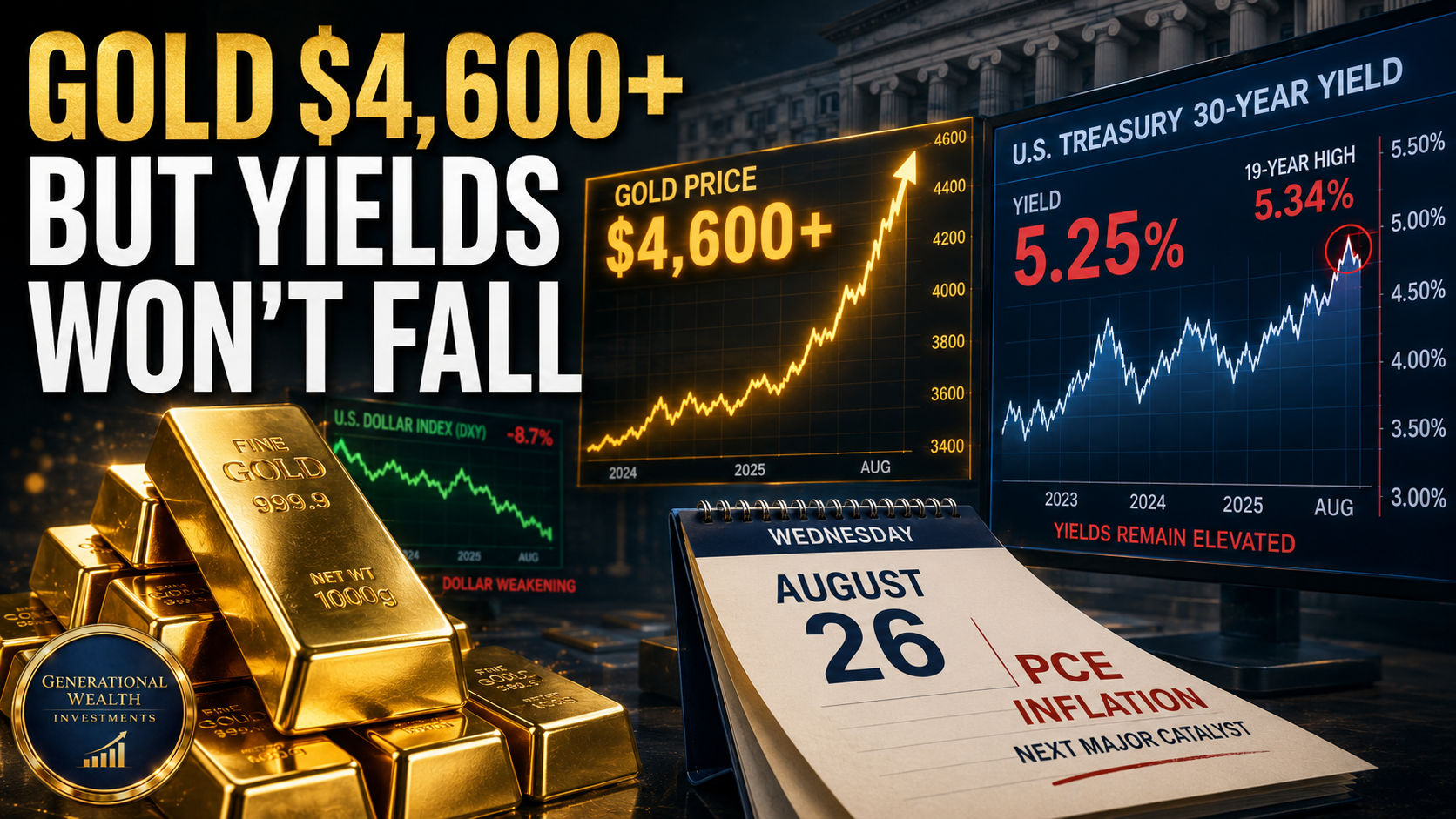
Gold Tops $4,600 as Treasury Yields Stay Near 19-Year Highs
Gold has climbed above $4,600 even as long-term Treasury yields remain near levels not seen in almost two decades. The next test is Wednesday’s July PCE inflation report—and whether rates, the dollar and oil begin confirming gold’s move or pushing against it.
August 24, 2026
Gold Pushes Above $4,600 While Treasury Yields Stay Near 19-Year Highs
Gold pushed above $4,600 Monday, with spot gold trading around $4,635 even as the 30-year Treasury yield remained near 5.25%. Elevated yields normally pressure an asset that pays no interest, making the combination unusually important. A weak dollar is helping the setup, but Wednesday’s July PCE inflation report could determine whether rate pressure returns or the rally gains stronger confirmation.
Watch Today’s Market Breakdown
See why gold is rising despite elevated Treasury yields, how Bitcoin and oil fit into the same macro picture, and why Wednesday’s inflation report is the next major test.
Today’s Market Setup
Gold is sending a strong signal, but the bond market has not fully relaxed. That tension makes rates, the dollar, oil and Wednesday’s inflation data more important than the headline gold price alone.
Gold Is Defying High Yields
Spot gold traded around $4,635 Monday, its highest since May 15, while the 30-year Treasury yield remained near 5.25% and close to its recent 5.34% peak. High yields normally increase the opportunity cost of holding gold, making the simultaneous strength notable.
The Dollar and Bitcoin Add Context
The dollar remains near multi-month lows after the Treasury said it would at least double long-dated bond buybacks to $4 billion per operation. Gold gained more than 5% last week, while Bitcoin is holding above $77,000 after gaining more than 21%.
Oil Keeps Inflation Risk Alive
Brent crude is down about 1.6% near $93 as traders await new U.S. sanctions on Iran. Lower oil helps ease immediate inflation pressure, but another spike could push inflation concerns and Treasury yields back into focus ahead of Wednesday’s July PCE report.
What Matters From Here
Gold clearing $4,600 explains what happened. The next question is whether the forces underneath the move begin confirming it or start working against it.
- Can gold hold its strength if the 30-year Treasury yield remains near 5.25% or moves back toward its recent peak?
- Does Wednesday’s July PCE inflation report ease rate pressure, or give the bond market another reason to keep yields elevated?
- Could another oil spike revive inflation concerns even if the dollar remains weak?
The Headlines Are Only the First Step
The free Market Preview explains why gold, Treasury yields, Bitcoin and oil are sending an unusual combination of signals. The members-only Daily Market Brief goes deeper into the catalysts, risks, confirmation signals and developments worth monitoring as markets approach Wednesday’s inflation report.
See What Members GetInside Today’s Members-Only Daily Market Brief
- The yield and dollar signals that could strengthen or weaken the case behind gold’s current move.
- How Bitcoin holding above $77,000 fits into the broader cross-asset market message.
- Why Brent crude and the next U.S. sanctions on Iran matter for the inflation and interest-rate setup.
- What to monitor around Wednesday’s July PCE report as markets test whether inflation pressure is becoming more or less important.
Go Beyond the Headlines
The public Market Preview tells you what moved and why investors are paying attention. The Generational Wealth Community is designed for investors who want to understand what deserves attention next, what could confirm the current setup, what risks could change it, and which developments deserve continued monitoring. We don’t chase hype, we decode the market.
Unlock the Daily Market BriefEducational market research designed to help investors understand the setup — not chase headlines.
Your pathway from knowledge to legacy. We don’t chase hype, we decode the market.
Stay Ahead of What Matters Next
Follow the catalysts, risks and confirmation signals that deserve attention as gold, Treasury yields, oil and Wednesday’s inflation report test the current market setup.
Join the Generational Wealth Community