


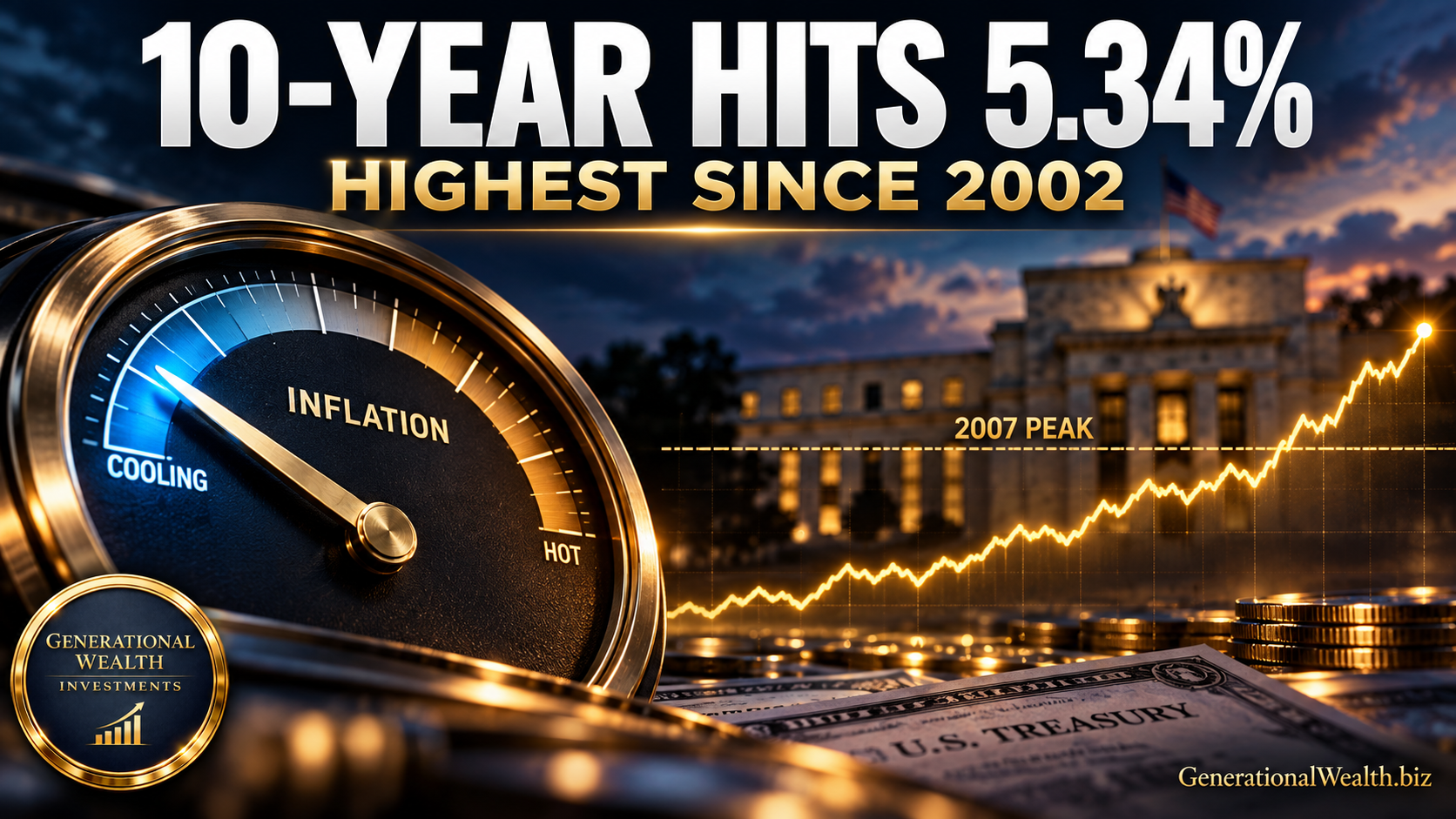
The 10-Year Treasury Yield Just Hit a 24-Year High — and a Softer Inflation Report Couldn't Stop It
The 10-year Treasury yield just broke its 2007 peak and hit its highest level in 24 years — the morning after inflation came in cooler than expected. When good news can't bring long-term rates down, the bond market is sending a message. Here's what's really driving yields, how it hits your mortgage and portfolio, and the 3 jobs-report scenarios that could decide what happens next.

Oil Pushes the 30-Year Treasury Yield to Its Highest Level Since 2004
Oil just pushed the 30-year Treasury yield to its highest level since 2004. Then reports of U.S.-Iran talks on reopening the Strait of Hormuz knocked Brent $3 lower in minutes. Here's why the bond market is treating oil as an inflation problem, not a growth problem, and why next week's inflation data and jobs report could decide where yields go next.
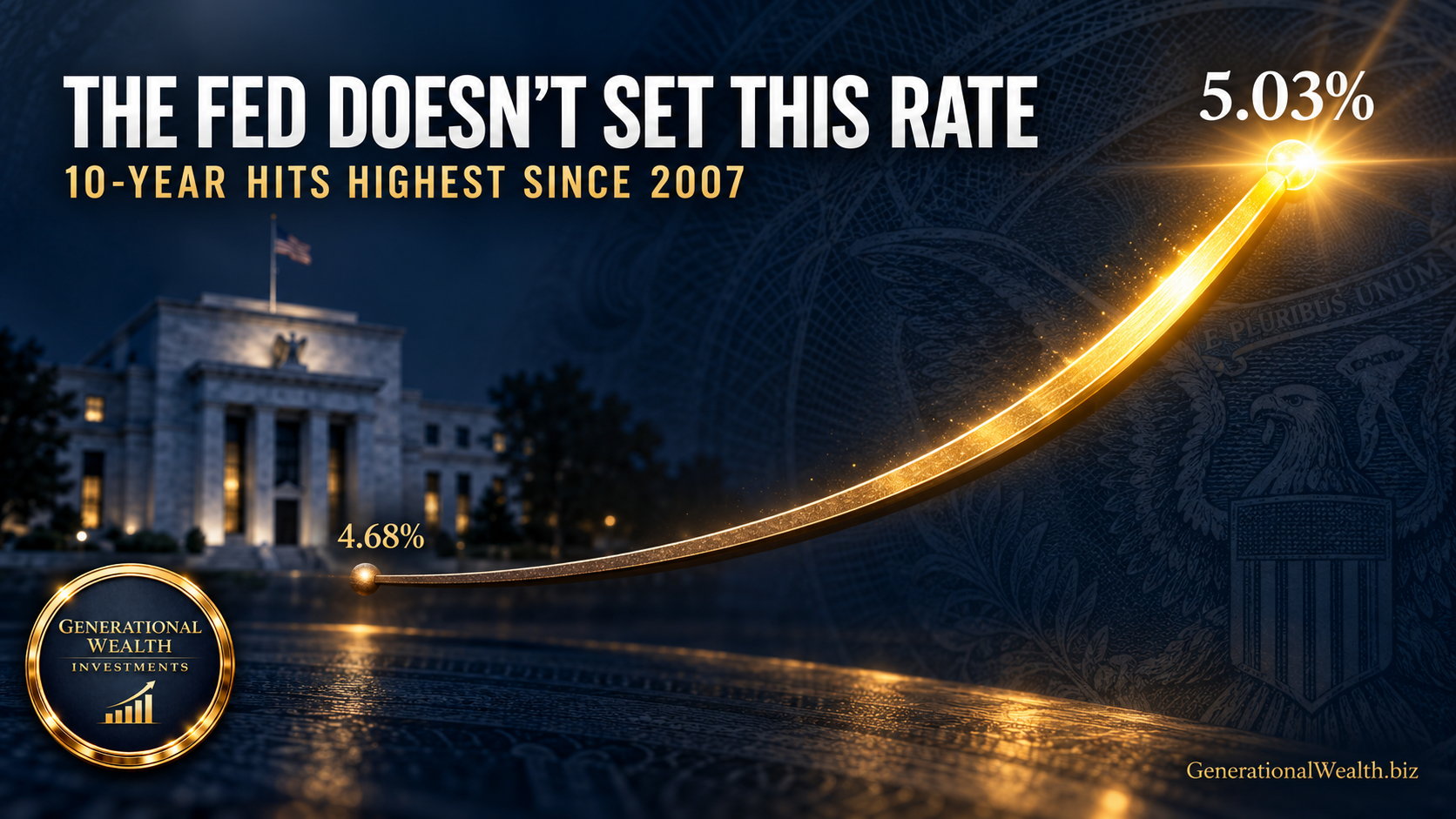
The 10-Year Just Hit 5.03% — And the Fed Doesn't Control That Number
The 10-year Treasury yield hit 5.03% overnight, its highest level since 2007 — and the 2-year barely moved. That gap is the whole story. Here's why an oil-driven inflation shock, not Fed policy, is repricing the long end of the curve, what it means for a 6.76% mortgage, and the 3 things in Wednesday's dot plot that decide whether this is one hike or the start of a cycle.

Bitcoin Hits $80,000 on a Treasury Decision — And the Bond Market Is Already Disagreeing
Bitcoin posted its biggest weekly gain in over 2 years, closing near $77,000 after touching almost $80,000. Gold settled above $4,600 an ounce. And the S&P 500 finished the week down 1.5%. The catalyst wasn't crypto news — it was a U.S. Treasury buyback announcement, and the way different assets read it reveals what investors actually believe about fiscal credibility. Here's the mechanism underneath the move, and the one data point that says the whole trade may be built on a premise the bond market has already rejected.
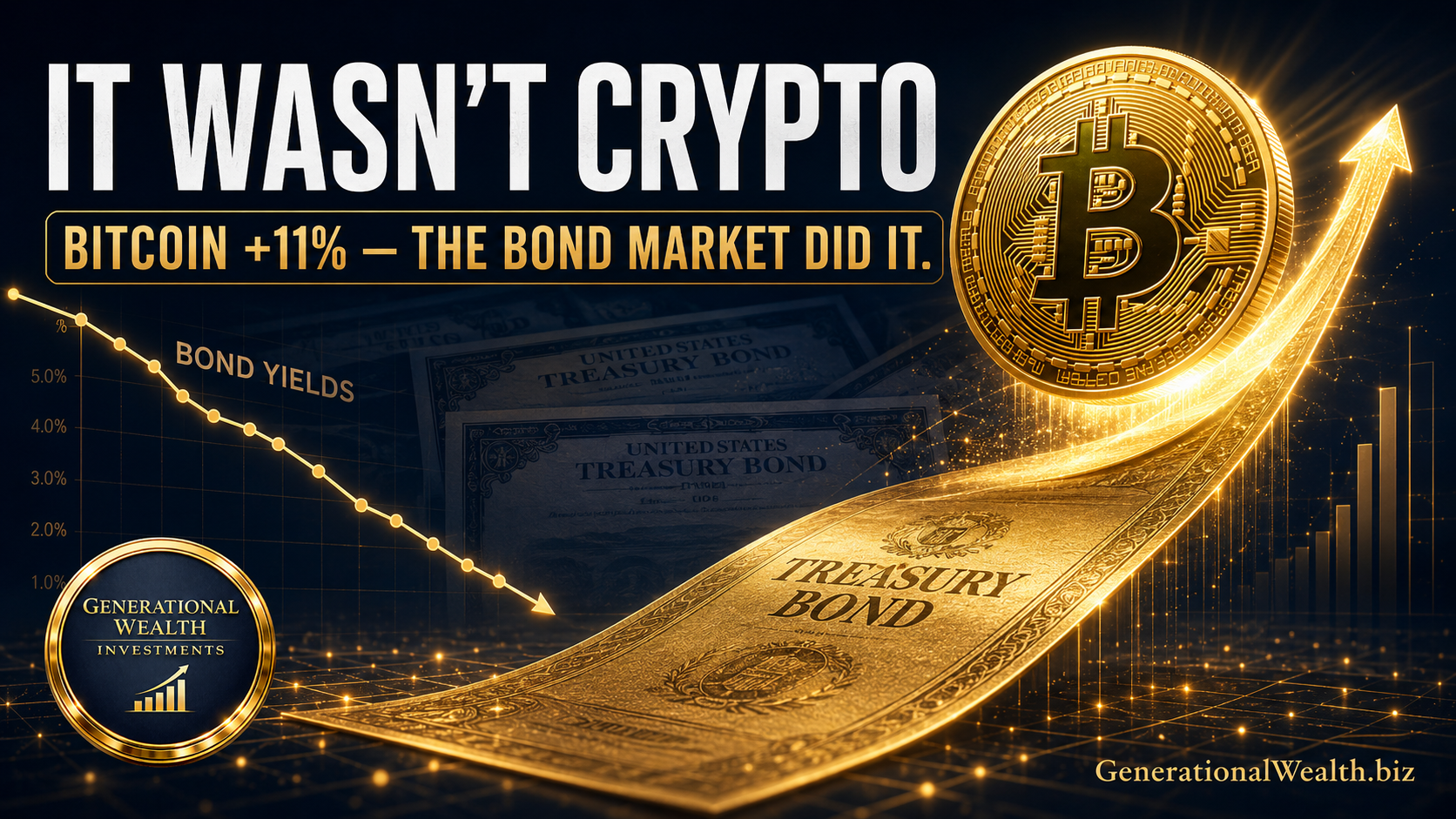
Bitcoin's Biggest Day Since March Was a Bond Market Trade — Not a Crypto One
Bitcoin posted its biggest day since March, climbing roughly 11% to near $71,800 — but the catalyst wasn't crypto news. It was a Treasury Department announcement doubling long-term bond buybacks, which pulled the 30-year yield down to 5.2% and triggered a record $1 billion short squeeze. Ethereum ran even harder, up 19%. Here's the mechanism behind the move, why Fed minutes and $94 oil complicate the story, and the single earnings report that resolves it.

Micron Fell 7% on Zero Bad News. The 30-Year Treasury Explains Why.
Micron fell 7% yesterday. SanDisk and Seagate fell 9%. None of them reported bad news, missed earnings, or lost a contract — and yet three of the AI buildout's biggest winners got hit harder than anything else in the market. The answer isn't in their filings. It's in the bond market, where the 30-year Treasury yield just hit a 19-year high and repriced every dollar of earnings these companies expect to make next decade. Here's the mechanism behind the move, the $3 trillion sitting in tech's footnotes, and why the Fed minutes at 2:00 PM Eastern decide whether the pressure continues.