



ASML Can't Build Machines Fast Enough: The AI Chip Boom Just Hit a Supply Wall
ASML just posted a record €11.7 billion quarter, but the real headline is what it said about the future: even with 30% more capacity planned, it can't build enough chipmaking machines to meet demand in 2027 and 2028. Customers are already asking about 2030. Here's why the AI trade's bottleneck is shifting from money to machines, and what to watch as TSMC reports next.

Microsoft's Maia 300 Chip Isn't Just a Shot at Nvidia — It's a Bet on Where $175 Billion in AI Spending Goes Next
Microsoft's new Maia 300 chip claims 40% more useful computing per megawatt than leading GPU systems, with potentially more than 1 million chips headed into deployment next year. The real story isn't Microsoft vs. Nvidia — it's who keeps the profit margin on more than $175 billion in AI spending. Here's the mechanism, 3 scenarios, and what Ignite needs to prove next month.

Samsung Forecast an $80 Billion Quarter and Its Stock Still Fell: Why the AI Trade Is Now About Margin Durability
Samsung just guided to roughly $80 billion in operating profit for a single quarter, a record for any technology company, and its stock closed lower. The market is no longer asking whether AI demand is real. It is asking how long a 55% margin can last in a business famous for boom and bust. Here is the mechanism behind the reaction, 3 scenarios for memory margins, and the numbers that will settle the debate on October 29.

China's CXMT Enters Mass Production on 5th-Gen DRAM: What It Means for Samsung, SK Hynix, and Micron
China's CXMT just moved its 5th-generation DRAM into mass production, claiming at least 50% more chips per wafer despite U.S. export controls. But that headline number counts chips before defects are thrown out. Here's why yield decides whether this is a real threat to Samsung, SK Hynix, and Micron, and what the market's first reaction could signal.

Nvidia Falls, Software Rallies: The AI Trade Just Split in Two
Three of the most powerful people in AI spent the weekend agreeing their industry is moving too fast. By Monday's premarket, Nvidia was down more than 2%, chip stocks were bleeding across three continents, and the enterprise software sector left for dead all year was catching a bid. That's not the market rejecting AI — it's the market re-pricing who inside the AI trade gets paid. Here's the mechanism behind the split, the two macro crosscurrents most coverage ignored, and exactly what would prove this read wrong.

Broadcom Just Forecast $230 Billion in AI Chip Sales — and the Stock Fell Anyway
Broadcom more than tripled AI chip revenue to $16.7 billion and forecast roughly $230 billion by fiscal 2028 — and the stock still fell. Snowflake jumped more than 20%. HPE posted record revenue and dropped over 3%. Same sector, same tailwind, three different verdicts. Here's what the market is actually pricing now, and why the 10-year Treasury yield matters more to these stocks than the guidance did.

Nvidia Server Prices Are Reportedly Rising More Than 15% — And the Stock Hasn't Traded on It Yet
Bloomberg reported Saturday that some of Nvidia's largest customers were told server prices will rise more than 15%, driven by soaring memory-chip costs. Nvidia hasn't confirmed it, and the stock hasn't traded on it yet. The real story isn't the price increase — it's that the AI bottleneck is moving from compute to memory, and the bottleneck always owns the margin.

Micron Fell 7% on Zero Bad News. The 30-Year Treasury Explains Why.
Micron fell 7% yesterday. SanDisk and Seagate fell 9%. None of them reported bad news, missed earnings, or lost a contract — and yet three of the AI buildout's biggest winners got hit harder than anything else in the market. The answer isn't in their filings. It's in the bond market, where the 30-year Treasury yield just hit a 19-year high and repriced every dollar of earnings these companies expect to make next decade. Here's the mechanism behind the move, the $3 trillion sitting in tech's footnotes, and why the Fed minutes at 2:00 PM Eastern decide whether the pressure continues.

The AI Trade Just Split in Two: Micron Clears $1,000 as Microsoft Sheds $112 Billion
Micron closed above $1,000 a share. The same day, Microsoft lost roughly $112 billion in market value. That wasn't a tech selloff — Applied Materials gained more than 5% while Oracle fell. Money didn't leave AI. It moved down the stack, out of the companies paying for the buildout and into the ones selling it. Memory has stopped being a product and become a cost line, and with the 30-year Treasury at the highest level of 2026, the squeeze is coming from both directions at once. Wednesday's Fed minutes — where three officials dissented for a rate hike — will decide how much worse it gets.
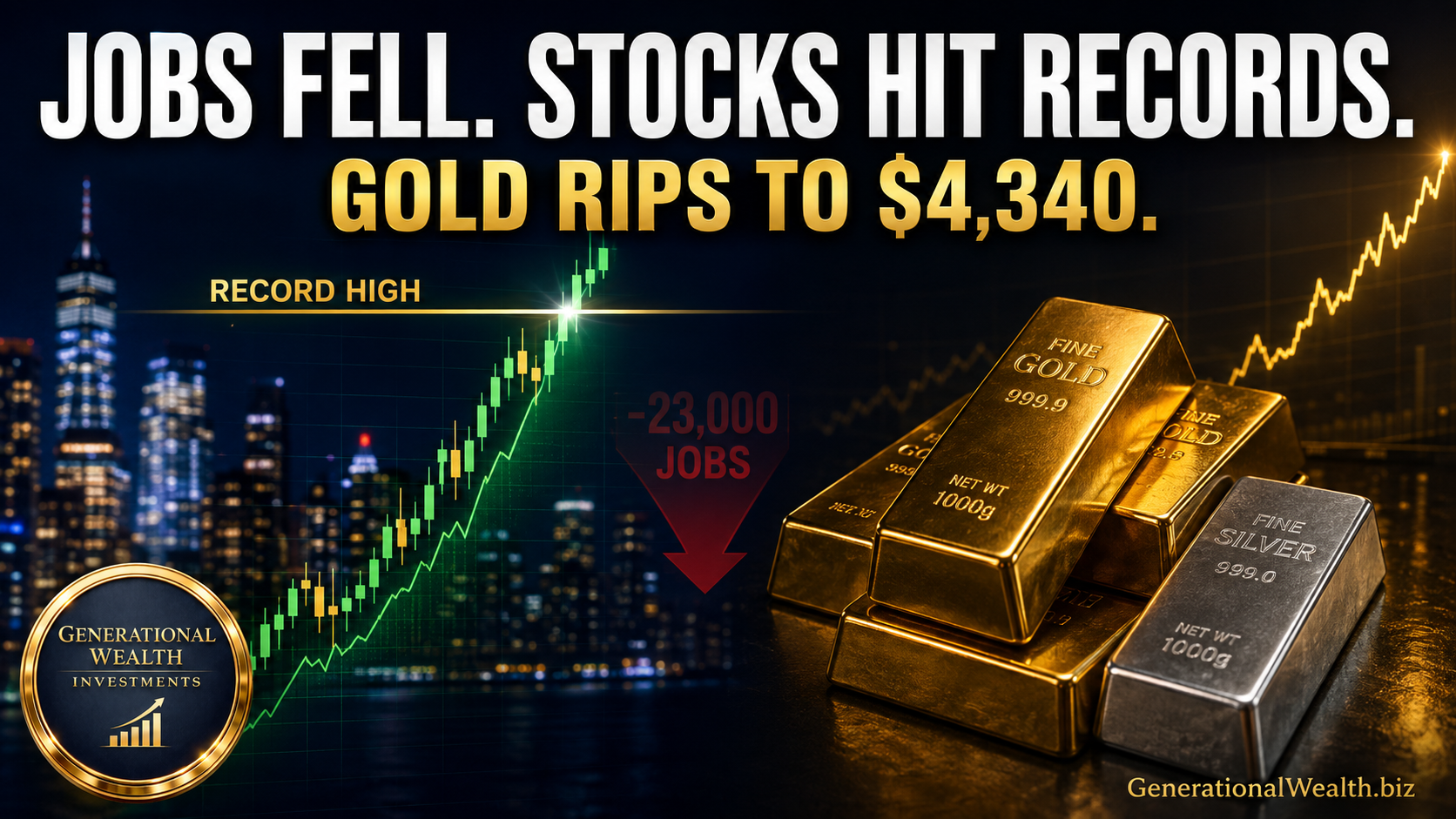
Stocks Hit Record Highs as Economy Loses 23,000 Jobs — Gold Rips to a 7-Week High
The economy unexpectedly shed 23,000 jobs in July — and Wall Street rallied to record highs anyway. With September rate hike odds falling from 57% to 44%, capital rotated into growth, chips, and hard assets while gold hit a 7-week high near $4,340. Here's the full breakdown of what drove Friday's session, why gold and the Nasdaq rallied together, and why Wednesday's CPI print is the whole ballgame.

Oil Cracks Below $80, Gold Jumps, and Korea Loses 5% Overnight — Plus a $400 Billion Pharma Merger
Oil cracked below $80 after President Trump called off a planned strike on Iran, sending crude down 6% and lifting gold to $4,100. South Korea's Kospi lost 5.13% overnight while U.S. futures pointed higher, and AstraZeneca and Bristol Myers Squibb reportedly held talks on a $400 billion combination. Crypto sat the rally out entirely. Here's what's driving the rotation and what to watch this week.

Microsoft's Best Day in 18 Years Sparks a Global Chip Melt-Up — But Apple and Amazon Just Split the Market
Microsoft posted its best day in nearly 18 years, igniting a global chip rally that drove South Korea's Kospi to a record 18% single-day gain. But Apple and Amazon split sharply after earnings, and the bond market isn't buying the rebound — with the 30-year yield near its highest since 2007. Here's what moved and what could reverse it.
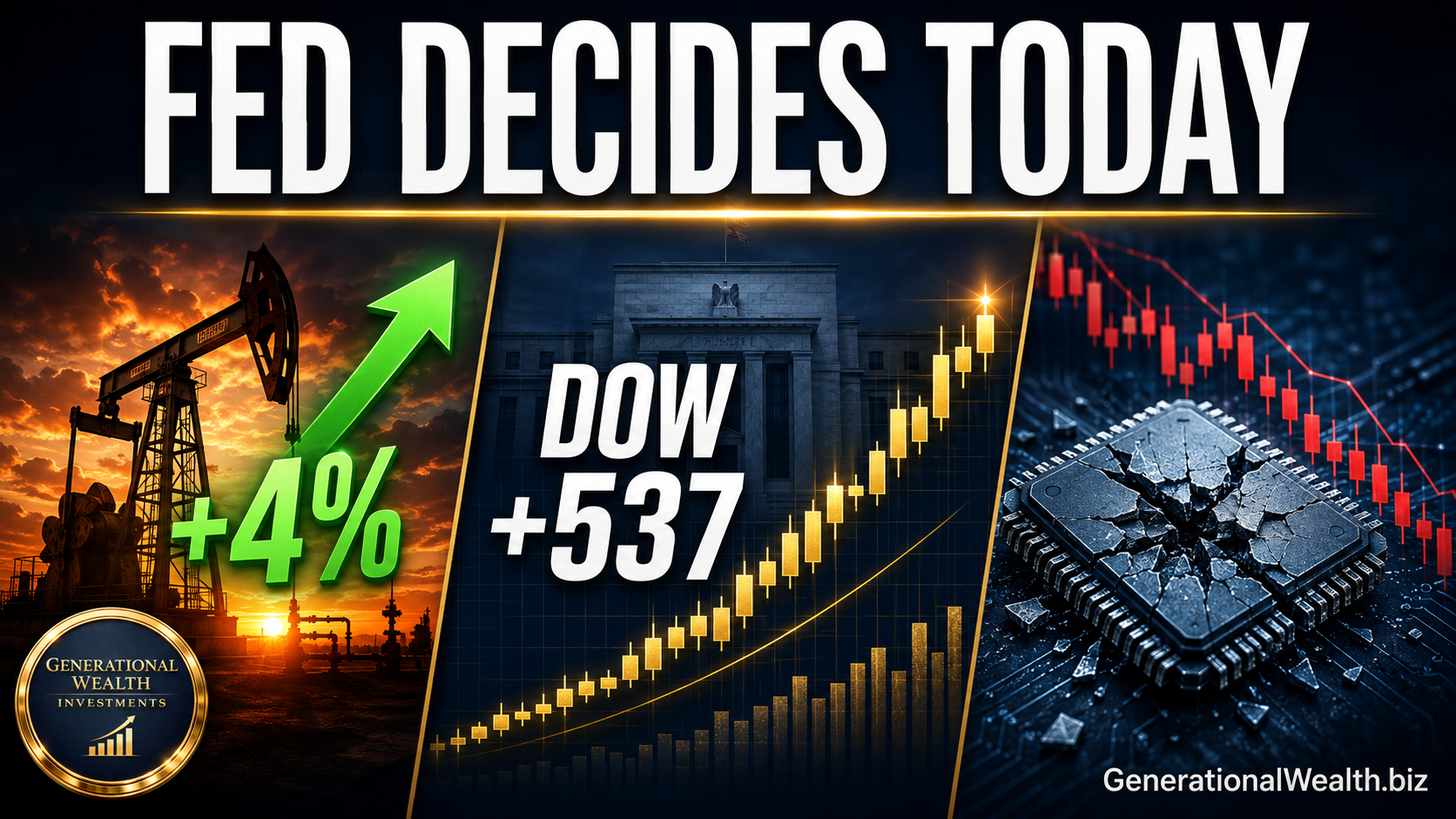
Oil Spikes on Iran Strike, Dow Rips 537 Points, and the Fed Delivers a Coin-Flip Decision Today
Three storylines are pulling this market in three directions at once. Oil spiked on Middle East escalation, the Dow ripped 537 points higher while chip stocks got crushed for a fourth straight session, and the Fed delivers a decision today that's genuinely too close to call. Here's what happened and what to watch before the close.

Kospi Crashes 10.8% as China's Chip Breakthrough Rattles Semiconductors — Oil Suffers Biggest Drop Since April
South Korea's Kospi crashed 10.8% overnight, halting trading, as a report on China building deep ultraviolet lithography machines sent Samsung and SK Hynix into freefall. Oil posted its biggest one-day drop since April, Bitcoin slipped under $64,000, and the Federal Reserve decides tomorrow. Here's what's driving the global risk-off move.

Oil Spikes, Chip Stocks Lose $3 Trillion, and Gold Breaks the Rules — Monday Market Breakdown
Oil is spiking on continued Iran strikes, semiconductor stocks have lost over $3 trillion since June, and gold is falling despite rising geopolitical tensions. Here's a full breakdown of what's driving markets, where crypto money is rotating, and the earnings catalyst that could move everything this week.