


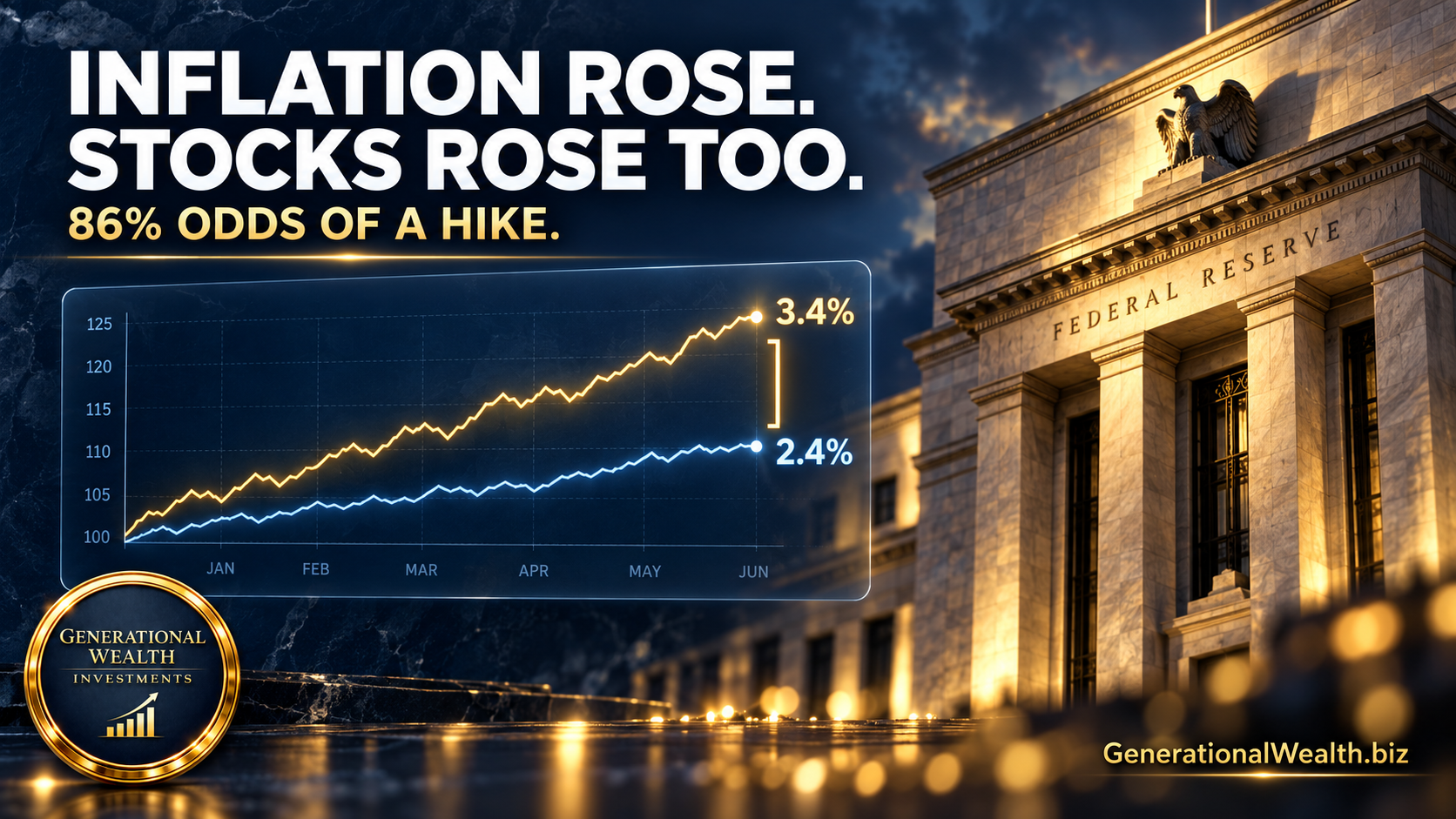
Inflation Accelerated, Rate-Hike Odds Hit 86%, and Stocks Rallied Anyway — Here's What Friday Actually Told Us
Consumer prices accelerated in August. Gasoline jumped 3.9%. Odds of a Federal Reserve rate hike surged toward 90%. And the S&P 500 closed up 0.9% anyway. That looks like a contradiction until you look at the 1-point gap between headline and core inflation — a gap that explains why markets treated this print as a supply shock rather than a demand problem. Here's the full mechanism, the three ways Wednesday's Fed decision can break, and the specific signals that would prove this read wrong.

Meta Jumps 6.5% While the S&P 500 Falls: What Muse Actually Changed
On Wednesday the market sold the S&P 500 down 0.48% as oil broke $100 and yields hit multi-year highs — and bought Meta up more than 6.5%. That 7-point spread wasn't noise. Meta didn't beat the macro; it changed which side of it the company sits on. Muse attached a $20-per-month subscription to $130 billion in AI spending, and in a rising-rate tape, the market pays for what's close and sells what's far. The adoption test starts now.

Jobs Crushed Expectations and Stocks Fell Anyway: Why 162,000 Jobs Just Raised September Rate Hike Odds
The August jobs report was a blowout: 162,000 jobs added against a 56,000 forecast, with unemployment steady at 4.1%. Stocks fell anyway. The reason isn't complicated once you see it — this report didn't change the economy, it changed the Fed's constraint. Here's the mechanism, why the 2-year Treasury moved before equities did, how oil at $91.48 opens a second inflation channel, and what Thursday's PPI and Friday's CPI will actually decide.

Rate-Hike Odds Just Fell to a Coin Flip. The Same Day's Data Said Not So Fast.
Stocks rallied Thursday after Fed Governor Christopher Waller signaled he could support holding rates steady in September. But Waller offered a conditional, not a commitment — and the same morning's ISM report showed services prices at their hottest since August 2022 with employment contracting for a second straight month. Here's why the market's reaction function has inverted, what the three jobs-report scenarios actually mean, and what would prove this thesis wrong.

Oil Jumps 5%, Yields Hit a 3-Year High — and Gold Refused to Rally. That's the Real Story.
Brent settled at $94.65 and the 10-year Treasury yield reached 4.81% as renewed U.S.-Iran fighting near the Strait of Hormuz put a war premium back into crude. But gold made a 3-week low instead of rallying — and that single contradiction tells you more about this market than the oil headline does. Here's the transmission chain from a barrel of crude to your portfolio's discount rate, plus the four conditions that would break the thesis.

Rate Hike Odds Jump to 57%, Nvidia Falls 4.6%: How One Jackson Hole Speech Repriced the Entire Market
Nvidia gained 8.7% on AI guidance Thursday, then fell 4.6% Friday on news that had nothing to do with Nvidia. What changed was the price of money. Fed Chair Kevin Warsh put the 2% target back at the center of the market, September rate hike odds jumped from roughly 35% to 57%, the 2-year Treasury yield rose 13 basis points to a one-month high, and gold dropped 3%. Here's the full causal chain, the falsification test for whether it holds, and the three scenarios for the August jobs report.

Nvidia's $442 Billion Day: Why the Rest of the Market Didn't Follow
Nvidia's $442 billion single-day market cap gain was historic, but the rally underneath it was narrow — only tech finished higher, even as Salesforce and CrowdStrike surged on their own guidance raises. With oil rebounding and Kevin Warsh set to speak at Jackson Hole, here's what actually moved markets Thursday and what to watch next.

Brent Crude Falls 6% in 2 Sessions: Why the Hormuz Rally Is a Shipping Trade, Not a Fed Trade
Brent crude has fallen more than 6% in two sessions, Treasury yields dropped, and stocks closed green — but nothing about Fed policy changed. Every one of those moves traces back to a single waterway. Here's the mechanism connecting the Strait of Hormuz to the 10-year yield, the PCE trap waiting this morning, and the 4 data points that will confirm or break this rally.
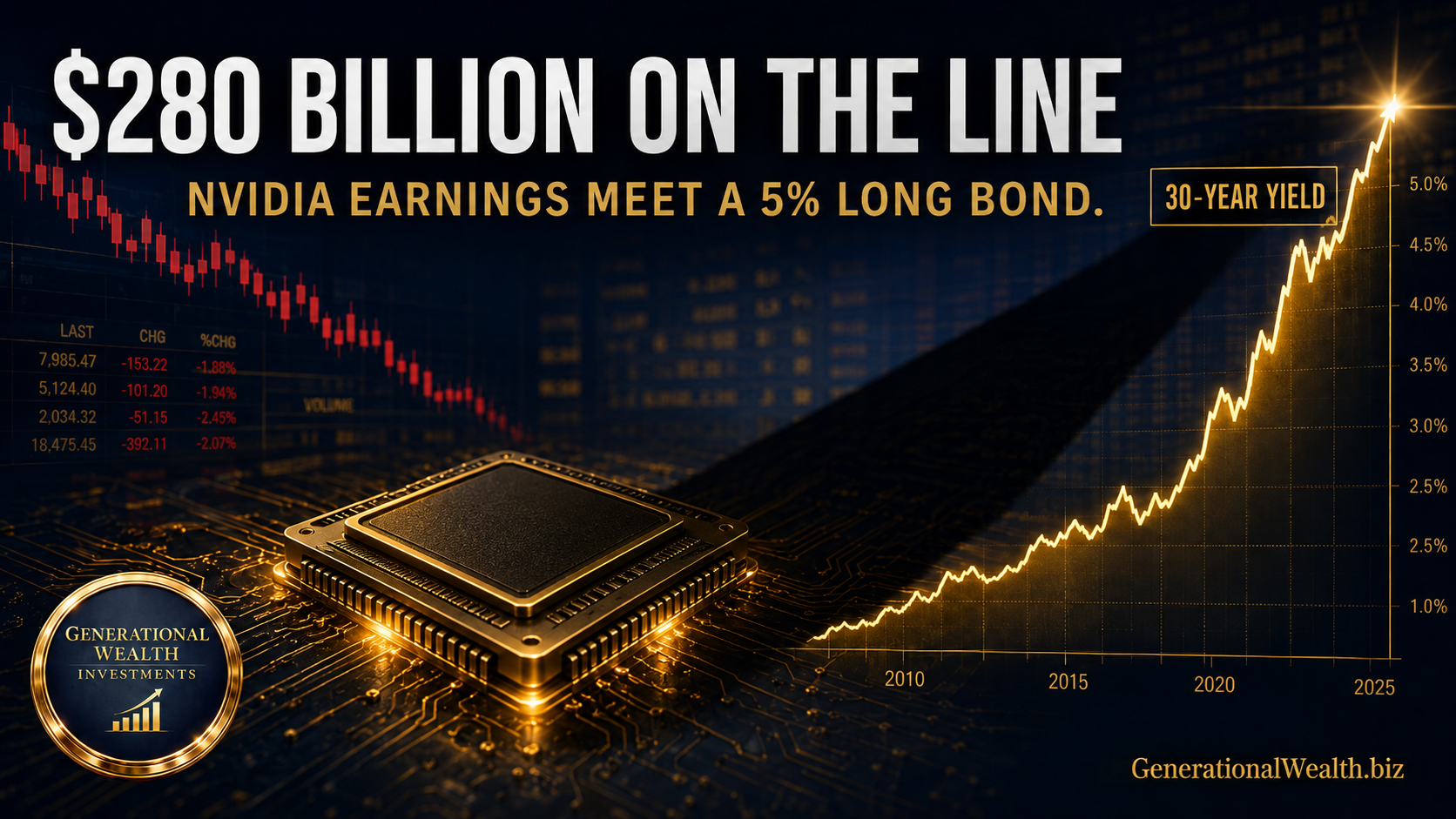
Nvidia's $280 Billion Earnings Test: Why the AI Trade Now Runs Through the Bond Market
Nvidia reports Wednesday after the close with roughly $280 billion of market value in play — more than the individual market cap of 90% of S&P 500 companies. But the implied 5.4% move is smaller than Nvidia's recent average, and the stock just posted its seventh straight down day. The real variable isn't in the income statement. It's the 30-year Treasury yield sitting above 5% at a 19-year high, quietly repricing every data-center project the AI trade depends on.
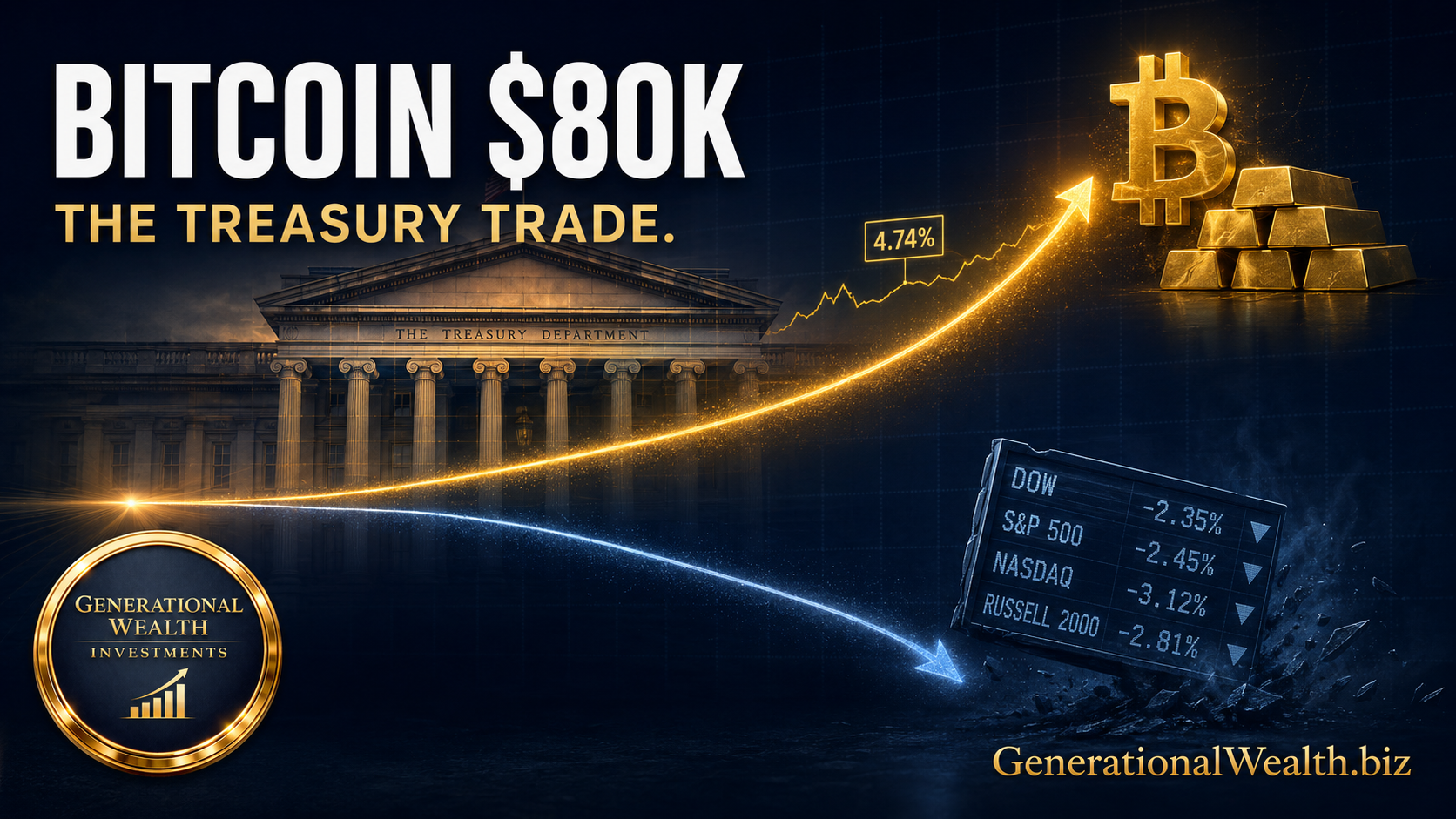
Bitcoin Hits $80,000 on a Treasury Decision — And the Bond Market Is Already Disagreeing
Bitcoin posted its biggest weekly gain in over 2 years, closing near $77,000 after touching almost $80,000. Gold settled above $4,600 an ounce. And the S&P 500 finished the week down 1.5%. The catalyst wasn't crypto news — it was a U.S. Treasury buyback announcement, and the way different assets read it reveals what investors actually believe about fiscal credibility. Here's the mechanism underneath the move, and the one data point that says the whole trade may be built on a premise the bond market has already rejected.
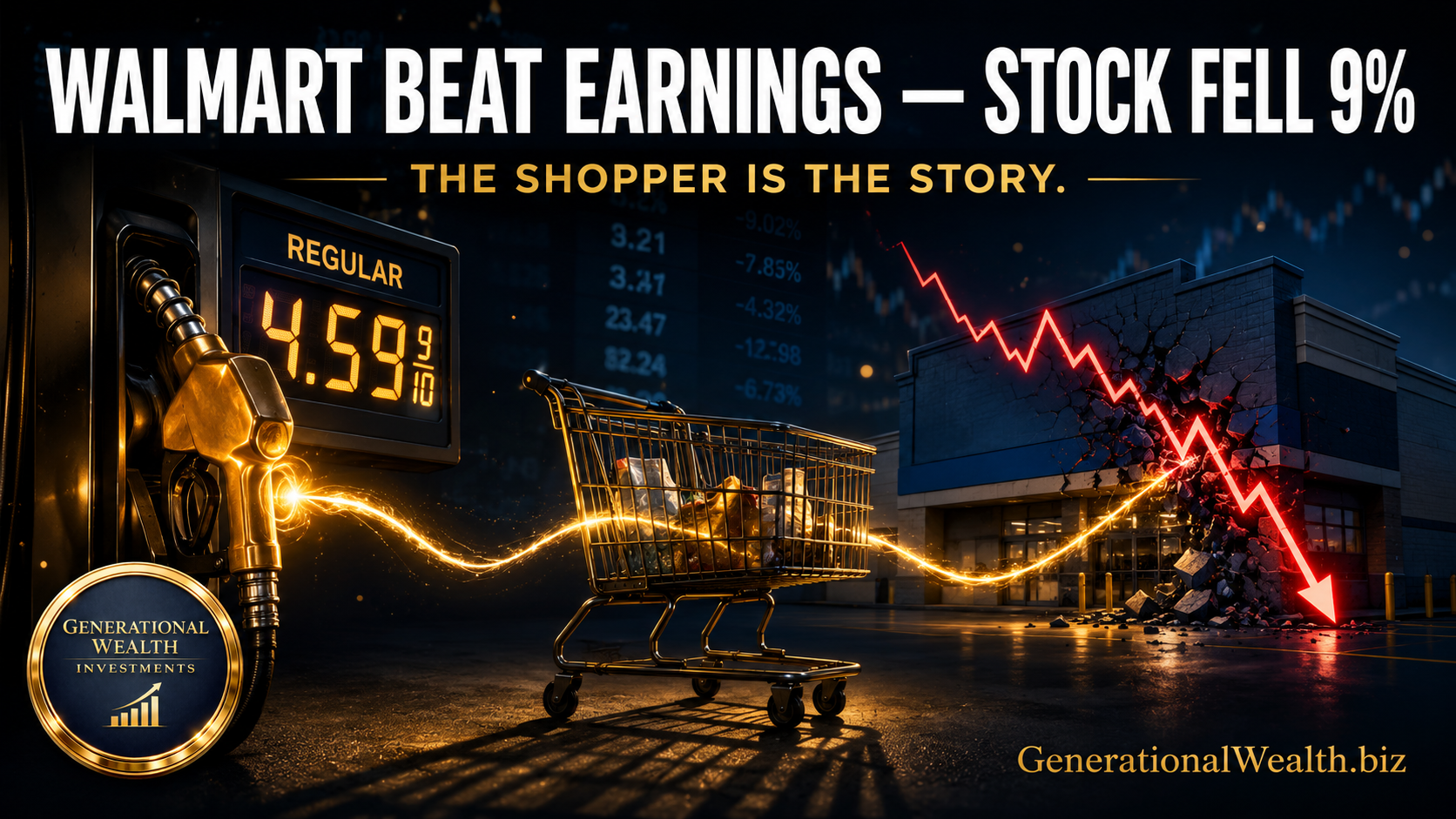
Walmart Beat Earnings and Fell 9%: The Consumer Just Sent Wall Street a Warning
Walmart delivered an earnings beat and a guidance raise, then suffered its worst day in years. The problem wasn't profit — it was the shopper. U.S. comparable sales grew just 2.6% against expectations of 3.7%, the slowest pace since 2020, with the company pointing directly at high gas prices. With Brent crude near $94 on Iran sanctions rhetoric and Treasury yields climbing despite a surprise buyback plan, one retailer just told the market exactly where the American consumer stands.
Micron Fell 7% on Zero Bad News. The 30-Year Treasury Explains Why.
Micron fell 7% yesterday. SanDisk and Seagate fell 9%. None of them reported bad news, missed earnings, or lost a contract — and yet three of the AI buildout's biggest winners got hit harder than anything else in the market. The answer isn't in their filings. It's in the bond market, where the 30-year Treasury yield just hit a 19-year high and repriced every dollar of earnings these companies expect to make next decade. Here's the mechanism behind the move, the $3 trillion sitting in tech's footnotes, and why the Fed minutes at 2:00 PM Eastern decide whether the pressure continues.
Super Micro Guides to $72 Billion — and Wall Street Still Sold AI Stocks
Super Micro told Wall Street it expects up to $72 billion in AI server sales next year — roughly 36% above the $53 billion consensus — and the stock jumped 9% after hours. Hours earlier, AI stocks had sold off all day. The doubt isn't about demand anymore; it's about how a buildout running on borrowed money gets paid for with the 10-year near 4.7% and oil at $83.

Nvidia Lines Up $500 Billion for AI — and the Stock Fell Anyway
Nvidia assembled a $500 billion AI war chest with Apollo, BlackRock, Blackstone, Brookfield, Goldman Sachs and KKR — and the stock fell anyway. Crude surged 5% to $82 on stalled Strait of Hormuz talks, driving the 10-year above 4.7% and flipping September Fed odds toward a hike. Bitcoin failed at $65,000 for a fourth straight day while gold pushed to $4,357. Here's the one variable driving all of it — and why Wednesday's CPI decides what happens next.

Oil Climbs a Third Session, Gold Nears $4,400 and Silver Clears $64 as Markets Brace for CPI
Oil climbed for a third straight session after Iran ruled out direct talks with Washington, pushing gold toward $4,400 and silver past $64. Meanwhile the S&P 500 closed at a record 7,757 and Nasdaq futures led again overnight. Capital is hedging Wednesday's inflation print two contradictory ways at once — here's what that rotation is telling you.

Stocks Hit a Record High After America Lost 23,000 Jobs — Here's What the Market Is Actually Pricing In
America lost 23,000 jobs in July, and the S&P 500 closed at a record 7,757 anyway. Atlassian jumped 35%, gold ripped to a 7-week high near $4,400, and a weekend headline out of the Strait of Hormuz could reprice oil Monday. Here's why every one of those moves is the same trade wearing a different ticker — and what Wednesday's CPI report puts at risk.
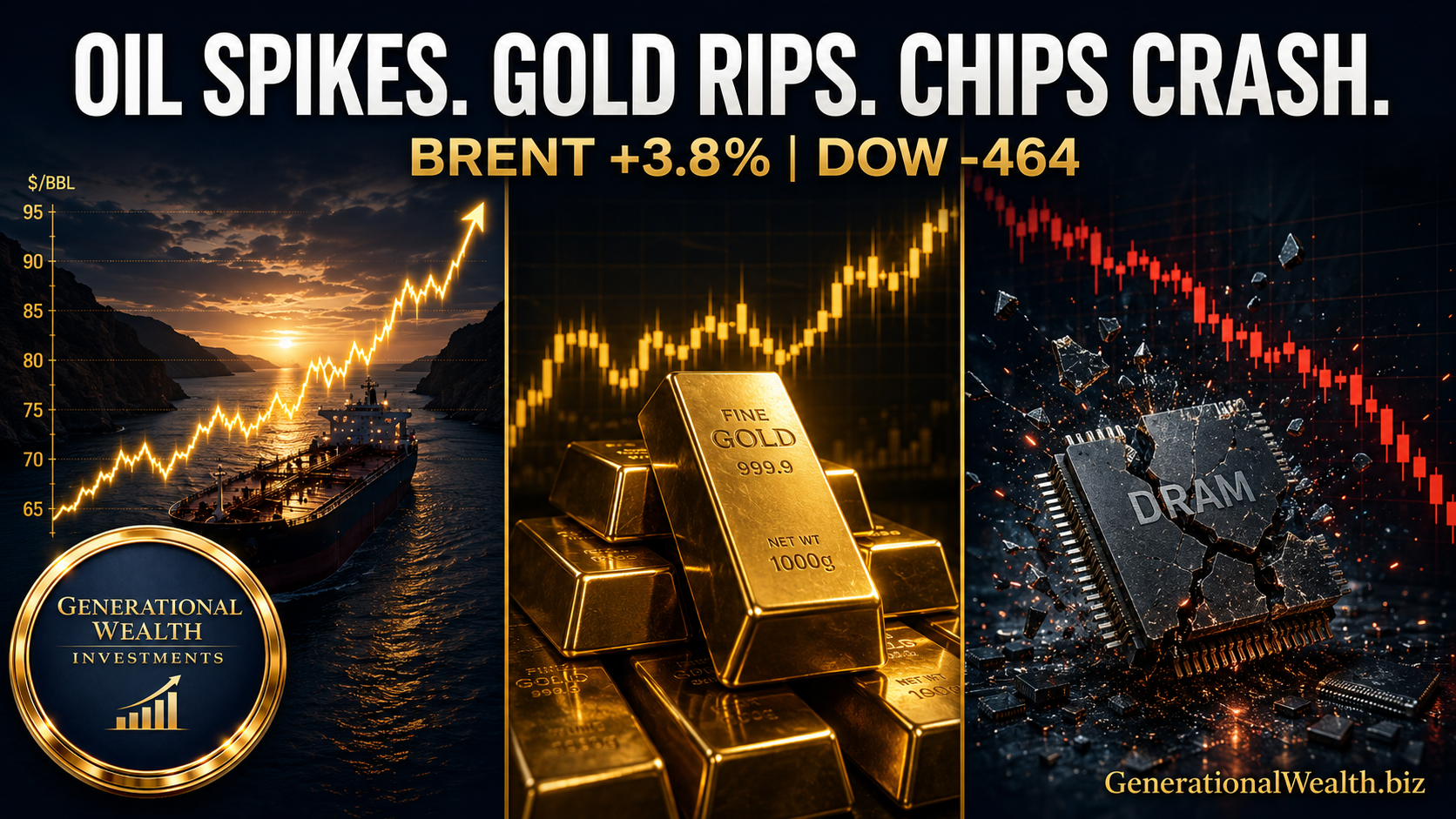
Oil Jumps 3.8% on Strait of Hormuz Document, Yields Spike to 4.67%, and Memory Chips Crater Despite Blowout Profits
A single Iranian document restricting Strait of Hormuz traffic sent Brent crude up 3.8%, lifted the 10-year Treasury yield to 4.67%, and ended the Dow's record streak with a 464-point drop. Meanwhile, gold is on pace for its best week since January and Western Digital fell 13% despite 44% revenue growth. Here's how the chain reaction unfolded — and why the July jobs report decides what happens next.

Trump Calls Off Iran Strike as Hormuz Reopening Enters the Deal: OPEC+ Adds Barrels, Cardano Jumps 9%
President Trump called off a planned strike on Iran late Saturday, citing agreement on a deal that would immediately reopen the Strait of Hormuz — the chokepoint carrying one-fifth of the world's seaborne oil. OPEC+ added 188,000 barrels a day to September quotas, the 30-year Treasury yield hit its highest level since 2007, and Cardano jumped 9% ahead of a key ETF eligibility date. Here's what actually moved and what it means for the week ahead.
Amazon Surges 15% While Apple Loses $475 Billion — Treasury Yields Hit 2007 Highs
Friday's session split Big Tech wide open: Amazon gained roughly 15% on its fastest AWS growth in 18 quarters, while Apple erased about $475 billion in market value on soft September guidance. Behind it all, the 30-year Treasury yield climbed to 5.25% — the highest since 2007 — as futures began pricing a possible September rate hike. Here's the full breakdown of the rotation, from record Kospi gains to record-low Bitcoin fund inflows.

Microsoft's Best Day in 18 Years Sparks a Global Chip Melt-Up — But Apple and Amazon Just Split the Market
Microsoft posted its best day in nearly 18 years, igniting a global chip rally that drove South Korea's Kospi to a record 18% single-day gain. But Apple and Amazon split sharply after earnings, and the bond market isn't buying the rebound — with the 30-year yield near its highest since 2007. Here's what moved and what could reverse it.