



Nvidia Falls, Software Rallies: The AI Trade Just Split in Two
Three of the most powerful people in AI spent the weekend agreeing their industry is moving too fast. By Monday's premarket, Nvidia was down more than 2%, chip stocks were bleeding across three continents, and the enterprise software sector left for dead all year was catching a bid. That's not the market rejecting AI — it's the market re-pricing who inside the AI trade gets paid. Here's the mechanism behind the split, the two macro crosscurrents most coverage ignored, and exactly what would prove this read wrong.

Meta Jumps 6.5% While the S&P 500 Falls: What Muse Actually Changed
On Wednesday the market sold the S&P 500 down 0.48% as oil broke $100 and yields hit multi-year highs — and bought Meta up more than 6.5%. That 7-point spread wasn't noise. Meta didn't beat the macro; it changed which side of it the company sits on. Muse attached a $20-per-month subscription to $130 billion in AI spending, and in a rising-rate tape, the market pays for what's close and sells what's far. The adoption test starts now.

Micron Fell 7% on Zero Bad News. The 30-Year Treasury Explains Why.
Micron fell 7% yesterday. SanDisk and Seagate fell 9%. None of them reported bad news, missed earnings, or lost a contract — and yet three of the AI buildout's biggest winners got hit harder than anything else in the market. The answer isn't in their filings. It's in the bond market, where the 30-year Treasury yield just hit a 19-year high and repriced every dollar of earnings these companies expect to make next decade. Here's the mechanism behind the move, the $3 trillion sitting in tech's footnotes, and why the Fed minutes at 2:00 PM Eastern decide whether the pressure continues.
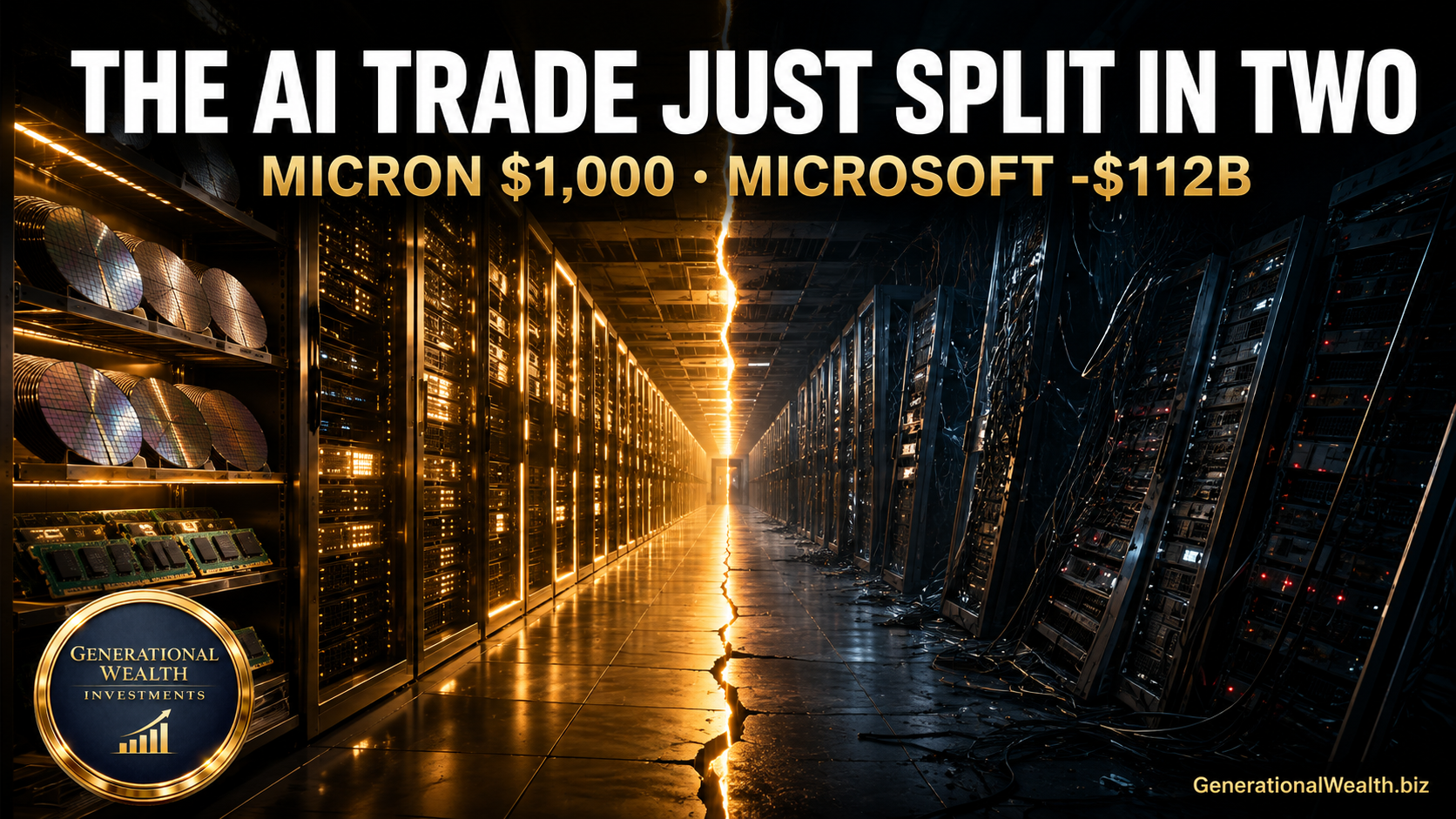
The AI Trade Just Split in Two: Micron Clears $1,000 as Microsoft Sheds $112 Billion
Micron closed above $1,000 a share. The same day, Microsoft lost roughly $112 billion in market value. That wasn't a tech selloff — Applied Materials gained more than 5% while Oracle fell. Money didn't leave AI. It moved down the stack, out of the companies paying for the buildout and into the ones selling it. Memory has stopped being a product and become a cost line, and with the 30-year Treasury at the highest level of 2026, the squeeze is coming from both directions at once. Wednesday's Fed minutes — where three officials dissented for a rate hike — will decide how much worse it gets.