

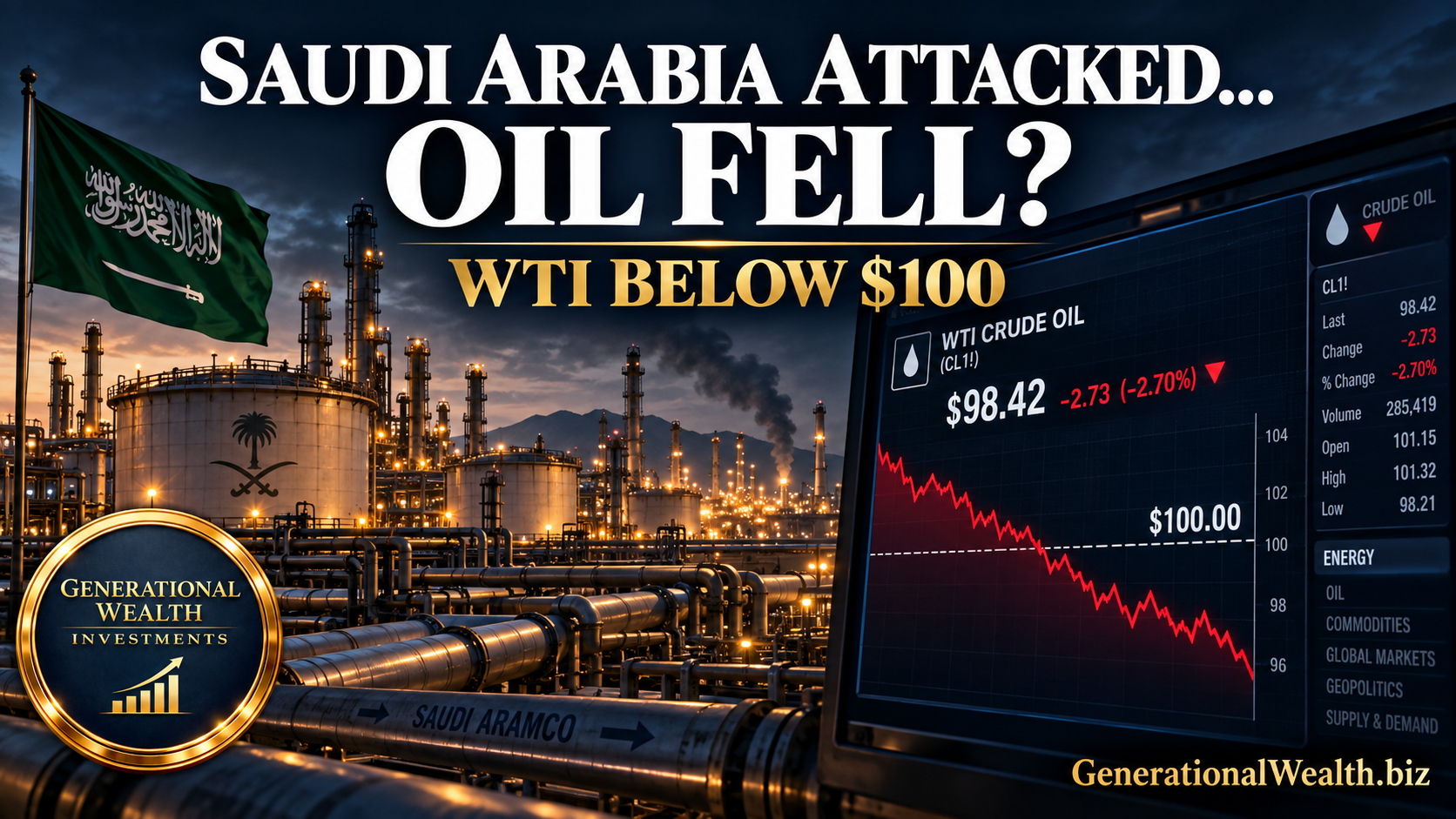
Saudi Arabia Attacked—Why Oil Prices Fell Below $100
Weekend attacks on Saudi Arabia would normally add pressure to oil prices, yet WTI fell below $100 as traders focused on recovering Saudi exports and possible U.S.-Iran diplomacy. The next question is whether improving supply and diplomacy can keep oil below that threshold—or whether geopolitical risk takes control again.
September 21, 2026
Saudi Arabia Was Attacked — So Why Did Oil Prices Fall?
Weekend attacks on Saudi Arabia added fresh supply risk, yet West Texas Intermediate crude fell below $100. Traders instead focused on Saudi exports rebounding to just over 4 million barrels a day this month from about 2.4 million in August, along with possible U.S.-Iran diplomacy. The question now is whether those forces can keep pressure on oil prices.
Watch Today’s Market Breakdown
See why oil moved lower despite new attacks, what recovering Saudi exports are changing and why this week’s diplomacy now matters.
Today’s Market Setup
Oil is sending a counterintuitive signal: geopolitical risk remains elevated, but traders are also seeing signs that supply conditions and diplomacy could be improving.
WTI Falls Below $100
West Texas Intermediate crude moved below $100 even after weekend attacks on Saudi Arabia. Instead of reacting only to the attacks, traders are weighing whether improving Saudi exports and possible diplomatic progress could reduce some of the pressure on supply.
Saudi Exports Are Recovering
Saudi crude exports have rebounded to just over 4 million barrels a day this month, compared with roughly 2.4 million in August. That recovery is important because additional supply can change how the market evaluates geopolitical disruptions.
Inflation Pressure Is Back in Focus
Oil above $100 had been feeding inflation fears and expectations for higher interest rates. With crude moving lower and U.S. stock futures higher, investors are now watching whether the change in oil prices can persist.
What Matters From Here
The drop below $100 is important. What happens next depends on whether the forces pushing oil lower continue to outweigh the geopolitical risk.
- Can West Texas Intermediate remain below $100 if attacks and regional supply risks continue?
- Does the recovery in Saudi crude exports continue strongly enough to keep easing supply concerns?
- Does this week’s United Nations diplomacy produce meaningful de-escalation between the United States and Iran?
The Headlines Are Only the First Step
The free Market Preview explains why oil fell despite new attacks. The members-only Daily Market Brief goes deeper into the catalysts, risks, confirmation signals and developments worth monitoring as traders decide whether this oil move can continue.
See What Members GetInside Today’s Members-Only Daily Market Brief
- The signals worth monitoring to determine whether WTI can remain below $100 or begins reversing higher.
- How the recovery in Saudi crude exports changes the supply-risk picture after the weekend attacks.
- The diplomatic developments that could strengthen or weaken the current oil-market setup.
- How changes in oil prices could affect the inflation and interest-rate concerns investors have been watching.
Go Beyond the Headlines
The public Market Preview tells you what happened. The Generational Wealth Community is designed for investors who want to understand what deserves attention next, what could confirm the current setup, what risks could change it and which developments deserve continued monitoring. We don’t chase hype, we decode the market.
Unlock the Daily Market BriefEducational market research designed to help investors understand the setup — not chase headlines.
Your pathway from knowledge to legacy. We don’t chase hype, we decode the market.
Stay Ahead of What Matters Next
The next test is whether this week’s diplomacy produces real de-escalation — and whether WTI can remain below $100.
Join the Generational Wealth Community