

Oil Shock Sends Treasury Yields to 20-Year High
Oil-driven inflation fears pushed long-term Treasury yields to multi-decade highs before a Strait of Hormuz diplomacy headline suddenly reversed crude and helped stocks recover. Now the focus shifts to whether oil stays elevated — and what next week’s inflation and jobs data mean for the rate outlook.
September 25, 2026
Oil Shock Sends Treasury Yields to 20-Year High — Then Hormuz Changes the Setup
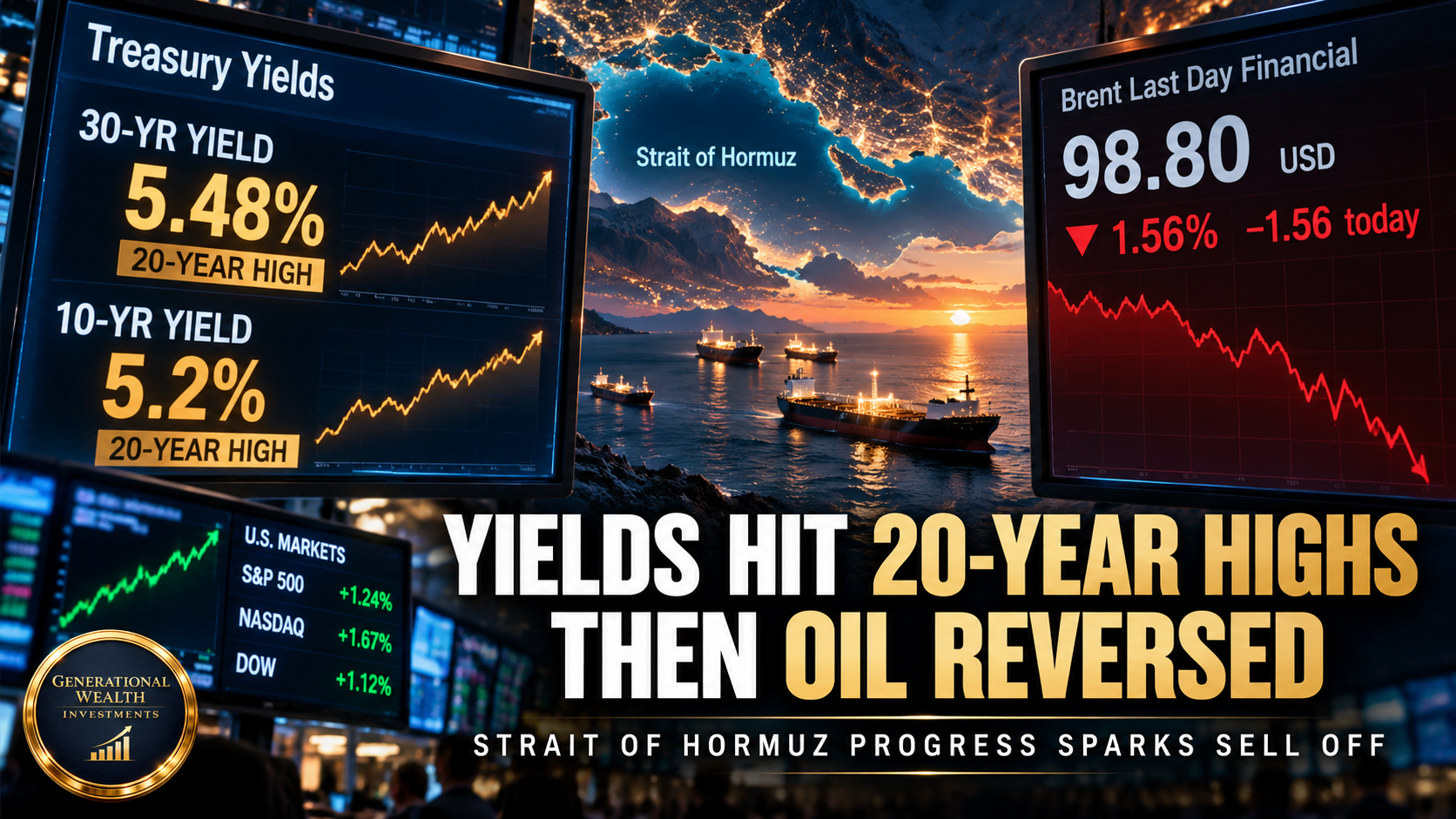
Oil-driven inflation fears pushed long-term Treasury yields to levels not seen in roughly two decades Thursday. Then the market changed direction: reports that U.S. and Iranian negotiators were exploring a path to reopen the Strait of Hormuz sent Brent crude sharply lower and helped stocks recover. Now investors have to determine whether that reversal can hold.
Watch Today’s Market Breakdown
See how the oil shock pushed Treasury yields higher, why a Hormuz headline suddenly reversed crude, and what markets are watching next.
Today’s Market Setup
Thursday showed how quickly oil, inflation expectations and interest rates can become one interconnected market story — and how quickly that setup can change when geopolitical expectations shift.
Treasury Yields Reach Multi-Decade Highs
The 30-year Treasury yield reached about 5.48%, its highest since 2004, while the 10-year climbed to around 5.2%, a level last seen in 2007. Rising long-term yields mean higher borrowing costs remain a major pressure point for markets.
Oil Revives Inflation Concerns
Renewed attacks on Saudi Arabia pushed oil higher as investors confronted fresh supply fears. With the U.S. economy remaining strong, another rise in energy prices added to concerns that inflation pressure could remain elevated.
Hormuz Headline Reverses the Move
Reports that U.S. and Iranian negotiators were exploring a path to reopen the Strait of Hormuz changed the market quickly. Brent crude fell roughly three dollars within minutes, while stocks recovered much of their earlier losses.
What Matters From Here
The key question is whether Thursday’s reversal marks a meaningful change in the oil-and-rates setup or only a temporary reaction to a diplomatic headline.
- Does oil remain elevated enough to keep inflation concerns and Treasury yields under pressure?
- Can the decline in crude continue if negotiations over reopening the Strait of Hormuz progress?
- How will next week’s inflation data and jobs report affect a market already confronting historically high long-term Treasury yields?
The Headlines Are Only the First Step
The free Market Preview explains how oil, Treasury yields and the Hormuz headline changed Thursday’s market. The members-only Daily Market Brief goes deeper into the catalysts, risks, confirmation signals and developments worth monitoring as investors evaluate what happens next.
See What Members GetInside Today’s Members-Only Daily Market Brief
- The oil-market developments that could reinforce or weaken the inflation pressure now affecting Treasury yields.
- What to monitor around the Strait of Hormuz as markets evaluate the possibility of reopening the critical shipping route.
- The interest-rate signals that could show whether Thursday’s surge in long-term Treasury yields is continuing or beginning to ease.
- Why next week’s inflation data and jobs report could become the next major tests for the current market setup.
Go Beyond the Headlines
The public Market Preview tells you what happened. The Generational Wealth Community is designed for investors who want to understand what deserves attention next, what could confirm the current market setup, what risks could change it and which developments deserve continued monitoring. We don’t chase hype, we decode the market.
Unlock the Daily Market BriefEducational market research designed to help investors understand the setup — not chase headlines.
Your pathway from knowledge to legacy. We don’t chase hype, we decode the market.
Stay Ahead of What Matters Next
Oil, inflation expectations and Treasury yields are moving together, while developments around the Strait of Hormuz can change that setup quickly. The next major tests arrive with inflation data and the jobs report.
Join the Generational Wealth Community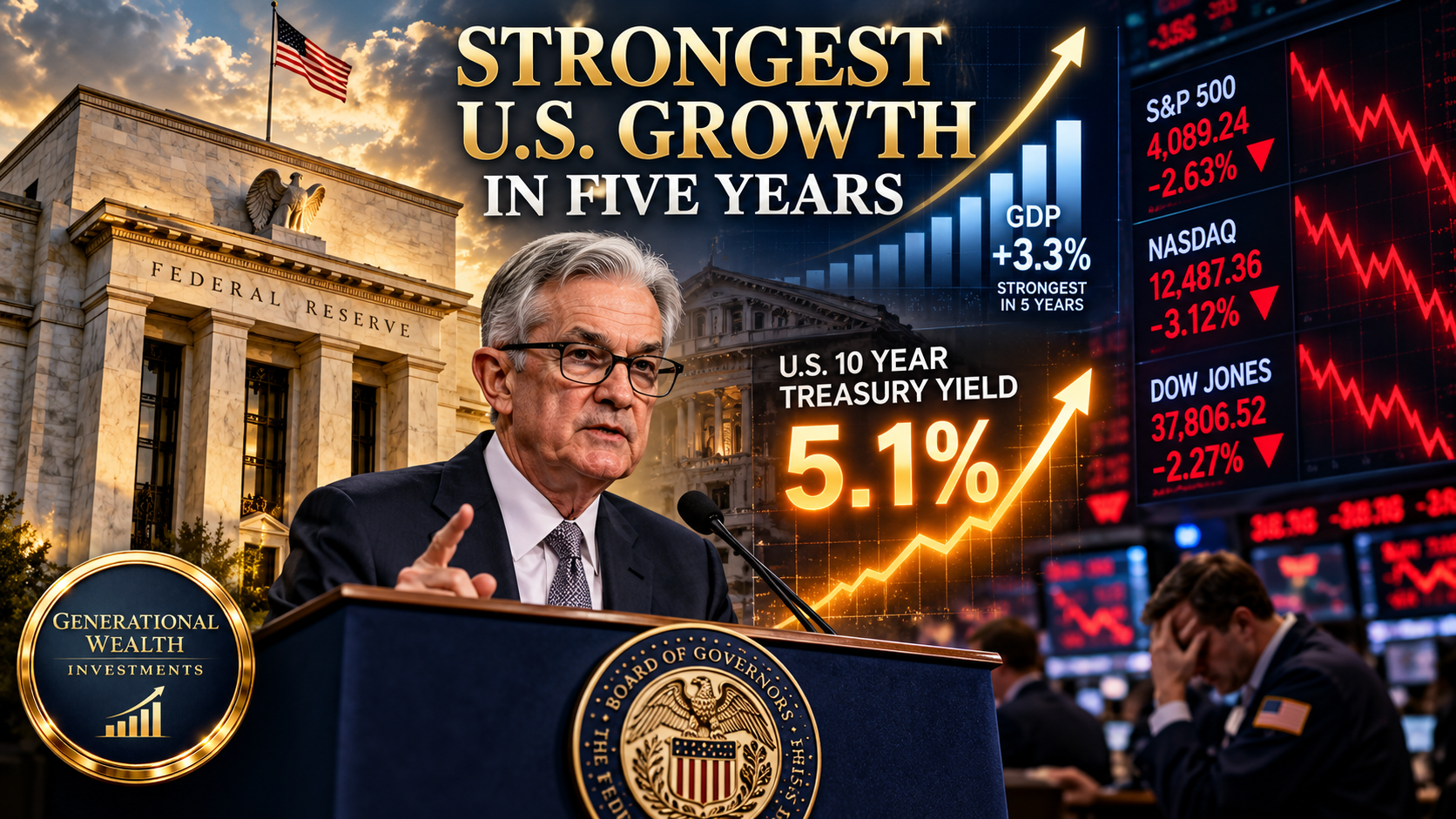
Strong Economy Sends Stocks Lower as Fed Hike Risk Rises
The strongest U.S. growth signal in more than five years sent Treasury yields higher and stocks lower as investors increased expectations for another Federal Reserve rate hike. Now attention turns to the next inflation report and whether it strengthens the case for another move in October.
September 24, 2026
Strongest U.S. Growth Signal in 5 Years Sends Stocks Lower
The economy just delivered its strongest growth signal in more than five years — and Wall Street sold off. U.S. business activity accelerated while business costs climbed at their fastest pace in roughly four years, strengthening the argument for another Federal Reserve rate hike. The question now is whether next week’s inflation data gives the Fed even more reason to tighten.
Watch Today’s Market Breakdown
See why stronger economic growth pushed Treasury yields higher, stocks lower, and expectations for another Federal Reserve rate hike higher.
Today’s Market Setup
Wednesday delivered a reminder that strong economic data is not always immediately bullish for stocks. When growth and inflation pressures rise together, investors also have to consider what that means for interest rates.
Growth Accelerates to a Five-Year High
A key September survey showed U.S. business activity expanding at its strongest pace in more than five years. Normally stronger growth is encouraging, but businesses also reported rapidly rising costs, keeping inflation concerns firmly in the market’s focus.
Treasury Yields Jump
The 10-year Treasury yield finished near 5.1%, its highest level since 2007. Higher Treasury yields can increase borrowing costs throughout the economy and raise the hurdle stocks must clear when investors compare potential returns with bonds.
Another Fed Hike Moves Closer
Traders moved to roughly a 70% probability of another Federal Reserve rate hike in October. The Nasdaq fell more than 1% as investors confronted the possibility that economic strength could keep monetary policy tighter for longer.
What Matters From Here
The market now has to decide whether stronger growth is durable enough to withstand higher borrowing costs — and whether inflation gives the Fed room to stop after its latest increase.
- Does next week’s Federal Reserve inflation gauge reinforce the case for another rate hike in October?
- Can stocks stabilize if the 10-year Treasury yield remains near its highest level since 2007?
- Can strong economic growth continue without creating even more inflation pressure?
The Headlines Are Only the First Step
The free Market Preview explains why unexpectedly strong economic data pushed stocks lower. The members-only Daily Market Brief goes deeper into the rate signals, inflation catalysts, risks and confirmation points worth monitoring as the market evaluates the possibility of another Fed hike.
See What Members GetInside Today’s Members-Only Daily Market Brief
- The interest-rate signals that could strengthen or weaken expectations for another Federal Reserve hike.
- What Treasury yields could reveal about whether tighter financial conditions are becoming a larger problem for stocks.
- The inflation developments that matter most ahead of next week’s key Federal Reserve inflation report.
- What could show whether Wednesday’s stock-market decline was a temporary reaction or part of a broader repricing of interest-rate risk.
Go Beyond the Headlines
The public Market Preview tells you what happened. The Generational Wealth Community is designed for investors who want to understand what deserves attention next, what could confirm the current market setup, what risks could change it and which developments deserve continued monitoring. We don’t chase hype, we decode the market.
Unlock the Daily Market BriefEducational market research designed to help investors understand the setup — not chase headlines.
Your pathway from knowledge to legacy. We don’t chase hype, we decode the market.
Stay Ahead of What Matters Next
Strong growth is usually good news. But when inflation and Treasury yields are rising too, the Federal Reserve can turn that strength into a new challenge for markets.
Join the Generational Wealth Community
Nvidia's $500B AI War Chest as Oil Surges | Aug 11, 2026
Nvidia lined up more than $500 billion from six Wall Street giants for AI data centers, and the stock fell anyway on circular financing concerns. Crude surged roughly 5% as Hormuz talks stalled, the 10-year yield topped 4.7%, and September rate hike odds moved to roughly even ahead of Wednesday's CPI.
Market Preview: Nvidia Lines Up $500 Billion for AI as Oil Surges and Rate Hike Odds Climb
Nvidia announced partnerships with six of the largest firms on Wall Street to mobilize more than $500 billion for AI data centers — and the stock fell anyway. Meanwhile crude jumped roughly 5%, the 10-year Treasury yield pushed above 4.7%, and traders now put roughly even odds on a Federal Reserve rate hike in September. Today's video connects the energy move, the AI financing question, and the rate math heading into Wednesday's inflation print.

Today's Market Snapshot
Crude Jumps as Hormuz Talks Stall
West Texas Intermediate settled up about 5% Monday near $82 a barrel, with Brent near $88, after President Trump demanded Iran pay compensation and talks to reopen the Strait of Hormuz stalled. Both moved higher again this morning, Brent near its highest since late July. Producers and refiners benefit if it holds.
Nvidia's $500 Billion Question
Nvidia announced partnerships with Apollo, BlackRock, Blackstone, Brookfield, Goldman Sachs and KKR to mobilize over $500 billion for AI data centers. Shares still fell roughly 2–3% as investors questioned circular financing, recovering slightly overnight. Intel dropped nearly 4% on a $15 billion dilutive stock offering.
Yields Rise, Stocks Slip
Higher oil lifted inflation expectations and the 10-year Treasury yield climbed above 4.7%, near its highest since January. September hike odds moved to roughly even from about 44% Monday, and Cleveland Fed President Hammack said several increases may be needed. The S&P 500 closed down 0.1% at 7,752.
What Investors Should Be Watching
- Wednesday's consumer price index, now the week's real catalyst after oil and yields reset expectations for the September meeting.
- Whether AI spending confirmation arrives, with CoreWeave reporting today and Applied Materials Thursday — or whether the financing questions around Nvidia's announcement keep pressure on leadership.
- Whether the crude rally holds, and what a sudden deal reopening the Strait of Hormuz would do to the energy trade.
Inside Today's Members-Only Daily Market Brief
- The specific levels and catalysts members are tracking across crude, gold, and rates as the Hormuz standoff drags on.
- Both sides of Wednesday's inflation print, and what each outcome would mean for a September hike now priced near a coin flip.
- Why circular financing is drawing scrutiny, and what would actually confirm or break the AI spending story this week.
- The bitcoin level analysts say shifts sentiment, plus what recent fund flows suggest beneath a heavy tape.
- Where capital is rotating as money moves toward energy and hard assets while AI leadership wobbles.
Go Beyond the Headlines
The public video explains what happened. The Generational Wealth Community helps members understand what matters next, where the risks are, and which developments deserve continued attention.
Unlock the Daily Market Brief