


Samsung Forecasts $80B Profit—Why Did the Stock Fall?
Samsung’s AI-driven memory business is producing extraordinary profits, yet its shares fell about 2.4% anyway. The market’s attention is shifting from whether AI demand is real to whether today’s exceptional memory margins can last through Samsung’s October 29 earnings report.
October 8, 2026
Samsung Forecasts $80B Profit — So Why Did the Stock Fall?
Samsung forecast roughly $80 billion in quarterly operating profit and says third-quarter operating profit reached about 107 trillion won, nearly nine times last year. Revenue more than doubled as memory-chip shortages pushed prices higher, yet Samsung shares still finished down about 2.4%. The tension is clear: AI demand is producing enormous profits, but investors are already asking how long those margins can last.
Watch Today’s Market Breakdown
See why Samsung’s record profit forecast did not lift the stock, how AI-driven memory demand is affecting results and what investors will be watching when full earnings arrive October 29.
Today’s Market Setup
AI demand is no longer showing up only in investment plans and spending forecasts. Samsung’s results show that the boom is producing enormous operating profits — while the market is already looking ahead to whether those economics can persist.
AI Demand Is Showing Up in Profit
Samsung says third-quarter operating profit reached about 107 trillion won, nearly nine times last year and a record for a technology company. Revenue more than doubled as memory-chip shortages pushed prices higher, turning strong AI demand into substantial operating results.
The Stock Still Fell 2.4%
Samsung shares finished down about 2.4% despite the record quarter. Investors are already looking beyond the headline profit number and asking whether today’s elevated memory margins can continue. That forward-looking question is becoming more important than the record itself.
October 29 Is the Next Test
TSMC also reported record quarterly revenue driven by AI demand, reinforcing the strength of the broader AI chip cycle. Samsung’s full earnings arrive October 29, when memory margins and demand for high-bandwidth memory will move into sharper focus.
What Matters From Here
The record profit answers whether AI demand is producing real financial results. The harder questions now concern how durable those economics will be.
- Can Samsung sustain elevated memory margins if the shortages that pushed prices higher begin to change?
- What will the October 29 full earnings report reveal about high-bandwidth-memory demand and the durability of the current profit cycle?
- Does the stock’s 2.4% decline suggest investors now need evidence that record AI-driven profits can continue, rather than simply another record quarter?
The Headlines Are Only the First Step
The free Market Preview explains Samsung’s record profit forecast, the stock’s reaction and the next earnings catalyst. The members-only Daily Market Brief goes deeper into the margins, demand signals, risks and developments worth monitoring as investors evaluate how durable the AI profit cycle may be.
See What Members GetInside Today’s Members-Only Daily Market Brief
- The margin question behind Samsung’s 2.4% decline despite its extraordinary quarterly profit.
- What the October 29 full earnings report could reveal about the durability of Samsung’s memory-chip economics.
- Why high-bandwidth-memory demand is an important signal to monitor as investors evaluate the next phase of AI infrastructure spending.
- How Samsung’s results and TSMC’s record revenue fit into the broader question of whether AI demand is continuing to translate into sustainable corporate profits.
Go Beyond the Headlines
The public Market Preview tells you what happened. The Generational Wealth Community is designed for investors who want to understand what deserves attention next, what could confirm the current setup, what risks could change it and which developments deserve continued monitoring. We don’t chase hype, we decode the market.
Unlock the Daily Market BriefEducational market research designed to help investors understand the setup — not chase headlines.
Your pathway from knowledge to legacy. We don’t chase hype, we decode the market.
Stay Ahead of What Matters Next
AI demand is now showing up in enormous operating results. The next question is whether those margins and high-bandwidth-memory demand can support the story once investors look beyond the headline quarter.
Join the Generational Wealth Community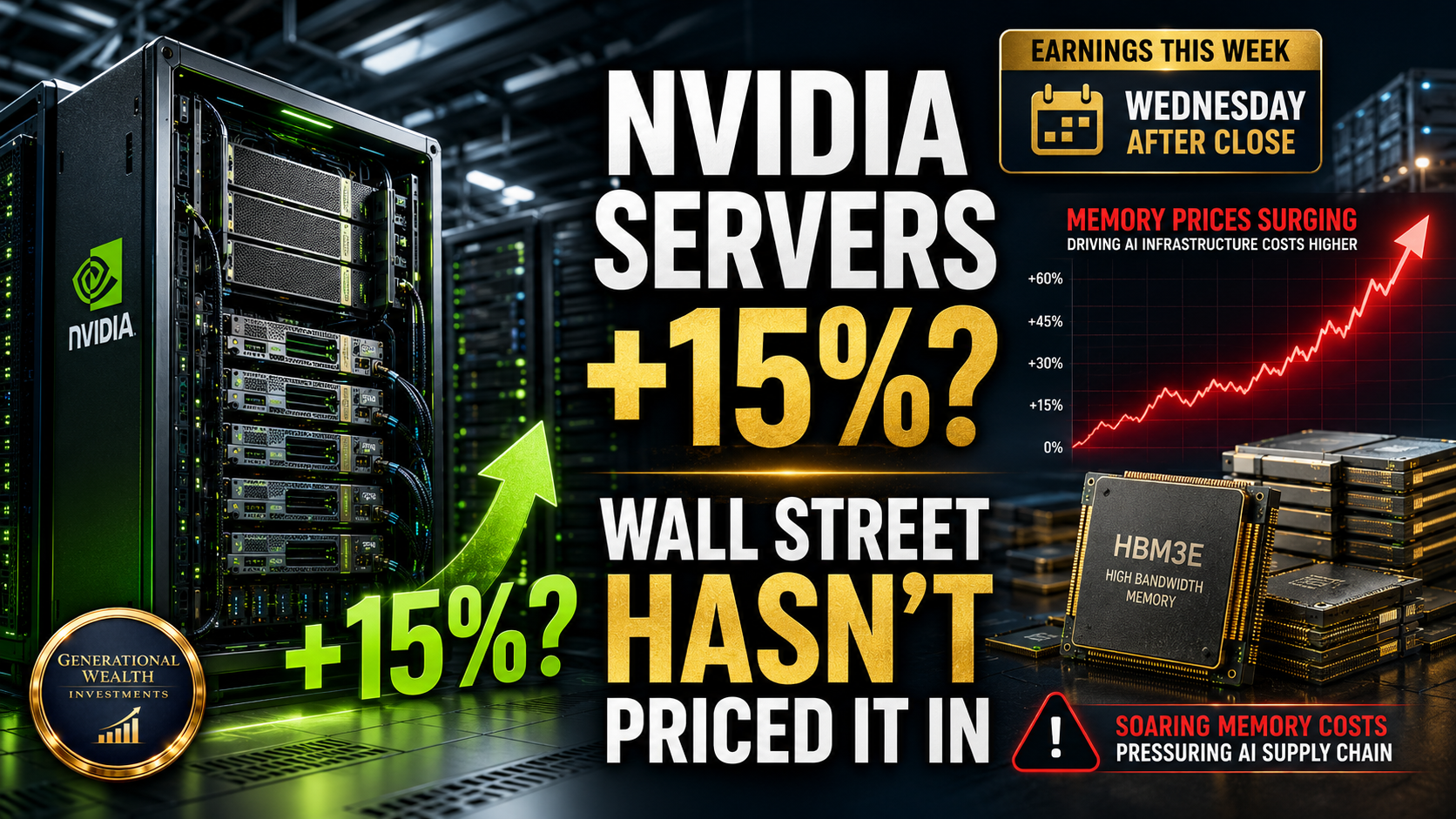
A weekend report says some Nvidia AI server prices could rise more than 15% as soaring memory costs move through the AI infrastructure supply chain. Nvidia shares get their first chance to react Monday, just two days before earnings put margins, pricing power, and data-center spending in focus.
August 23, 2026
Nvidia Server Prices May Jump 15% — Before the Stock Can React
Some Nvidia AI servers may soon cost more than 15% more as memory-chip prices climb, according to a Saturday report that Nvidia had not yet confirmed. Because the news arrived while markets were closed, Nvidia shares have not reacted. Monday brings the first test — followed by an even bigger one when Nvidia reports earnings Wednesday after the closing bell.
Watch Today’s Market Breakdown
See why rising memory costs could affect Nvidia’s AI-server pricing, data-center spending, semiconductor margins, and the market setup heading into earnings.
Today’s Market Setup
The report puts a new variable into the AI trade just days before Nvidia earnings: the cost of building the infrastructure powering the boom may be rising.
Nvidia Server Prices Could Rise Sharply
Bloomberg reported Saturday that some major Nvidia customers were told server prices could rise more than 15% in many cases because memory-chip costs are soaring. Reuters could not independently verify the report, and Nvidia had not commented.
The Pressure Extends Beyond Nvidia
The affected systems reportedly include Vera Rubin and Grace Blackwell platforms shipping early next year. Server builders supplying Microsoft, Google and Oracle have also reportedly warned customers about increases, raising questions about the cost of already enormous AI data-center budgets.
Memory Makers Sit on the Other Side
Higher memory prices could strengthen Samsung, SK Hynix and Micron even as they increase costs elsewhere in the AI supply chain. Nvidia lists memory and component expenses within cost of revenue, putting margins and pricing power directly in focus.
What Matters From Here
The reported price increases are important. The bigger issue is how much of those costs Nvidia can pass through — and whether the market sees them as a margin problem, a pricing-power signal, or both.
- Does Nvidia confirm the reported server-price increases, and how much of the higher memory cost will customers absorb?
- How does Nvidia stock react Monday when investors get their first opportunity to trade on the weekend report?
- What does Wednesday’s fiscal second-quarter report reveal about margins, pricing power, and the cost of the next phase of the AI infrastructure buildout?
The Headlines Are Only the First Step
The free Market Preview explains why rising memory costs could matter for Nvidia and the broader AI trade. The members-only Daily Market Brief goes deeper into the catalysts, risks, confirmation signals, and developments worth monitoring as Nvidia moves from Monday’s market reaction into Wednesday’s earnings report.
See What Members GetInside Today’s Members-Only Daily Market Brief
- What to monitor when Nvidia shares get their first chance to react to the weekend server-pricing report on Monday.
- The signals that could help determine whether higher memory costs are becoming a broader AI-infrastructure issue.
- Why Nvidia’s pricing power and margin commentary will matter when the company reports Wednesday after the closing bell.
- How Micron, Samsung and SK Hynix fit into the other side of the same memory-cost story.
Go Beyond the Headlines
The public Market Preview tells you what happened and why investors are paying attention. The Generational Wealth Community is designed for investors who want to understand what deserves attention next, what could confirm the current market narrative, what risks could change the setup, and which developments deserve continued monitoring. We don’t chase hype, we decode the market.
Unlock the Daily Market BriefEducational market research designed to help investors understand the setup — not chase headlines.
Your pathway from knowledge to legacy. We don’t chase hype, we decode the market.
Stay Ahead of What Matters Next
Follow the catalysts, risks, and confirmation signals that deserve attention as Nvidia, memory-chip costs, AI spending, and Wednesday’s earnings report test the next phase of the AI trade.
Join the Generational Wealth Community