

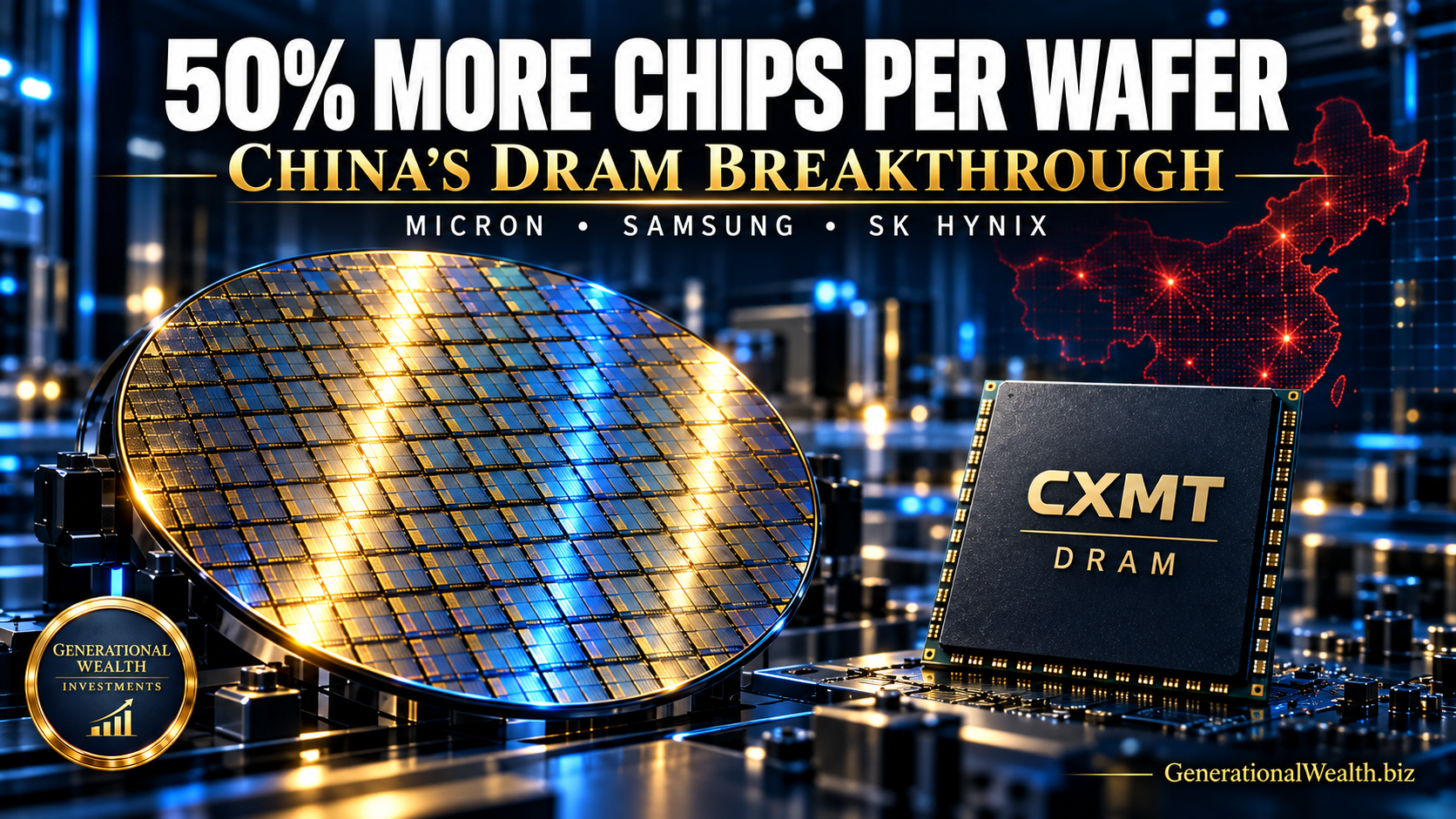
China’s DRAM Breakthrough: 50% More Dies Per Wafer
CXMT says its newest DRAM process can produce at least 50% more gross chip dies per wafer even as China faces restrictions on advanced chipmaking technology. The next test is whether investors see the breakthrough as a meaningful new challenge for Samsung, SK Hynix and Micron when U.S. markets reopen Monday.
September 20, 2026
China’s Chip Breakthrough: 50% More DRAM Per Wafer — Who Gets Hurt?
China’s leading DRAM maker, CXMT, says its new fifth-generation memory-chip platform can produce at least 50% more gross chip dies per wafer than its previous process. The advance arrives despite U.S. export controls restricting access to some advanced chipmaking equipment and software. The bigger question now is how investors reassess the competitive pressure on the global memory-chip industry.
Watch Today’s Market Breakdown
See what CXMT says it achieved, why the manufacturing improvement matters and which major memory-chip companies could now face greater competitive pressure.
Today’s Market Setup
CXMT’s announcement puts manufacturing efficiency, memory capacity and China’s ability to advance under export restrictions back at the center of the semiconductor story.
CXMT Moves Into Mass Production
CXMT says its fifth-generation DRAM process is now in mass production and can deliver at least 50% more gross chip dies per wafer than its previous platform. That makes manufacturing output the central number investors are now evaluating.
Memory Capacity Also Increased
The company also unveiled 24-gigabit LPDDR5X chips that hold 50% more data than its prior comparable products. DRAM is the working memory used across phones, PCs and servers, giving the development relevance across major technology markets.
Global Competition Is Back in Focus
The advance comes despite U.S. export controls restricting China’s access to some advanced chipmaking equipment and software. That could strengthen CXMT’s challenge to established memory producers Samsung, SK Hynix and Micron.
What Matters From Here
The technology announcement is important. The next question is how the market prices its competitive significance when U.S. trading resumes.
- Do memory-chip stocks react Monday when U.S. markets reopen?
- Does CXMT’s higher reported wafer output change how investors view the competitive position of Samsung, SK Hynix and Micron?
- How does this advance affect the market’s view of China’s ability to improve memory-chip production while operating under U.S. export restrictions?
The Headlines Are Only the First Step
The free Market Preview explains what CXMT announced and why investors are paying attention. The members-only Daily Market Brief goes deeper into the catalysts, risks, confirmation signals and market developments worth continuing to monitor as the story moves from a technology announcement to a market reaction.
See What Members GetInside Today’s Members-Only Daily Market Brief
- The memory-chip stock reaction worth monitoring when U.S. markets reopen Monday.
- How the competitive pressure surrounding CXMT, Samsung, SK Hynix and Micron could develop from here.
- The confirmation signals that could show whether investors view CXMT’s manufacturing advance as financially significant.
- Why the export-control backdrop remains an important part of the broader semiconductor setup.
Go Beyond the Headlines
The public Market Preview tells you what happened. The Generational Wealth Community is designed for investors who want to understand what deserves attention next, what could confirm the current setup, what risks could change it and which developments deserve continued monitoring. We don’t chase hype, we decode the market.
Unlock the Daily Market BriefEducational market research designed to help investors understand the setup — not chase headlines.
Your pathway from knowledge to legacy. We don’t chase hype, we decode the market.
Stay Ahead of What Matters Next
The next test comes Monday, when investors get their first chance to respond through U.S.-traded memory-chip stocks.
Join the Generational Wealth Community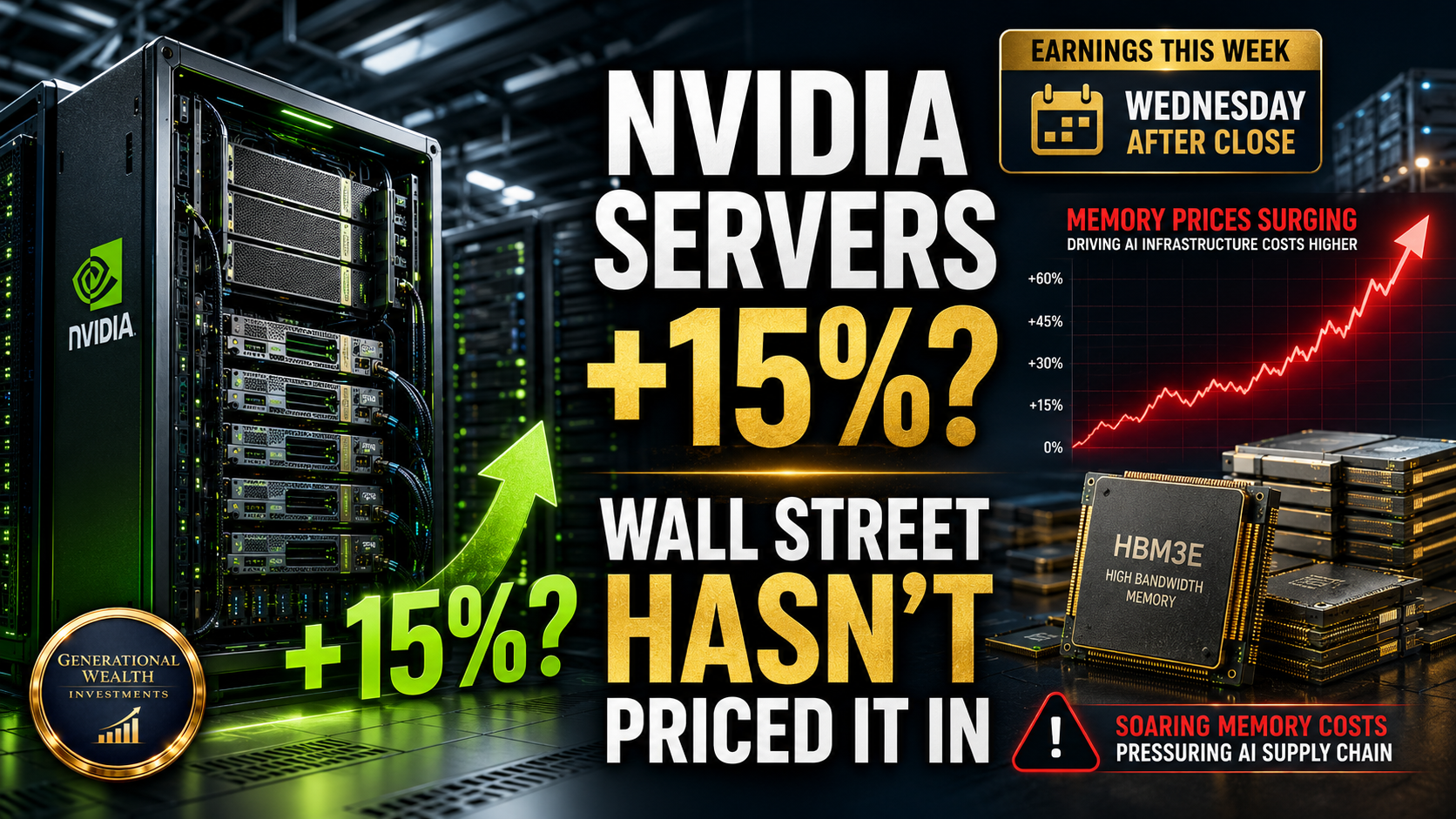
A weekend report says some Nvidia AI server prices could rise more than 15% as soaring memory costs move through the AI infrastructure supply chain. Nvidia shares get their first chance to react Monday, just two days before earnings put margins, pricing power, and data-center spending in focus.
August 23, 2026
Nvidia Server Prices May Jump 15% — Before the Stock Can React
Some Nvidia AI servers may soon cost more than 15% more as memory-chip prices climb, according to a Saturday report that Nvidia had not yet confirmed. Because the news arrived while markets were closed, Nvidia shares have not reacted. Monday brings the first test — followed by an even bigger one when Nvidia reports earnings Wednesday after the closing bell.
Watch Today’s Market Breakdown
See why rising memory costs could affect Nvidia’s AI-server pricing, data-center spending, semiconductor margins, and the market setup heading into earnings.
Today’s Market Setup
The report puts a new variable into the AI trade just days before Nvidia earnings: the cost of building the infrastructure powering the boom may be rising.
Nvidia Server Prices Could Rise Sharply
Bloomberg reported Saturday that some major Nvidia customers were told server prices could rise more than 15% in many cases because memory-chip costs are soaring. Reuters could not independently verify the report, and Nvidia had not commented.
The Pressure Extends Beyond Nvidia
The affected systems reportedly include Vera Rubin and Grace Blackwell platforms shipping early next year. Server builders supplying Microsoft, Google and Oracle have also reportedly warned customers about increases, raising questions about the cost of already enormous AI data-center budgets.
Memory Makers Sit on the Other Side
Higher memory prices could strengthen Samsung, SK Hynix and Micron even as they increase costs elsewhere in the AI supply chain. Nvidia lists memory and component expenses within cost of revenue, putting margins and pricing power directly in focus.
What Matters From Here
The reported price increases are important. The bigger issue is how much of those costs Nvidia can pass through — and whether the market sees them as a margin problem, a pricing-power signal, or both.
- Does Nvidia confirm the reported server-price increases, and how much of the higher memory cost will customers absorb?
- How does Nvidia stock react Monday when investors get their first opportunity to trade on the weekend report?
- What does Wednesday’s fiscal second-quarter report reveal about margins, pricing power, and the cost of the next phase of the AI infrastructure buildout?
The Headlines Are Only the First Step
The free Market Preview explains why rising memory costs could matter for Nvidia and the broader AI trade. The members-only Daily Market Brief goes deeper into the catalysts, risks, confirmation signals, and developments worth monitoring as Nvidia moves from Monday’s market reaction into Wednesday’s earnings report.
See What Members GetInside Today’s Members-Only Daily Market Brief
- What to monitor when Nvidia shares get their first chance to react to the weekend server-pricing report on Monday.
- The signals that could help determine whether higher memory costs are becoming a broader AI-infrastructure issue.
- Why Nvidia’s pricing power and margin commentary will matter when the company reports Wednesday after the closing bell.
- How Micron, Samsung and SK Hynix fit into the other side of the same memory-cost story.
Go Beyond the Headlines
The public Market Preview tells you what happened and why investors are paying attention. The Generational Wealth Community is designed for investors who want to understand what deserves attention next, what could confirm the current market narrative, what risks could change the setup, and which developments deserve continued monitoring. We don’t chase hype, we decode the market.
Unlock the Daily Market BriefEducational market research designed to help investors understand the setup — not chase headlines.
Your pathway from knowledge to legacy. We don’t chase hype, we decode the market.
Stay Ahead of What Matters Next
Follow the catalysts, risks, and confirmation signals that deserve attention as Nvidia, memory-chip costs, AI spending, and Wednesday’s earnings report test the next phase of the AI trade.
Join the Generational Wealth Community