

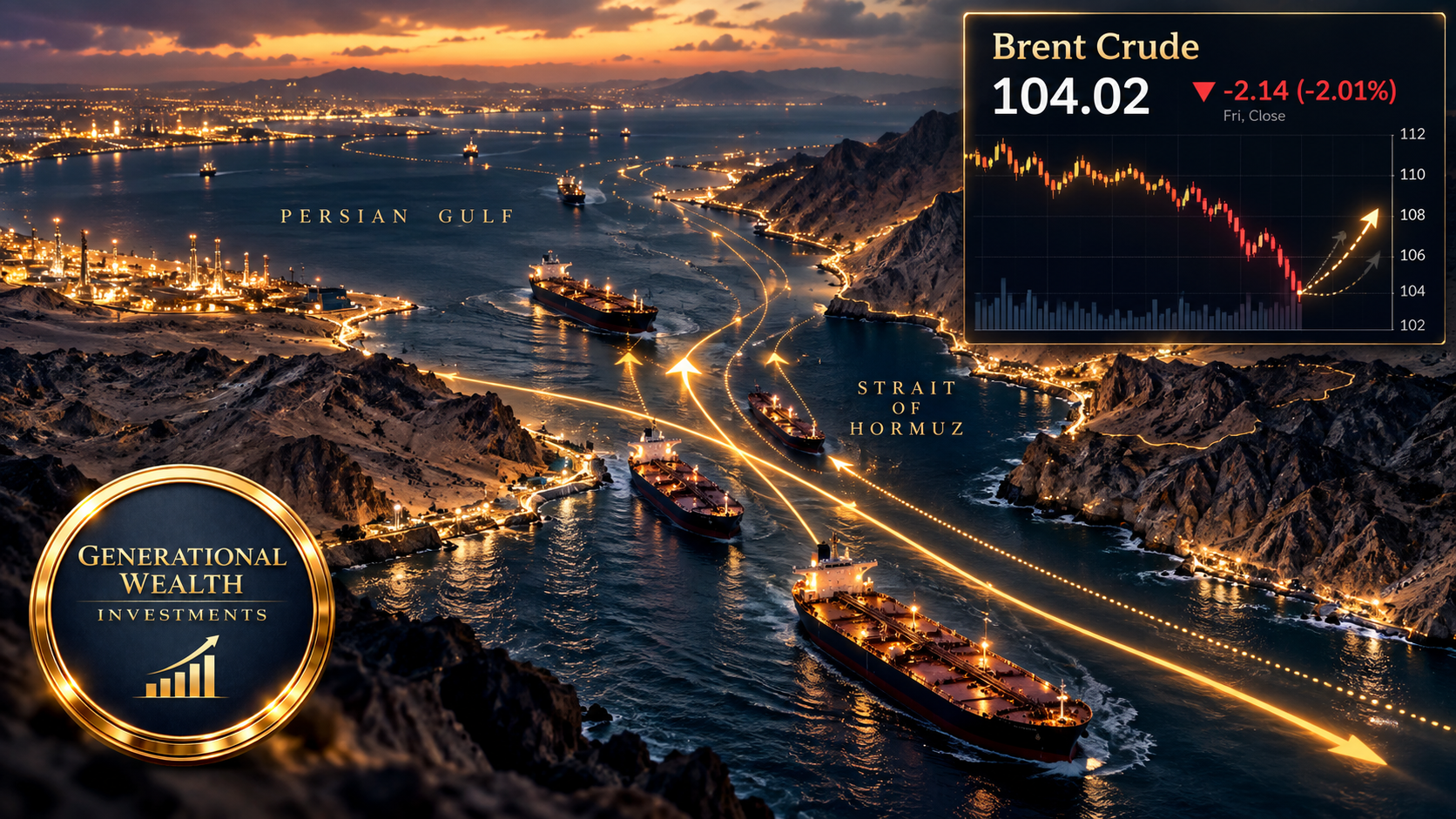
Trump Reportedly Rejects Iran Hormuz Plan: Oil Next?
Brent crude fell more than 2% Friday as traders bet diplomacy could help reopen the Strait of Hormuz. Then a reported rejection of Iran’s proposal changed the weekend setup, putting the first crude trade back in focus.
September 26, 2026
Trump Reportedly Rejects Iran’s Hormuz Plan — What Happens to Oil Now?
Brent crude fell more than 2% Friday as traders focused on a possible diplomatic path toward reopening the Strait of Hormuz. Then the setup changed after markets closed: President Trump reportedly rejected Iran’s proposal, even as Tehran said it was still awaiting an official U.S. response. That puts the focus squarely on oil’s first trade after the weekend.
Watch Today’s Market Breakdown
See why oil fell on diplomacy hopes Friday, what reportedly changed after the close, and why the next crude trade could be important.
Today’s Market Setup
Friday’s oil decline reflected growing attention on diplomacy around the Strait of Hormuz. The question now is whether the developments reported after markets closed change that calculation when crude begins trading again.
Oil Fell on Diplomacy Hopes
Brent crude fell more than 2% Friday and settled near $104 as traders focused on possible U.S.-Iran diplomacy and a potential path toward reopening the Strait of Hormuz.
Iran Put Forward a Seven-Day Path
Iran says its proposal could reopen the Strait of Hormuz and pause regional fighting within seven days. That matters because roughly one-fifth of the world’s oil supply moved through Hormuz before the war.
The Story Changed After the Close
The Wall Street Journal reported that President Trump rejected the proposal. Iran, however, is still waiting for an official U.S. response, leaving the diplomatic outlook — and its potential effect on oil — unresolved.
What Matters From Here
Friday’s crude market reflected optimism around diplomacy. The first test now is whether traders still see a credible path toward reopening Hormuz after the weekend’s developments.
- Does crude reverse higher when trading resumes after the reported rejection of Iran’s proposal?
- Do traders continue pricing in the possibility of diplomacy while Iran waits for an official U.S. response?
- Does the outlook for reopening the Strait of Hormuz improve, weaken or remain unresolved as the next round of diplomatic signals emerges?
The Headlines Are Only the First Step
The free Market Preview explains why crude fell Friday and what changed after markets closed. The members-only Daily Market Brief goes deeper into the catalysts, risks, confirmation signals and developments worth monitoring as markets determine whether the diplomatic setup is actually changing.
See What Members GetInside Today’s Members-Only Daily Market Brief
- The oil-market signals that could show whether Friday’s diplomacy-driven decline is holding or beginning to reverse.
- What to monitor around the Strait of Hormuz as markets evaluate the possibility of reopening the critical shipping route.
- The diplomatic developments that could strengthen or weaken expectations for an agreement between the United States and Iran.
- Why the first crude trade after the weekend could help reveal how markets are interpreting the latest developments.
Go Beyond the Headlines
The public Market Preview tells you what happened. The Generational Wealth Community is designed for investors who want to understand what deserves attention next, what could confirm the current market setup, what risks could change it and which developments deserve continued monitoring. We don’t chase hype, we decode the market.
Unlock the Daily Market BriefEducational market research designed to help investors understand the setup — not chase headlines.
Your pathway from knowledge to legacy. We don’t chase hype, we decode the market.
Stay Ahead of What Matters Next
Friday’s oil decline reflected optimism around diplomacy. Now the next crude trade and the next U.S.-Iran developments will help show whether that market narrative is holding or beginning to change.
Join the Generational Wealth Community
Oil Tops $90 After Hormuz Strike as Hike Odds Hit 57%
Oil moved above $90 after a U.S. strike near the Strait of Hormuz put one of the world’s most important energy routes back in focus. With September rate-hike odds now at 57%, the next question is whether higher energy prices or Friday’s jobs report has the bigger impact on Fed expectations.
August 31, 2026
Oil Blows Past $90 After Hormuz Strike — Rate Hike Odds Jump to 57%
Oil moved above $90 after American forces struck Iranian launchers near the Strait of Hormuz, putting one of the world’s most important energy routes back at the center of the market. The complication is that inflation pressure is already colliding with rising expectations for a September Fed rate increase. Now investors have two major risks to track: energy disruption and Friday’s jobs report.
Watch Today’s Market Breakdown
See why the Hormuz strike pushed oil above $90, how it connects to inflation and rate expectations, and why Friday’s jobs report matters.
Oil Blows Past $90 After Hormuz Strike — Rate Hike Odds Jump to 57% Watch Today’s Market BriefingToday’s Market Setup
The market is dealing with a renewed geopolitical oil shock while interest-rate expectations are already moving in a more restrictive direction.
Hormuz Risk Sends Oil Above $90
American forces struck two Iranian launchers on Larak Island after officials said Revolutionary Guard forces were preparing rockets carrying sea mines into the Strait of Hormuz. Iran then attacked American forces in Jordan. Brent futures climbed about 2% overnight and moved above $90 a barrel.
Oil Adds to the Inflation Problem
Fed Chair Kevin Warsh said Friday that the Fed still has work to do if inflation is not moving clearly toward 2%. Markets raised the implied probability of a September rate increase to 57%, while the two-year Treasury yield is near 4.34% after rising almost 12 basis points Friday.
Friday’s Jobs Report Becomes the Next Test
President Trump said Venezuelan oil from the new American agreement will help refill the Strategic Petroleum Reserve, but additional Venezuelan production requires investment. That leaves the immediate Hormuz risk unresolved while markets wait to see whether Friday’s labor data changes rate-hike expectations.
What Matters From Here
Oil above $90 explains what changed overnight. The more important issue now is how long the pressure lasts and whether it reinforces the Fed’s inflation concerns.
- Does the Strait of Hormuz remain disrupted enough to keep upward pressure on oil, or does the immediate geopolitical risk begin to ease?
- Does higher oil strengthen the inflation argument enough to keep September rate-hike expectations elevated?
- Could a weaker-than-expected jobs report on Friday cool those expectations even if energy prices remain under pressure?
The Headlines Are Only the First Step
The free Market Preview explains why oil, inflation and interest-rate expectations are colliding today. The members-only Daily Market Brief goes deeper into the catalysts, risks, confirmation signals and developments worth monitoring as the Hormuz story and Friday’s jobs report reshape the market setup.
See What Members GetInside Today’s Members-Only Daily Market Brief
- The Hormuz developments that could strengthen or weaken the current oil-supply risk.
- How renewed energy inflation interacts with the market’s 57% September rate-hike probability.
- Why the two-year Treasury yield matters as investors reassess the Fed’s next move.
- What Friday’s jobs report could change about the current interest-rate setup.
- How Venezuela’s longer-term supply story fits against the immediate geopolitical pressure in the Strait of Hormuz.
Go Beyond the Headlines
The public Market Preview tells you what happened and why investors are paying attention. The Generational Wealth Community is built for investors who want to understand what deserves attention next, what could confirm the current setup, what risks could change it, and which developments deserve continued monitoring. We don’t chase hype, we decode the market.
Unlock the Daily Market BriefEducational market research designed to help investors understand the setup — not chase headlines.
Your pathway from knowledge to legacy. We don’t chase hype, we decode the market.
Stay Ahead of What Matters Next
Follow the catalysts that matter as markets weigh renewed Hormuz risk, oil above $90, higher rate-hike expectations and Friday’s jobs report.
Join the Generational Wealth Community
Brent Crude Falls to $86 as Hormuz Talks Lower Yields
Brent crude has dropped more than 6% in two sessions as Iran and Oman discuss a temporary shipping corridor through the Strait of Hormuz. Treasury yields are falling too, but limited vessel traffic and this morning’s PCE inflation report will test whether the relief can hold.
August 26, 2026
Brent Crude Falls to $86 as Hormuz Reopening Talks Begin — Yields Drop Too
Brent crude has fallen more than 6% in two sessions as Iran and Oman discuss a temporary shipping corridor through the Strait of Hormuz and an agreement to clear mines. Oil is now around $86 a barrel, potentially easing a major inflation pressure as Treasury yields fall. But Hormuz is not fully open, and this morning’s PCE inflation report is the next major test.
Watch Today’s Market Breakdown
See why Hormuz reopening talks are moving oil, how falling crude connects to Treasury yields, and why PCE inflation matters next.
Today’s Market Setup
The market is reacting to the possibility that one of the world’s most important oil routes could begin reopening, but the physical shipping data still shows significant disruption.
Brent Crude Drops Toward $86
Brent settled down nearly 4% Tuesday and fell again this morning to around $86 a barrel. Iran and Oman are discussing a temporary shipping corridor through Hormuz, where roughly one-fifth of the world’s traded oil moved before the war.
Treasury Yields Move Lower
Lower oil can reduce a major source of inflation pressure. The 10-year Treasury yield fell about eight basis points Tuesday to roughly 4.63%, while the 30-year declined to around 5.16%. The S&P 500 gained about 0.3% and the Nasdaq rose roughly 0.7%.
Hormuz Is Still Far From Normal
Only five commodity vessels reportedly transited the strait Tuesday, far below recent normal levels. A tanker was also disabled near Hormuz after an unidentified projectile strike. The reopening narrative is developing faster than normal shipping activity has returned.
What Matters From Here
Falling oil and yields have changed the market setup, but the next signals will determine whether that relief is reinforced or challenged.
- Do the Hormuz discussions translate into meaningfully higher vessel traffic through the strait?
- Does this morning’s PCE inflation report reinforce the easing in oil and Treasury yields, or challenge it with a hotter reading?
- Can the stock-market response hold if shipping disruptions remain significant even as crude prices continue falling?
The Headlines Are Only the First Step
The free Market Preview explains why oil, Hormuz and Treasury yields matter today. The members-only Daily Market Brief goes deeper into the catalysts, risks, confirmation signals and developments worth monitoring as investors evaluate whether the current relief is becoming more durable.
See What Members GetInside Today’s Members-Only Daily Market Brief
- The shipping and vessel-flow developments that could confirm or weaken the Hormuz reopening narrative.
- How falling crude, PCE inflation and Treasury yields fit together in the current market setup.
- What continued disruption near the strait could mean for the relief already appearing across oil, bonds and equities.
- The next developments worth monitoring as markets test whether lower inflation pressure can persist.
Go Beyond the Headlines
The public Market Preview tells you what happened and why investors are paying attention. The Generational Wealth Community is designed for investors who want to understand what deserves attention next, what could confirm the current setup, what risks could change it, and which developments deserve continued monitoring. We don’t chase hype, we decode the market.
Unlock the Daily Market BriefEducational market research designed to help investors understand the setup — not chase headlines.
Your pathway from knowledge to legacy. We don’t chase hype, we decode the market.
Stay Ahead of What Matters Next
Follow the catalysts, risks and confirmation signals that matter as markets evaluate falling oil, Hormuz shipping conditions, inflation and Treasury yields.
Join the Generational Wealth Community