

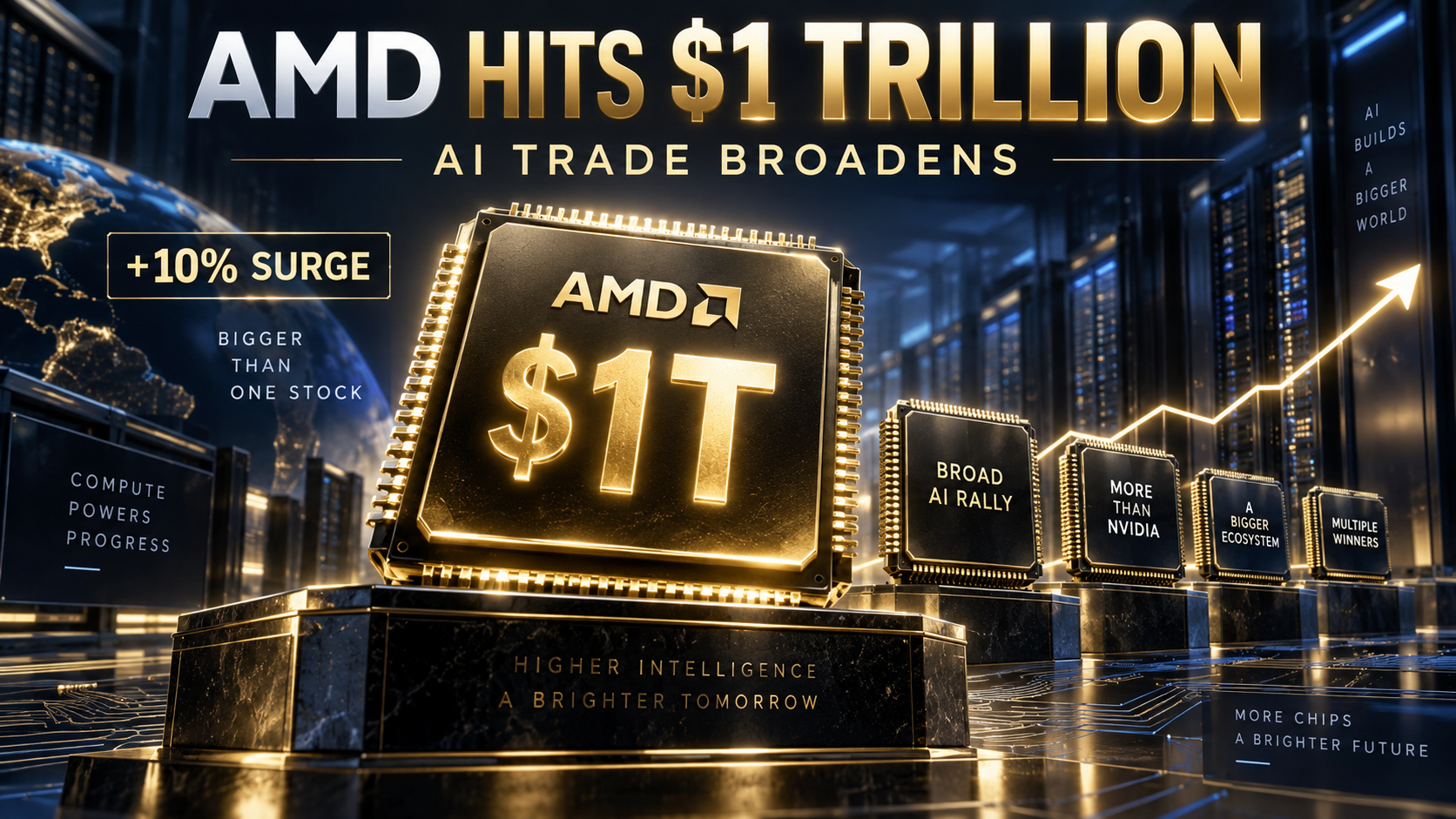
AMD Hits $1 Trillion as AI Rally Broadens Beyond Nvidia
AMD crossed the $1 trillion mark after an approximately 10% one-day surge as semiconductor stocks rallied and the Nasdaq closed at a record. The next test is whether AMD can hold that milestone as investors continue betting on expanding AI spending.
September 22, 2026
AMD Hits $1 Trillion After 10% Surge — Can the AI Rally Hold?
AMD crossed the $1 trillion valuation mark for the first time after shares jumped about 10% Monday. The move came alongside a more than 4% gain in the Philadelphia Semiconductor Index and a record close for the Nasdaq. Investors are betting AI spending is still expanding. The next question is whether AMD can hold its new trillion-dollar milestone when U.S. trading resumes.
Watch Today’s Market Breakdown
See why AMD’s trillion-dollar milestone matters, how the broader chip rally fits into the story and what investors are watching next.
Today’s Market Setup
AMD’s move is bigger than a single-stock milestone. The broader semiconductor rally and record Nasdaq close suggest investors are continuing to position around expanding artificial-intelligence spending.
AMD Joins the $1 Trillion Club
AMD shares jumped about 10% Monday, pushing the company above a $1 trillion valuation for the first time. It became only the fourth U.S. chipmaker to reach that milestone, following Nvidia, Broadcom and Micron.
Chip Strength Is Broader Than AMD
The Philadelphia Semiconductor Index gained more than 4%, while the Nasdaq closed at a record high. That broader strength matters because investors are not treating AMD’s surge as an isolated move.
AMD Is Expanding Its AI Ambition
AMD is moving beyond individual chips toward complete AI systems. That shift puts the company in more direct competition with Nvidia as investors continue betting that artificial-intelligence spending will expand.
What Matters From Here
Crossing $1 trillion is the headline. The more important test now is whether AMD and the broader semiconductor rally can sustain the move.
- Can AMD hold the $1 trillion valuation line after a nearly 10% one-day jump?
- Does strength across the semiconductor index continue when U.S. markets resume trading?
- Does AMD’s move toward complete AI systems continue strengthening its position as a more direct competitor to Nvidia?
The Headlines Are Only the First Step
The free Market Preview explains why AMD’s trillion-dollar milestone matters. The members-only Daily Market Brief goes deeper into the catalysts, risks, confirmation signals and developments worth monitoring as investors decide whether the broader AI-chip move continues.
See What Members GetInside Today’s Members-Only Daily Market Brief
- The signals worth monitoring as AMD tests whether it can hold its new $1 trillion valuation after Monday’s surge.
- Whether continued semiconductor strength confirms that the AI trade is broadening beyond a single market leader.
- How AMD’s move from individual chips toward complete AI systems is changing the competitive setup with Nvidia.
- What the next round of U.S. trading could reveal about whether Monday’s AMD and semiconductor gains have staying power.
Go Beyond the Headlines
The public Market Preview tells you what happened. The Generational Wealth Community is designed for investors who want to understand what deserves attention next, what could confirm the current setup, what risks could change it and which developments deserve continued monitoring. We don’t chase hype, we decode the market.
Unlock the Daily Market BriefEducational market research designed to help investors understand the setup — not chase headlines.
Your pathway from knowledge to legacy. We don’t chase hype, we decode the market.
Stay Ahead of What Matters Next
AMD has reached $1 trillion. Now the test is whether that milestone holds and whether strength across semiconductors continues to support the broader AI story.
Join the Generational Wealth Community
Hormuz Attacks Lift Oil and Gold as Stocks Near Records
Attacks around the Strait of Hormuz are keeping pressure on oil while gold holds near $4,400 and U.S. stocks remain just below record territory. See why markets are staying relatively calm—and what retail earnings and Fed minutes could change this week.
August 16, 2026
Market Preview: Hormuz Attacks Lift Oil and Gold as Stocks Near Records
The Strait of Hormuz is operating near seventeen percent of normal traffic, new attacks have added to the risk around global energy supplies, and yet U.S. stocks finished the week just below a record high. Oil, gold, inflation and interest-rate expectations are telling different parts of the story. Today’s video breaks down why markets remain relatively calm and what could challenge that view this week.
Watch Today’s Market Breakdown
Oil Tankers Under Attack, Gold at $4,400, Stocks Near Record — What Markets Know
Today’s Market Snapshot
Hormuz Risk Is Building
British maritime authorities reported a bulk carrier struck by a projectile Saturday, following three attacks on Abu Dhabi state oil tankers in forty-eight hours. Iran has also not decided whether to return to talks, keeping uncertainty around the world’s most important oil chokepoint elevated.
Markets Are Still Relatively Calm
U.S. stocks closed the week a fraction below a record high while volatility finished at its lowest level of the year. July inflation cooled for a second consecutive month to 3.4%, and traders placed roughly seven-in-ten odds on the Federal Reserve holding rates next month.
Oil and Gold Show the Pressure
U.S. crude settled Friday near $82 while gold held around $4,400 after gaining more than 10% in a month. Bitcoin, near $63,000, has not joined that move. Meanwhile, retail sales fell 0.6% in July and consumer sentiment declined to 51.
What Investors Should Be Watching
- Whether escalating developments around the Strait of Hormuz push energy prices higher or markets continue treating the disruption primarily as a price problem rather than a broader growth problem.
- What Home Depot on Tuesday, Target on Wednesday and Walmart on Thursday reveal about consumer spending after July retail sales declined.
- Whether Wednesday’s Federal Reserve minutes change rate expectations after three officials voted to raise rates at the meeting.
Inside Today’s Members-Only Daily Market Brief
- The market levels and catalysts that matter as stocks remain near record territory.
- The strongest and weakest areas of the market beneath the major indexes.
- The risks that could change the market’s current interpretation of energy and inflation.
- Important developments to monitor as retail earnings and the Fed minutes arrive.
- A clearer explanation of what today’s competing signals may mean for investors.
Go Beyond the Headlines
The public video explains what happened. The Generational Wealth Community helps members understand what matters next, where the risks are, and which developments deserve continued attention.
Unlock the Daily Market BriefYour pathway from knowledge to legacy. We don’t chase hype, we decode the market.
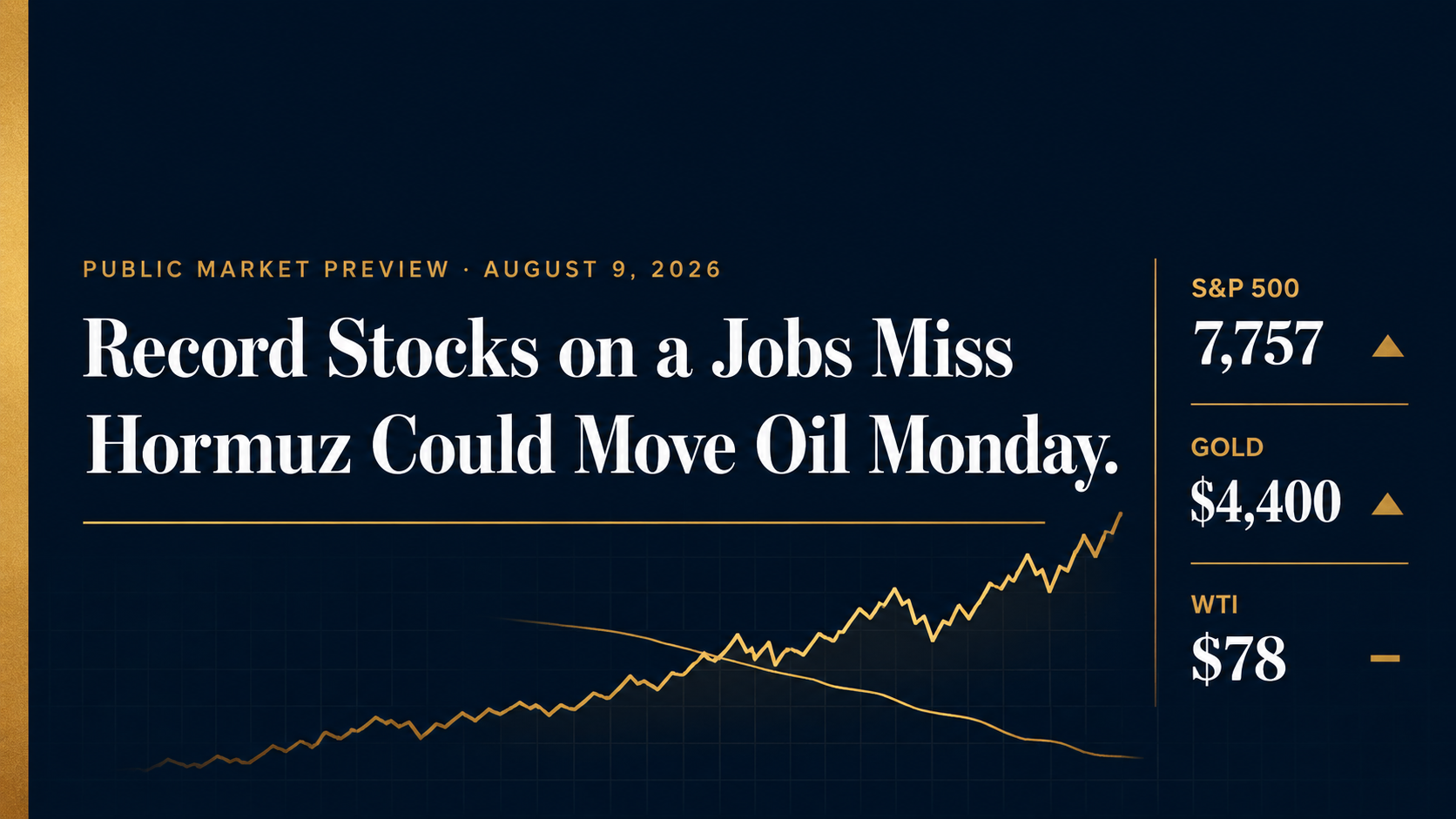
Market Preview: Record Stocks, Jobs Miss, Hormuz Oil Risk
The U.S. economy lost 23,000 jobs in July and the S&P 500 still closed at a record 7,757, as investors read the miss as taking a September rate hike off the table. Today's preview covers the software rotation, gold's seven-week high, and the Strait of Hormuz headlines that could move oil Monday.
Market Preview: Stocks Close at Records on a Jobs Miss as Strait of Hormuz Headlines Could Move Oil Monday
The economy lost jobs in July and equities finished Friday at a record anyway — investors read the miss as taking a September rate hike off the table. That repricing landed hardest in software, where one name closed up roughly 35%. Meanwhile, weekend developments around the Strait of Hormuz set up energy markets for a live Monday. Today's video walks through what connects all three.

Today's Market Snapshot
Jobs Data Resets the Rate Path
July payrolls fell by 23,000 against expectations for a gain near 80,000, while unemployment ticked down to 4.1%. Investors read that as taking a September hike off the table. The S&P 500 closed at a record 7,757, the Nasdaq added 1.3% to 26,690, and the 10-year yield eased to about 4.66%.
Software Leads as Money Rotates
Atlassian closed up roughly 35% after 28% revenue growth and beat guidance. Twilio rose about 27% and Cloudflare about 9%, while Nvidia gained more than 11% on the week. Capital appears to be rotating toward growth and AI names; energy shares lagged even as crude rose.
Oil, Gold, and Crypto Flows
Iran said it is close to a navigation deal with Oman, but its foreign minister warned that alone would not reopen the Strait of Hormuz. WTI settled near $78. December gold settled near $4,400, a seven-week high. Bitcoin held near $64,900 as spot funds took in over $750 million last week.
What Investors Should Be Watching
- Wednesday's July inflation report. A hot print would revive hike talk and challenge the rate math that drove Friday's record close.
- Whether the Hormuz situation moves toward a genuine reopening or a breakdown in talks — one path eases energy costs, the other does the opposite.
- Whether the software and AI rotation broadens, with cloud guidance holding up as the confirmation traders are looking for.
Inside Today's Members-Only Daily Market Brief
- The specific levels and catalysts members are tracking across gold, oil, and the September rate path.
- Both sides of Wednesday's inflation print, plus what to monitor around Cisco, CoreWeave, and Applied Materials earnings.
- Where capital is rotating as money moves out of energy and into growth and AI names — the strongest and weakest areas of the tape.
- What the divergence in crypto fund flows may be signaling, including the collapse in XRP inflows against steady bitcoin demand.
- The risks that could reverse a record week, and why a seven-week high in gold may still read as recovery rather than breakout.
Go Beyond the Headlines
The public video explains what happened. The Generational Wealth Community helps members understand what matters next, where the risks are, and which developments deserve continued attention.
Unlock the Daily Market Brief