

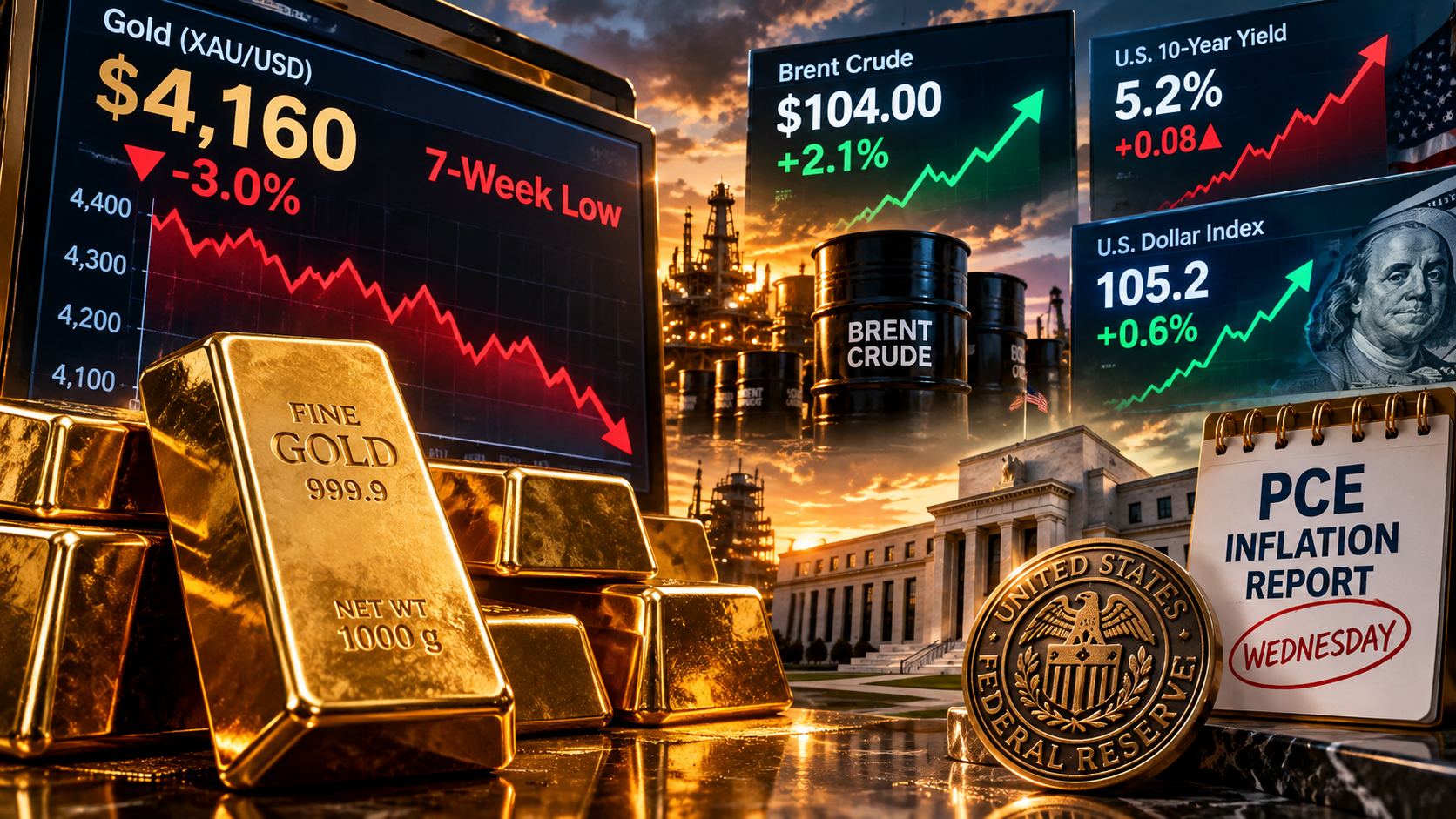
Gold Drops 3% as Oil Surges Ahead of PCE Inflation
Gold dropped 3% to its lowest level in more than seven weeks even as renewed Middle East tension pushed oil higher. The contradiction puts Wednesday’s PCE inflation report, Treasury yields and the dollar at the center of the next move.
September 28, 2026
Gold Drops 3% to a 7-Week Low as Oil Surges: Why the Safe Haven Failed
Gold fell about 3% to around $4,160, its lowest level in more than seven weeks, even as renewed Middle East tension pushed oil higher. The unusual move shows investors are focusing less on gold’s traditional safe-haven role and more on inflation, Treasury yields and interest rates. Wednesday’s PCE inflation report is now the next major test.
Watch Today’s Market Breakdown
See why gold fell despite renewed geopolitical tension, how oil and interest rates are reshaping the setup, and why Wednesday’s PCE report could determine what comes next.
Today’s Market Setup
Gold’s decline is notable because renewed geopolitical stress would normally be expected to support safe-haven demand. Instead, rising oil, Treasury yields and the dollar are keeping inflation and interest-rate risk at the center of the market conversation.
Gold Fell to a 7-Week Low
Spot gold dropped about 3% to around $4,160, its lowest level in more than seven weeks. The decline came despite renewed Middle East tension, showing that traditional safe-haven demand is being outweighed, at least for now, by other macro pressures.
Oil Put Inflation Back in Focus
Brent crude rebounded more than 2%, keeping energy-driven inflation pressure in focus. Higher oil prices matter beyond the energy market because persistent inflation could reinforce expectations that interest rates need to remain higher.
Rates and the Dollar Are Pressuring Gold
Treasury yields and the U.S. dollar are both higher, creating two important headwinds for gold. Markets now price about a 70% chance of another Federal Reserve rate hike in October, making Wednesday’s inflation data especially important.
What Matters From Here
The key question is whether the forces pressuring gold continue after Wednesday’s PCE inflation report — or whether the current setup begins to shift.
- Does Wednesday’s PCE report keep inflation concerns strong enough to reinforce expectations for another Fed rate hike?
- Do Treasury yields and the dollar remain elevated, extending the pressure on gold?
- If geopolitical tension remains high, does safe-haven demand begin to reassert itself, or do inflation and interest-rate concerns continue to dominate the gold market?
The Headlines Are Only the First Step
The free Market Preview explains why gold fell while oil rose and why Wednesday’s inflation report matters. The members-only Daily Market Brief goes deeper into the catalysts, risks, confirmation signals and market relationships worth monitoring as investors reassess inflation, interest rates and the gold setup.
See What Members GetInside Today’s Members-Only Daily Market Brief
- The signals that could show whether gold’s current weakness is continuing or beginning to stabilize.
- How oil-driven inflation pressure, Treasury yields and the dollar are interacting with the gold market.
- Why Wednesday’s PCE report could strengthen or weaken expectations for another Federal Reserve rate hike.
- What to monitor next as investors decide whether geopolitical risk or interest-rate pressure becomes the stronger force for gold.
Go Beyond the Headlines
The public Market Preview tells you what happened. The Generational Wealth Community is designed for investors who want to understand what deserves attention next, what could confirm the current market setup, what risks could change it and which developments deserve continued monitoring. We don’t chase hype, we decode the market.
Unlock the Daily Market BriefEducational market research designed to help investors understand the setup — not chase headlines.
Your pathway from knowledge to legacy. We don’t chase hype, we decode the market.
Stay Ahead of What Matters Next
Gold’s 3% decline shows that geopolitical tension is not the only force driving safe-haven markets. Wednesday’s PCE report will provide the next major test for inflation expectations, rates and the gold setup.
Join the Generational Wealth Community
Oil Jumps 5% as 10-Year Yield Hits 4.81% and Gold Falls
Oil surged as renewed fighting near the Strait of Hormuz pushed energy prices higher while the 10-year Treasury yield reached about 4.81%. Gold’s decline reveals the bigger market tension as investors weigh geopolitical risk against higher yields, a stronger dollar and the next test from U.S. labor data.
September 2, 2026
Oil Jumps 5% as Treasury Yields Hit 4.81% — So Why Is Gold Falling?
Oil surged after renewed U.S.-Iran fighting near the Strait of Hormuz, pushing Brent to $94.65 Tuesday and briefly near $97 overnight. At the same time, the 10-year Treasury yield reached about 4.81%, its highest since 2023. Yet gold moved the opposite direction, falling to a more than three-week low as higher yields and a stronger dollar outweighed safe-haven demand. Now labor data could test the entire setup.
Watch Today’s Market Breakdown
See how the Hormuz oil shock is feeding into inflation expectations, Treasury yields, stock valuations and gold ahead of the ADP employment report.
Today’s Market Setup
The market is dealing with one connected chain of pressure: geopolitical risk is lifting oil, higher oil is keeping inflation concerns alive, and rising rate expectations are pushing Treasury yields higher.
Oil Surges on Hormuz Risk
Brent settled Tuesday at $94.65, up 4.6%, while WTI gained 5.2%. Brent then briefly touched $97 overnight before easing near $95. Renewed U.S.-Iran fighting near Hormuz is keeping supply risk at the center of the inflation outlook.
Treasury Yields Reach New Highs
The 10-year Treasury yield reached about 4.81%, its highest since 2023, while the 2-year climbed near 4.41%. Higher energy costs can keep inflation elevated, strengthening the market’s focus on whether the Federal Reserve may need to raise rates again.
Gold Breaks the Safe-Haven Pattern
Spot gold fell near $4,324, a more than three-week low, despite the geopolitical tension. Higher Treasury yields and a stronger dollar outweighed safe-haven demand, showing why geopolitical risk alone has not been enough to push gold higher.
What Matters From Here
Oil, rates, stocks and gold are now reacting to the same inflation question. The next test is whether incoming labor data reinforces the higher-rate narrative or begins to challenge it.
- Does the ADP private-payrolls report strengthen the case for another Federal Reserve rate hike, or complicate the market’s current expectations?
- Can oil remain near current levels if fighting around the Strait of Hormuz continues to threaten supply?
- Will higher Treasury yields and a stronger dollar continue to outweigh safe-haven demand for gold?
The Headlines Are Only the First Step
The free Market Preview explains why oil, Treasury yields, stocks and gold are moving the way they are. The members-only Daily Market Brief goes deeper into the catalysts, risks, confirmation signals and developments worth monitoring as the market determines whether this inflation-and-rates pressure continues.
See What Members GetInside Today’s Members-Only Daily Market Brief
- The developments that could confirm whether the current oil-driven inflation pressure is continuing or beginning to ease.
- How the ADP employment report fits into the market’s changing expectations for Federal Reserve policy.
- The Treasury-yield signals worth following as the 10-year trades around its highest level since 2023.
- What gold’s weakness may reveal about the competition between safe-haven demand, higher yields and a stronger dollar.
- The next developments that could change the relationship between energy prices, interest rates and stock valuations.
Go Beyond the Headlines
The public Market Preview tells you what happened and why investors are paying attention. The Generational Wealth Community is designed for investors who want to understand what deserves attention next, what could confirm the current market setup, what risks could change it and which developments deserve continued monitoring. We don’t chase hype, we decode the market.
Unlock the Daily Market BriefEducational market research designed to help investors understand the setup — not chase headlines.
Your pathway from knowledge to legacy. We don’t chase hype, we decode the market.
Stay Ahead of What Matters Next
Follow the catalysts that matter as markets weigh oil near $95, Treasury yields around 4.81%, gold weakness and the next test from U.S. labor data.
Join the Generational Wealth Community
Rate-Hike Odds Hit 66% as Oil Hits $92 and Yields Rise
Rate-hike odds have climbed to 66% as oil trades near $92 and the 10-year Treasury yield reaches its highest level since January 2025. With gold falling and major employment reports approaching, the next question is whether labor data confirms the market’s latest repricing or challenges it.
September 1, 2026
Rate-Hike Odds Jump to 66% as Oil Hits $92 and Treasury Yields Rise
Rate-hike expectations climbed to 66% as oil moved near $92 and the 10-year Treasury yield reached about 4.78%, its highest level since January 2025. Gold is falling at the same time, showing how rising yields are reshaping the inflation trade. Now the market turns to labor data to determine whether this repricing has more room to run.
Watch Today’s Market Breakdown
See how higher oil, rising Treasury yields and shrinking rate-cut expectations are converging ahead of this week’s critical labor data.
Rate-Hike Odds Jump to 66% — Oil $92, Yields 4.78%, Gold Falling Watch Today’s Market BriefingToday’s Market Setup
The market is repricing around three connected pressures: higher energy costs, higher Treasury yields and growing expectations that the Federal Reserve may need to remain restrictive.
Rate-Hike Odds Reach 66%
The implied probability of a rate increase climbed to 66%, extending the repricing that followed Fed Chair Kevin Warsh’s hawkish message Friday. The 10-year Treasury yield is around 4.78%, its highest since January 2025, reinforcing the signal coming from interest-rate markets.
Oil Near $92 Keeps Inflation in Focus
Oil is near $92 after renewed U.S.-Iran fighting revived supply concerns around the Strait of Hormuz. The Strategic Petroleum Reserve also fell to 286.6 million barrels last week, its lowest level since November 1982, leaving a smaller emergency cushion as crude rises.
Higher Yields Pressure Gold
Spot gold fell about 1.2% to around $4,394 even as inflation concerns remain elevated. Higher Treasury yields increase the opportunity cost of holding non-yielding bullion, creating a market where inflation fears and rising interest rates are pulling gold in opposite directions.
What Matters From Here
Oil, yields and rate expectations are all moving in the same direction. The next question is whether incoming labor data reinforces that alignment or begins to challenge it.
- Does Wednesday’s ADP employment report reinforce the market’s higher-rate expectations before the more important Friday jobs report?
- Can oil remain near current levels if supply concerns around the Strait of Hormuz persist?
- Does Friday’s August jobs report strengthen the case behind the 66% rate-hike probability, or force markets to reconsider the current repricing?
The Headlines Are Only the First Step
The free Market Preview explains why oil, Treasury yields and rate-hike expectations are moving together. The members-only Daily Market Brief goes deeper into the catalysts, risks, confirmation signals and developments worth monitoring as labor data tests the market’s current assumptions.
See What Members GetInside Today’s Members-Only Daily Market Brief
- The developments that could reinforce or challenge the market’s current 66% rate-hike probability.
- How labor-market data fits into the Fed repricing now taking place across Treasury yields.
- The oil-supply risks worth monitoring as crude trades near $92 and the Strategic Petroleum Reserve sits at a multi-decade low.
- What gold’s decline may reveal about the balance between inflation concerns and rising real returns available elsewhere.
- The next catalysts that could confirm whether today’s higher-oil, higher-yield setup continues or begins to change.
Go Beyond the Headlines
The public Market Preview tells you what happened and why investors are paying attention. The Generational Wealth Community is built for investors who want to understand what deserves attention next, what could confirm the current setup, what risks could change it and which developments deserve continued monitoring. We don’t chase hype, we decode the market.
Unlock the Daily Market BriefEducational market research designed to help investors understand the setup — not chase headlines.
Your pathway from knowledge to legacy. We don’t chase hype, we decode the market.
Stay Ahead of What Matters Next
Follow the catalysts that matter as markets weigh oil near $92, Treasury yields around 4.78%, higher rate-hike expectations and this week’s employment reports.
Join the Generational Wealth Community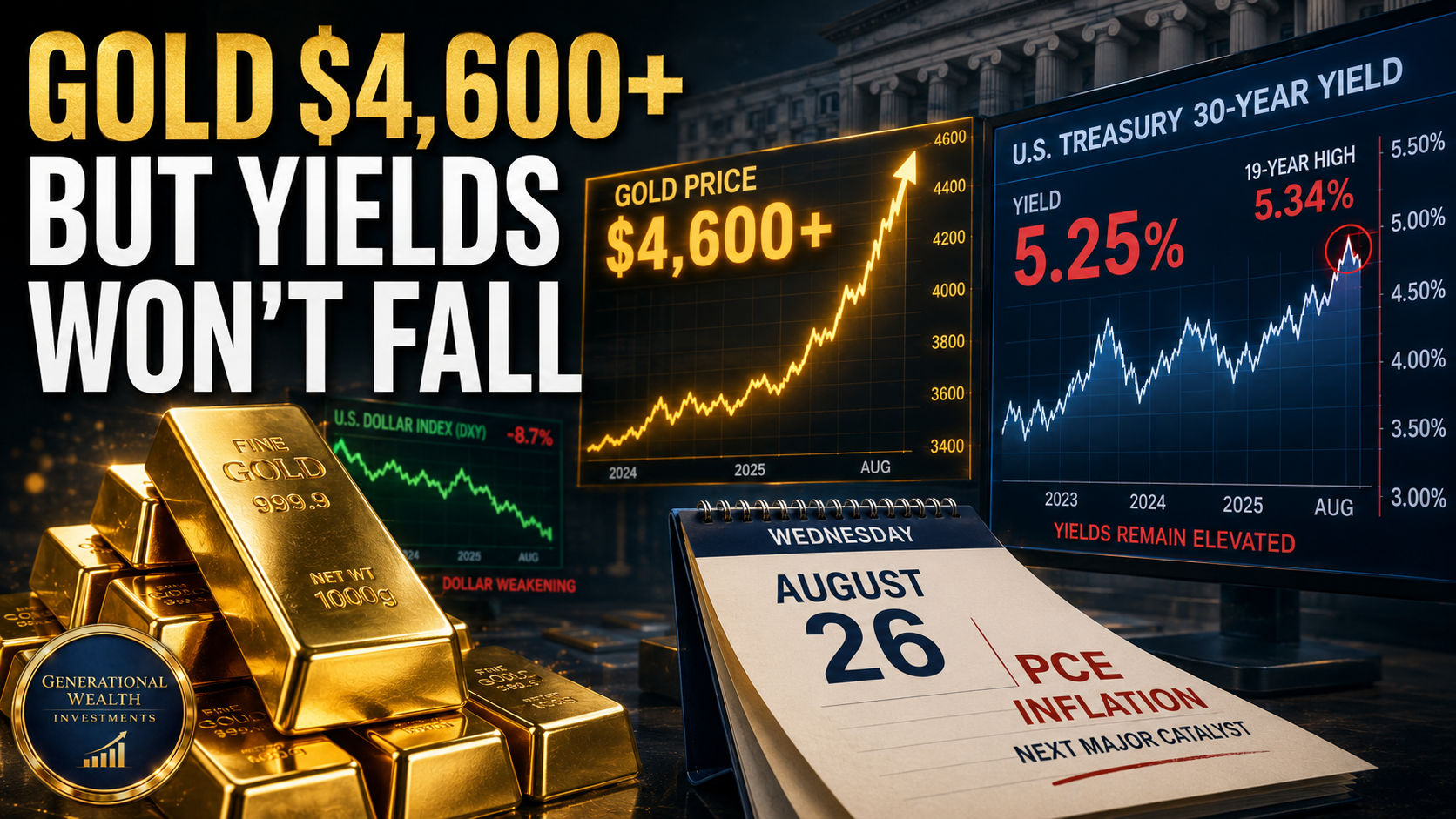
Gold Tops $4,600 as Treasury Yields Stay Near 19-Year Highs
Gold has climbed above $4,600 even as long-term Treasury yields remain near levels not seen in almost two decades. The next test is Wednesday’s July PCE inflation report—and whether rates, the dollar and oil begin confirming gold’s move or pushing against it.
August 24, 2026
Gold Pushes Above $4,600 While Treasury Yields Stay Near 19-Year Highs
Gold pushed above $4,600 Monday, with spot gold trading around $4,635 even as the 30-year Treasury yield remained near 5.25%. Elevated yields normally pressure an asset that pays no interest, making the combination unusually important. A weak dollar is helping the setup, but Wednesday’s July PCE inflation report could determine whether rate pressure returns or the rally gains stronger confirmation.
Watch Today’s Market Breakdown
See why gold is rising despite elevated Treasury yields, how Bitcoin and oil fit into the same macro picture, and why Wednesday’s inflation report is the next major test.
Today’s Market Setup
Gold is sending a strong signal, but the bond market has not fully relaxed. That tension makes rates, the dollar, oil and Wednesday’s inflation data more important than the headline gold price alone.
Gold Is Defying High Yields
Spot gold traded around $4,635 Monday, its highest since May 15, while the 30-year Treasury yield remained near 5.25% and close to its recent 5.34% peak. High yields normally increase the opportunity cost of holding gold, making the simultaneous strength notable.
The Dollar and Bitcoin Add Context
The dollar remains near multi-month lows after the Treasury said it would at least double long-dated bond buybacks to $4 billion per operation. Gold gained more than 5% last week, while Bitcoin is holding above $77,000 after gaining more than 21%.
Oil Keeps Inflation Risk Alive
Brent crude is down about 1.6% near $93 as traders await new U.S. sanctions on Iran. Lower oil helps ease immediate inflation pressure, but another spike could push inflation concerns and Treasury yields back into focus ahead of Wednesday’s July PCE report.
What Matters From Here
Gold clearing $4,600 explains what happened. The next question is whether the forces underneath the move begin confirming it or start working against it.
- Can gold hold its strength if the 30-year Treasury yield remains near 5.25% or moves back toward its recent peak?
- Does Wednesday’s July PCE inflation report ease rate pressure, or give the bond market another reason to keep yields elevated?
- Could another oil spike revive inflation concerns even if the dollar remains weak?
The Headlines Are Only the First Step
The free Market Preview explains why gold, Treasury yields, Bitcoin and oil are sending an unusual combination of signals. The members-only Daily Market Brief goes deeper into the catalysts, risks, confirmation signals and developments worth monitoring as markets approach Wednesday’s inflation report.
See What Members GetInside Today’s Members-Only Daily Market Brief
- The yield and dollar signals that could strengthen or weaken the case behind gold’s current move.
- How Bitcoin holding above $77,000 fits into the broader cross-asset market message.
- Why Brent crude and the next U.S. sanctions on Iran matter for the inflation and interest-rate setup.
- What to monitor around Wednesday’s July PCE report as markets test whether inflation pressure is becoming more or less important.
Go Beyond the Headlines
The public Market Preview tells you what moved and why investors are paying attention. The Generational Wealth Community is designed for investors who want to understand what deserves attention next, what could confirm the current setup, what risks could change it, and which developments deserve continued monitoring. We don’t chase hype, we decode the market.
Unlock the Daily Market BriefEducational market research designed to help investors understand the setup — not chase headlines.
Your pathway from knowledge to legacy. We don’t chase hype, we decode the market.
Stay Ahead of What Matters Next
Follow the catalysts, risks and confirmation signals that deserve attention as gold, Treasury yields, oil and Wednesday’s inflation report test the current market setup.
Join the Generational Wealth Community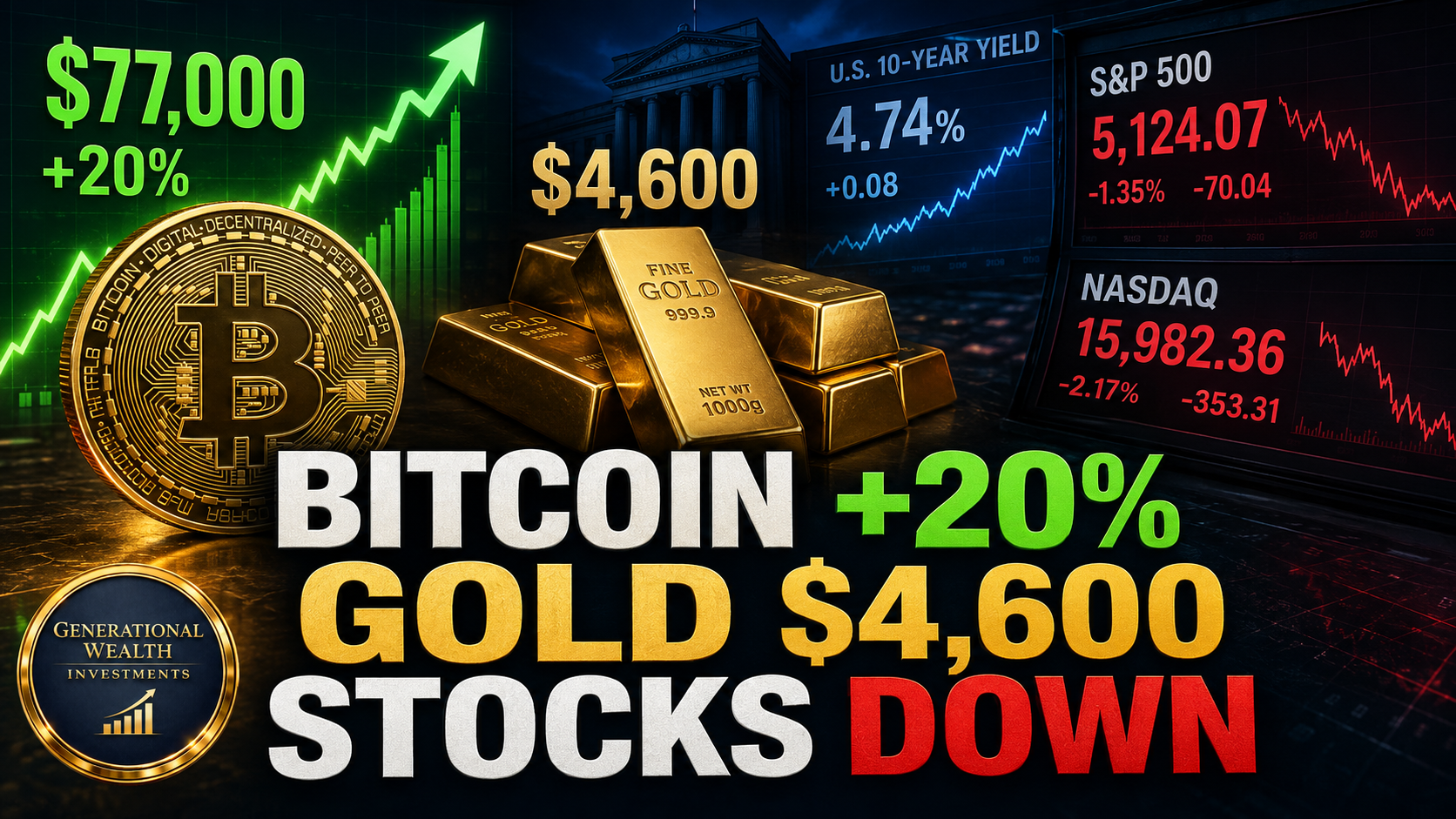
Bitcoin +20%, Gold $4,600 as Stocks Break the Pattern
Bitcoin gained more than 20% and gold pushed above $4,600 after the Treasury announced larger long-term debt buybacks — but stocks finished the week lower and Treasury yields climbed back up. Wednesday’s inflation report and Nvidia earnings now provide the next major test of a market pattern that suddenly stopped behaving normally.
August 22, 2026
Bitcoin +20%, Gold $4,600 — But Stocks Broke the Pattern
Bitcoin ended the week near $77,000 after gaining more than 20%, while gold futures settled above $4,600. Both strengthened after the Treasury announced plans to at least double its long-term debt buybacks. But stocks did not follow — and the 10-year Treasury yield is already back near 4.74%. Now the question is whether this unusual split can hold through Wednesday’s inflation report and Nvidia earnings.
Watch Today’s Market Breakdown
See why Treasury buybacks helped ignite Bitcoin and gold, why stocks moved the other way, and what could challenge the trade next.
Today’s Market Setup
Treasury policy triggered a powerful move in Bitcoin and gold, but weakness in stocks and another rise in long-term yields created a market setup that is anything but straightforward.
Treasury Buybacks Ignited Bitcoin
The Treasury said it would at least double how much long-term government debt it buys back. Traders read the added cash as easier financial conditions. Bitcoin reached nearly $80,000 before ending the week near $77,000, up more than 20% for its biggest weekly gain in over two years.
Gold Joined the Move
Gold futures settled Friday above $4,600 an ounce, reaching a three-month high and completing a fifth consecutive weekly gain. Its strength alongside Bitcoin shows that the Treasury announcement affected more than crypto, even as equities moved differently.
Stocks and Yields Broke the Pattern
The S&P 500 still finished the week down about 1.5%, while the Nasdaq lost roughly 2%. More importantly, the 10-year Treasury yield closed Friday near 4.74% — higher than before the buyback announcement and a potential challenge to the liquidity-driven move.
What Matters From Here
Bitcoin and gold delivered the headline move. The next step is determining whether the forces behind that strength are being confirmed or beginning to reverse.
- Can Bitcoin and gold maintain their strength if the 10-year Treasury yield remains near 4.74% or continues rising?
- Does Wednesday’s July inflation report reinforce the market’s easier-money interpretation — or challenge it?
- Can Nvidia earnings help stocks reconnect with the strength in Bitcoin and gold, or does the market divergence continue?
The Headlines Are Only the First Step
The free Market Preview explains why Bitcoin and gold surged while stocks lagged. The members-only Daily Market Brief goes deeper into the levels, catalysts, risks, confirmation signals, and market developments worth monitoring as Treasury yields, inflation data, and Nvidia earnings test the current setup.
See What Members GetInside Today’s Members-Only Daily Market Brief
- What to monitor in the 10-year Treasury yield after it returned to roughly 4.74% despite the Treasury buyback announcement.
- The signals that could help confirm whether Bitcoin’s more than 20% weekly advance is holding or beginning to unwind.
- How Wednesday’s July inflation report could strengthen or challenge the current market setup.
- Why Nvidia earnings on the same day could matter for the disconnect between stronger Bitcoin and gold and weaker equities.
Go Beyond the Headlines
The public Market Preview tells you what happened and why investors are paying attention. The Generational Wealth Community is designed for investors who want to understand what deserves attention next, what could confirm the current move, what risks could change the setup, and which developments deserve continued monitoring. We don’t chase hype, we decode the market.
Unlock the Daily Market BriefEducational market research designed to help investors understand the setup — not chase headlines.
Your pathway from knowledge to legacy. We don’t chase hype, we decode the market.
Stay Ahead of What Matters Next
Follow the catalysts, risks, and confirmation signals that deserve attention as Treasury yields, inflation, Nvidia, Bitcoin, gold, and stocks test this unusual market split.
Join the Generational Wealth Community
Walmart Falls 9% as High Gas Prices Squeeze Shoppers
Walmart beat earnings and raised guidance, but its 9% plunge exposed a bigger concern: shoppers are pulling back as high gas prices pressure household budgets. With Brent near $94, Treasury yields rising, and a major Iran policy announcement coming Monday, the consumer is becoming one of the market’s most important signals.
August 21, 2026
Walmart Beat Earnings and Fell 9% — The Consumer Just Broke
Walmart beat earnings and raised its guidance, yet the stock fell 9% in its worst day in years. The problem was not profit — it was the shopper. U.S. store sales grew just 2.6% versus the 3.7% Wall Street expected, and Walmart said high gas prices are forcing customers to make trade-offs. Now oil and Monday’s Iran announcement could determine whether that pressure gets worse.
Watch Today’s Market Breakdown
See why Walmart’s earnings beat was not enough, how oil and rising yields are tightening the consumer squeeze, and why Monday’s Iran plan matters next.
Today’s Market Setup
Walmart turned a strong-looking earnings headline into a warning about household budgets, while oil and interest rates added pressure across the broader market.
Walmart Exposed the Consumer Pressure
Walmart beat earnings and raised guidance, but the stock dropped 9%. U.S. store sales grew 2.6% versus the 3.7% Wall Street expected, the slowest pace since 2020. The company said shoppers are making trade-offs because gas prices are high.
Oil and Yields Tightened the Squeeze
Brent crude settled near $94 a barrel Thursday, up more than 2%, after the Treasury Secretary vowed the toughest sanctions ever on Iran. Treasury yields also climbed. The Dow fell more than 700 points, while the S&P 500 and Nasdaq each lost about 1%.
Bitcoin and Gold Moved Their Own Way
Not everything followed stocks lower. Bitcoin is near $77,000, its highest level since May, and is heading for its best week in more than two years. Gold held above $4,500 an ounce as investors head into Monday’s next major catalyst.
What Matters From Here
Walmart showed where consumer pressure is appearing. The bigger question now is whether Monday’s policy announcement strengthens or eases the forces behind it.
- What does Monday’s full Iran plan mean for crude oil and the gas-price pressure Walmart says is affecting shoppers?
- Do higher fuel costs and rising Treasury yields create additional pressure on consumers and the broader stock market?
- Can Bitcoin near $77,000 and gold above $4,500 maintain their strength if yields continue climbing?
The Headlines Are Only the First Step
The free Market Preview explains why Walmart’s earnings beat turned into a 9% selloff and how oil, rates, and consumer pressure connect. The members-only Daily Market Brief goes deeper into the catalysts, risks, confirmation signals, and developments worth monitoring as Monday’s Iran plan approaches.
See What Members GetInside Today’s Members-Only Daily Market Brief
- What to monitor in Monday’s Iran announcement and how the next developments could affect the oil and fuel-price story.
- The consumer signals behind Walmart’s 2.6% U.S. sales growth and why the gap versus expectations matters beyond one retailer.
- How rising Treasury yields and higher fuel costs interact with the inflation pressure already affecting household budgets.
- The developments that could help confirm or challenge the strength in Bitcoin near $77,000 and gold above $4,500.
Go Beyond the Headlines
The public Market Preview tells you what happened and why investors are paying attention. The Generational Wealth Community is designed for investors who want to understand what deserves attention next, what could confirm the current market move, what risks could change the setup, and which developments deserve continued monitoring. We don’t chase hype, we decode the market.
Unlock the Daily Market BriefEducational market research designed to help investors understand the setup — not chase headlines.
Your pathway from knowledge to legacy. We don’t chase hype, we decode the market.
Stay Ahead of What Matters Next
Follow the catalysts, risks, and market signals that deserve continued attention as oil, Treasury yields, consumer spending, Bitcoin, and gold reshape the market setup.
Join the Generational Wealth Community