



Three Chokepoints, Zero Backup: Why One Tanker Strike Just Repriced the Entire Oil Market
A ship was hit in the Strait of Hormuz overnight — but the tanker isn't the story. It landed while Saudi Arabia's East-West pipeline, carrying 4 to 5 million barrels a day, sits shut after drone strikes, and Houthi forces tighten their grip on the Red Sea exit. Three chokepoints, one system, no spare route. Here's what that means for oil, for record diesel prices, and for Wednesday's Fed decision.

Oil Hits $99 After Saudi Strike — But Gold Fell. That Divergence Is the Real Story
Oil hit $99 after Iran-backed Houthi forces struck Saudi energy facilities, with Brent up 2% and WTI up more than 3% to $94.41. But gold fell on the same session — and that divergence is the real signal. Here's what it says about the Fed, why this week's CPI and PPI prints can't answer the question everyone's asking, and the three scenarios into the September 15-16 meeting.

U.S. Strikes 3 Iranian Oil Tankers: Why Oil Reopens Sunday Night Carrying the Entire Market
The United States struck 3 Iranian oil tankers on Saturday, including one off Kharg Island — Iran's primary crude export terminal. Brent had already closed Friday at $96.28 after a 7.6% weekly gain, with WTI near $91.48 and gasoline averaging roughly $4.15 into a record Labor Day weekend. Now OPEC+ meets Sunday, oil futures reopen Sunday evening, and U.S. equity markets stay closed Monday — giving crude roughly 36 hours to reprice inflation and interest rate expectations with no stock market to argue with it. Here's the full transmission chain from tanker to equity multiple, what separates a risk premium from a real supply disruption, and the falsification test to write down before futures reopen.

Jobs Crushed Expectations and Stocks Fell Anyway: Why 162,000 Jobs Just Raised September Rate Hike Odds
The August jobs report was a blowout: 162,000 jobs added against a 56,000 forecast, with unemployment steady at 4.1%. Stocks fell anyway. The reason isn't complicated once you see it — this report didn't change the economy, it changed the Fed's constraint. Here's the mechanism, why the 2-year Treasury moved before equities did, how oil at $91.48 opens a second inflation channel, and what Thursday's PPI and Friday's CPI will actually decide.

Oil Inventories Jump 17.4 Million Barrels — and the Fed's Next Move Might Be a Hike
U.S. crude inventories posted their biggest weekly build in 3.5 years — 17.4 million barrels against forecasts calling for a drawdown — and oil still closed higher. The reason is a shipping constraint, not a demand collapse, and it runs straight through energy inflation to a Fed that may be closer to hiking than cutting.

Nvidia Lines Up $500 Billion for AI — and the Stock Fell Anyway
Nvidia assembled a $500 billion AI war chest with Apollo, BlackRock, Blackstone, Brookfield, Goldman Sachs and KKR — and the stock fell anyway. Crude surged 5% to $82 on stalled Strait of Hormuz talks, driving the 10-year above 4.7% and flipping September Fed odds toward a hike. Bitcoin failed at $65,000 for a fourth straight day while gold pushed to $4,357. Here's the one variable driving all of it — and why Wednesday's CPI decides what happens next.
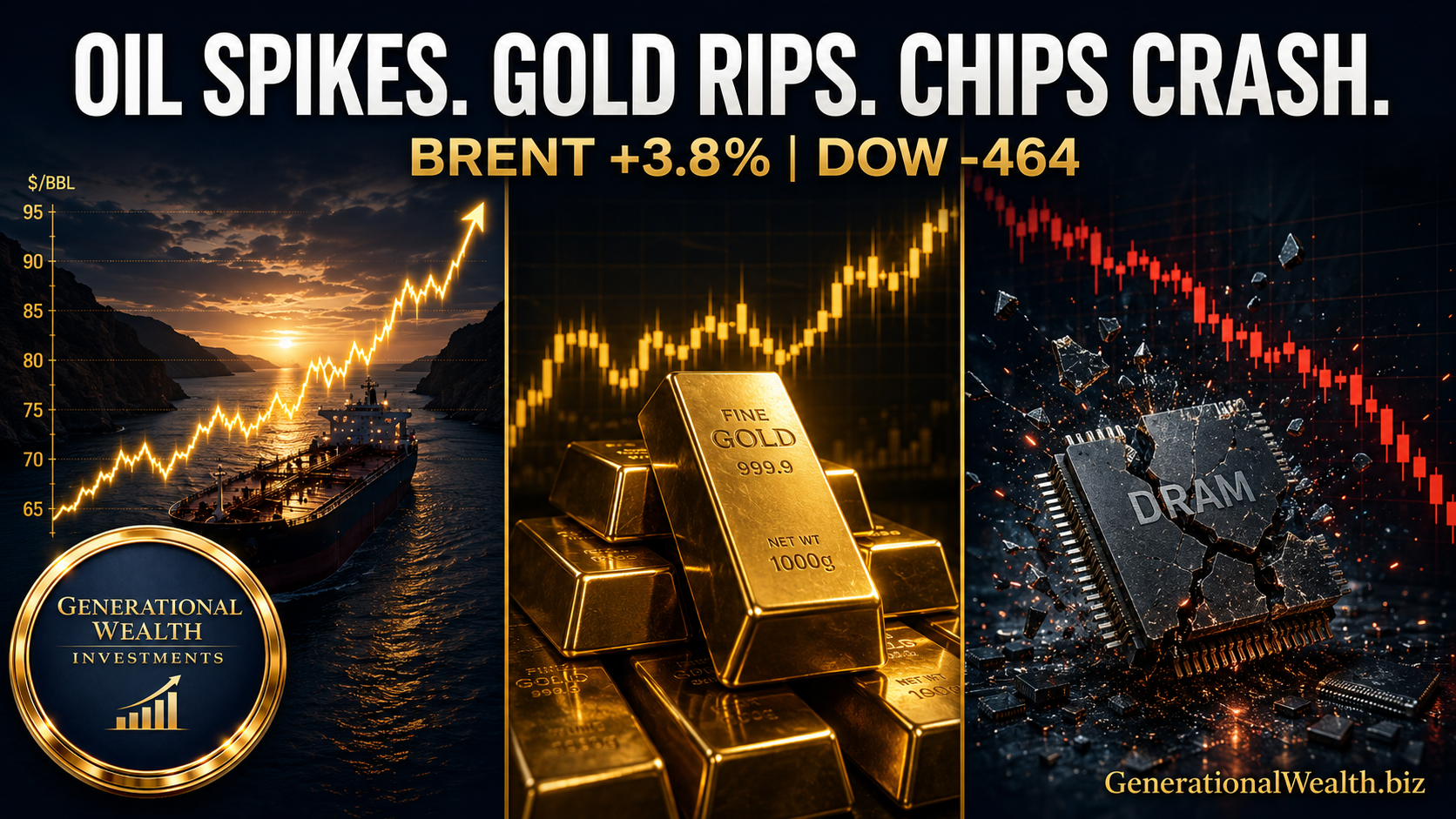
Oil Jumps 3.8% on Strait of Hormuz Document, Yields Spike to 4.67%, and Memory Chips Crater Despite Blowout Profits
A single Iranian document restricting Strait of Hormuz traffic sent Brent crude up 3.8%, lifted the 10-year Treasury yield to 4.67%, and ended the Dow's record streak with a 464-point drop. Meanwhile, gold is on pace for its best week since January and Western Digital fell 13% despite 44% revenue growth. Here's how the chain reaction unfolded — and why the July jobs report decides what happens next.
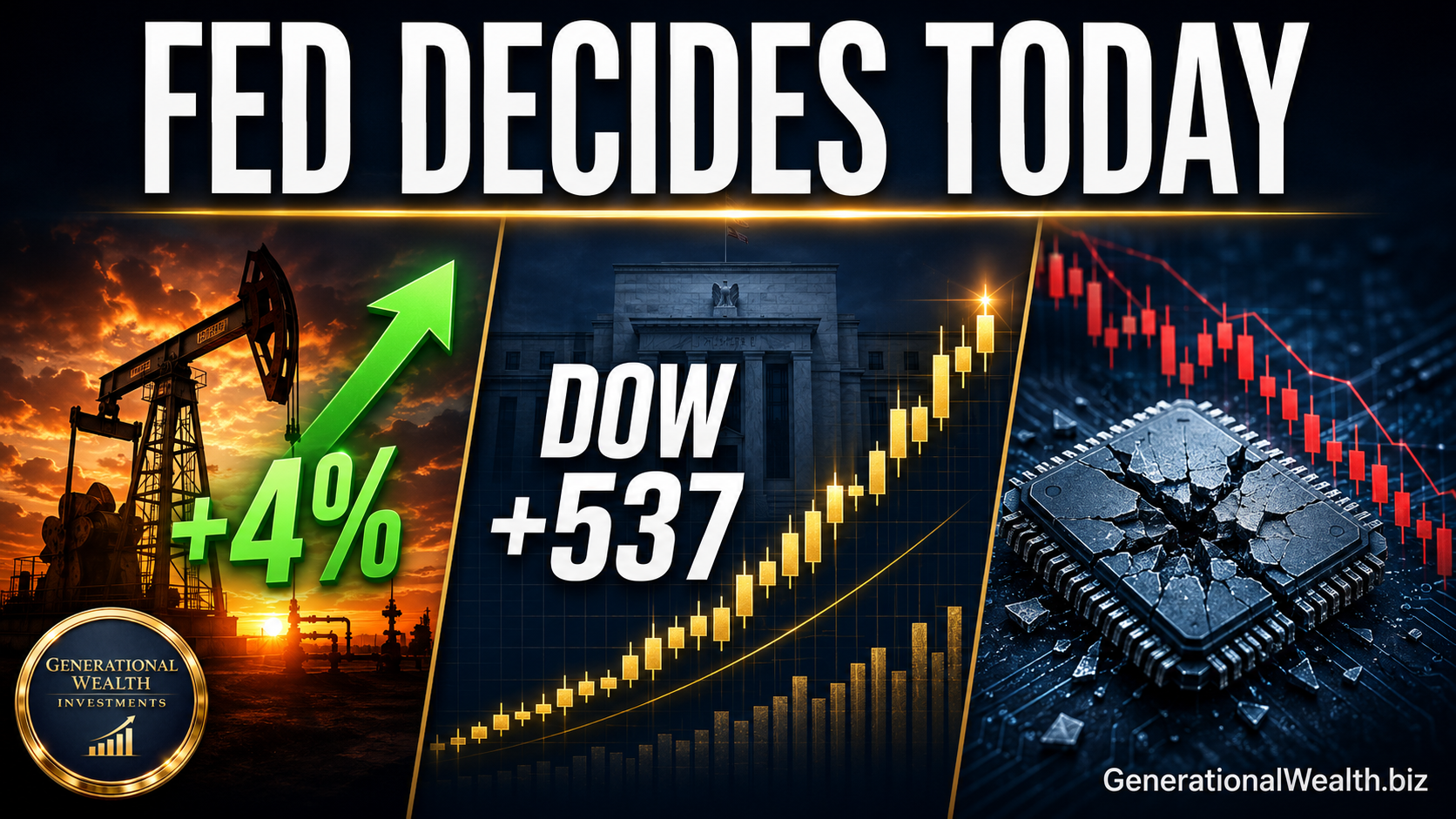
Oil Spikes on Iran Strike, Dow Rips 537 Points, and the Fed Delivers a Coin-Flip Decision Today
Three storylines are pulling this market in three directions at once. Oil spiked on Middle East escalation, the Dow ripped 537 points higher while chip stocks got crushed for a fourth straight session, and the Fed delivers a decision today that's genuinely too close to call. Here's what happened and what to watch before the close.