


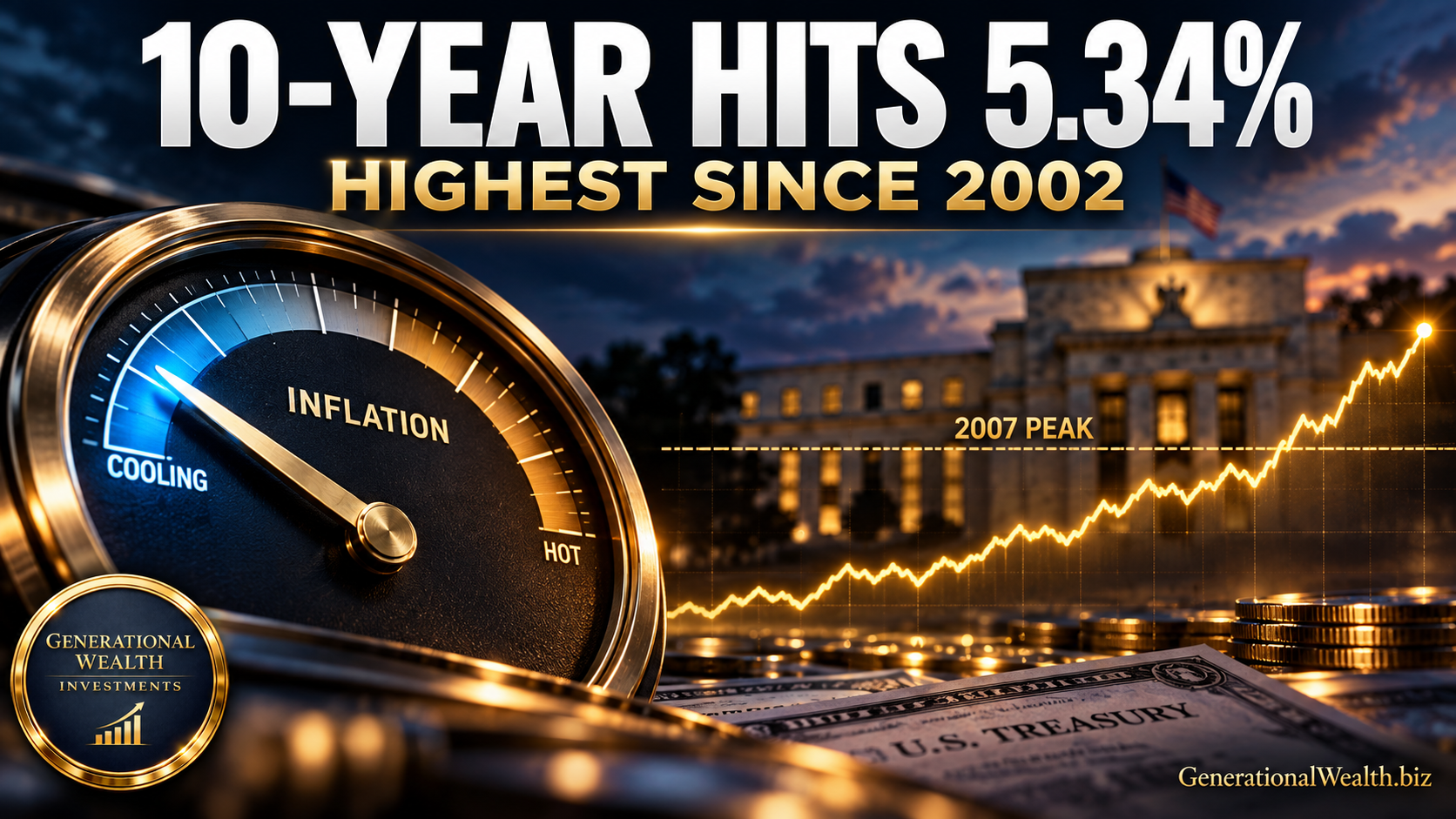
The 10-Year Treasury Yield Just Hit a 24-Year High — and a Softer Inflation Report Couldn't Stop It
The 10-year Treasury yield just broke its 2007 peak and hit its highest level in 24 years — the morning after inflation came in cooler than expected. When good news can't bring long-term rates down, the bond market is sending a message. Here's what's really driving yields, how it hits your mortgage and portfolio, and the 3 jobs-report scenarios that could decide what happens next.

Gold Drops 3% as Oil Surges: Why the Fed, Not Fear, Is Driving Gold Right Now
Gold just dropped 3% on the same day oil spiked on Middle East tension, and that's not how safe havens are supposed to behave. The reason comes down to yields, the dollar, and a 70% chance of another Fed hike. With Wednesday's PCE report approaching, here's what could flip gold's story next.

Three Chokepoints, Zero Backup: Why One Tanker Strike Just Repriced the Entire Oil Market
A ship was hit in the Strait of Hormuz overnight — but the tanker isn't the story. It landed while Saudi Arabia's East-West pipeline, carrying 4 to 5 million barrels a day, sits shut after drone strikes, and Houthi forces tighten their grip on the Red Sea exit. Three chokepoints, one system, no spare route. Here's what that means for oil, for record diesel prices, and for Wednesday's Fed decision.

Brent Crude Falls 6% in 2 Sessions: Why the Hormuz Rally Is a Shipping Trade, Not a Fed Trade
Brent crude has fallen more than 6% in two sessions, Treasury yields dropped, and stocks closed green — but nothing about Fed policy changed. Every one of those moves traces back to a single waterway. Here's the mechanism connecting the Strait of Hormuz to the 10-year yield, the PCE trap waiting this morning, and the 4 data points that will confirm or break this rally.
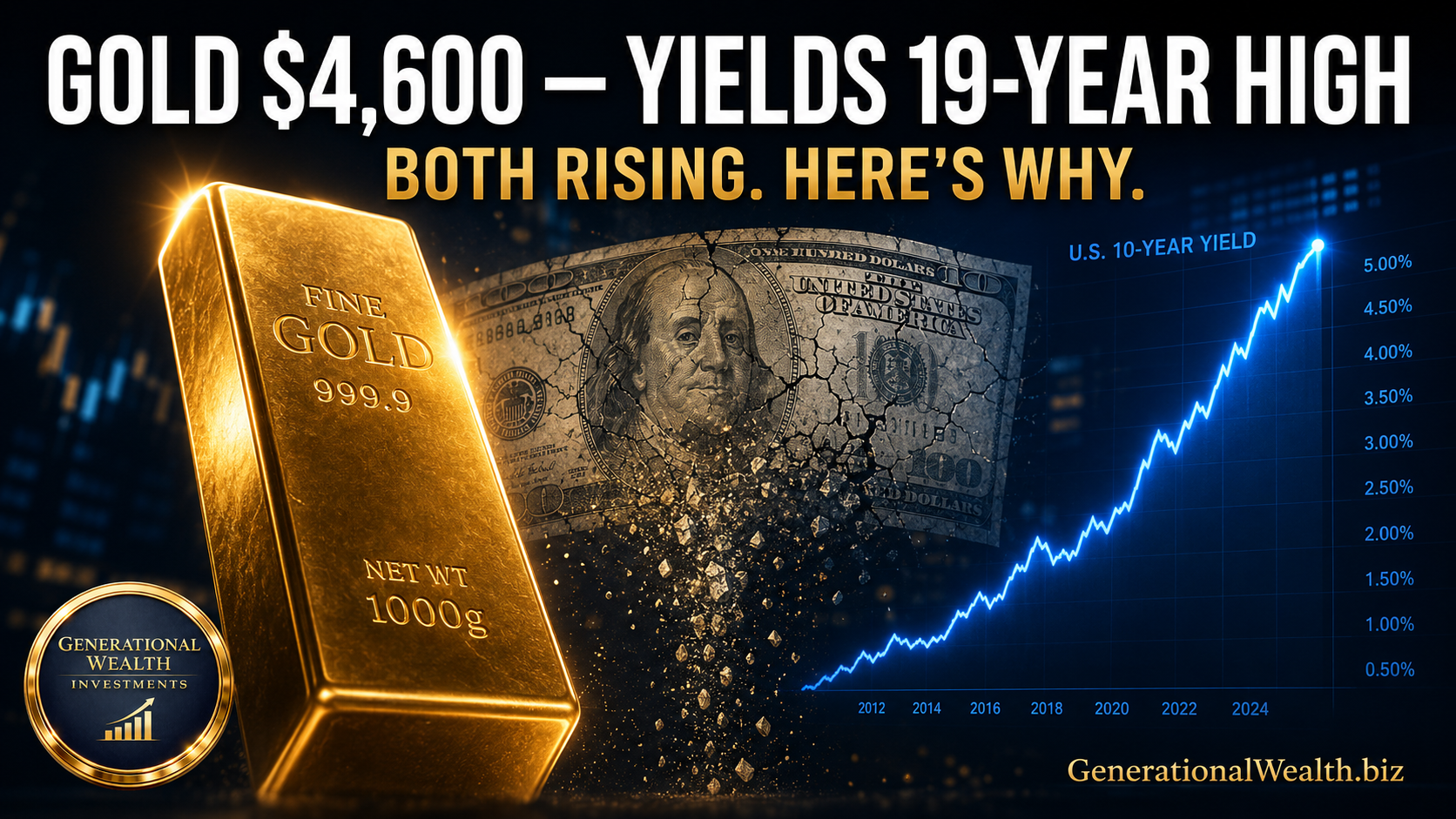
Gold Tops $4,600 While Treasury Yields Sit Near 19-Year Highs — Here's What That Contradiction Is Really Telling Us
Gold pushed above $4,600 this week while the 30-year Treasury yield stayed pinned near 5.25% — a combination that isn't supposed to happen. High yields normally punish a non-yielding metal. But with the dollar near multi-month lows, the Treasury doubling long-dated buybacks to $4 billion per operation, and Bitcoin up more than 21% on the week, the market may be pricing something other than interest rates. Here's the mechanism underneath the move, why falling oil is the data point that decodes it, and what Wednesday's July PCE print actually changes.