



The Jobs Report Missed Badly and Stocks Rallied: Decoding the "Bad News Is Good News" Trade
Employers added just 29,000 jobs in September, far below forecasts, and the prior 2 months were revised down by 60,000. Stocks rallied anyway. The reason is a rate-hike repricing that only works inside a narrow band: soft enough to stay the Fed's hand, not soft enough to threaten earnings. Here's how that band works, and why the October 14 CPI report could break it.
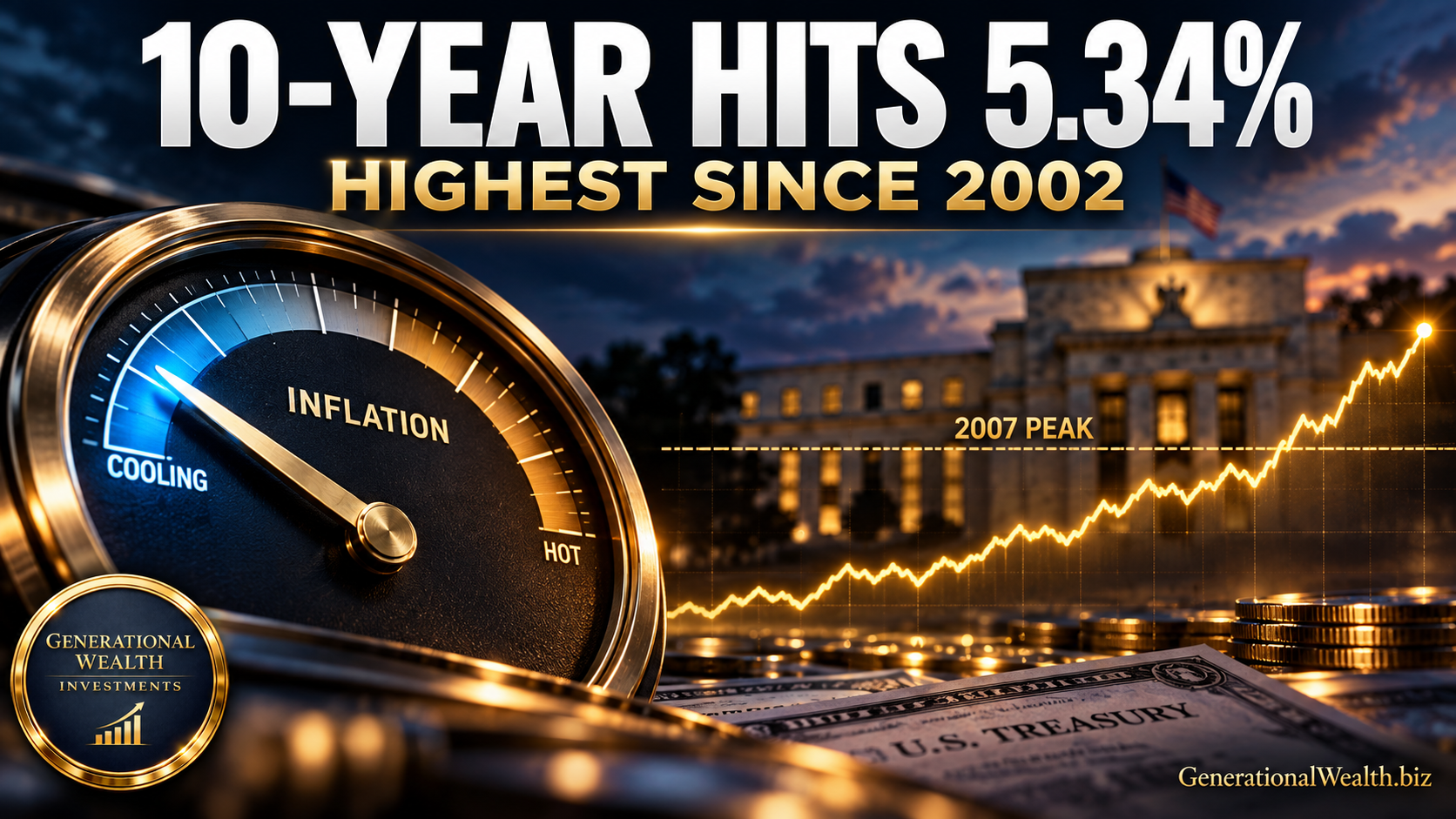
The 10-Year Treasury Yield Just Hit a 24-Year High — and a Softer Inflation Report Couldn't Stop It
The 10-year Treasury yield just broke its 2007 peak and hit its highest level in 24 years — the morning after inflation came in cooler than expected. When good news can't bring long-term rates down, the bond market is sending a message. Here's what's really driving yields, how it hits your mortgage and portfolio, and the 3 jobs-report scenarios that could decide what happens next.

Jobs Crushed Expectations and Stocks Fell Anyway: Why 162,000 Jobs Just Raised September Rate Hike Odds
The August jobs report was a blowout: 162,000 jobs added against a 56,000 forecast, with unemployment steady at 4.1%. Stocks fell anyway. The reason isn't complicated once you see it — this report didn't change the economy, it changed the Fed's constraint. Here's the mechanism, why the 2-year Treasury moved before equities did, how oil at $91.48 opens a second inflation channel, and what Thursday's PPI and Friday's CPI will actually decide.

Rate-Hike Odds Just Fell to a Coin Flip. The Same Day's Data Said Not So Fast.
Stocks rallied Thursday after Fed Governor Christopher Waller signaled he could support holding rates steady in September. But Waller offered a conditional, not a commitment — and the same morning's ISM report showed services prices at their hottest since August 2022 with employment contracting for a second straight month. Here's why the market's reaction function has inverted, what the three jobs-report scenarios actually mean, and what would prove this thesis wrong.

Rate Hike Odds Jump to 57%, Nvidia Falls 4.6%: How One Jackson Hole Speech Repriced the Entire Market
Nvidia gained 8.7% on AI guidance Thursday, then fell 4.6% Friday on news that had nothing to do with Nvidia. What changed was the price of money. Fed Chair Kevin Warsh put the 2% target back at the center of the market, September rate hike odds jumped from roughly 35% to 57%, the 2-year Treasury yield rose 13 basis points to a one-month high, and gold dropped 3%. Here's the full causal chain, the falsification test for whether it holds, and the three scenarios for the August jobs report.