



Jobs Crushed Expectations and Stocks Fell Anyway: Why 162,000 Jobs Just Raised September Rate Hike Odds
The August jobs report was a blowout: 162,000 jobs added against a 56,000 forecast, with unemployment steady at 4.1%. Stocks fell anyway. The reason isn't complicated once you see it — this report didn't change the economy, it changed the Fed's constraint. Here's the mechanism, why the 2-year Treasury moved before equities did, how oil at $91.48 opens a second inflation channel, and what Thursday's PPI and Friday's CPI will actually decide.

Rate-Hike Odds Just Fell to a Coin Flip. The Same Day's Data Said Not So Fast.
Stocks rallied Thursday after Fed Governor Christopher Waller signaled he could support holding rates steady in September. But Waller offered a conditional, not a commitment — and the same morning's ISM report showed services prices at their hottest since August 2022 with employment contracting for a second straight month. Here's why the market's reaction function has inverted, what the three jobs-report scenarios actually mean, and what would prove this thesis wrong.

Broadcom Just Forecast $230 Billion in AI Chip Sales — and the Stock Fell Anyway
Broadcom more than tripled AI chip revenue to $16.7 billion and forecast roughly $230 billion by fiscal 2028 — and the stock still fell. Snowflake jumped more than 20%. HPE posted record revenue and dropped over 3%. Same sector, same tailwind, three different verdicts. Here's what the market is actually pricing now, and why the 10-year Treasury yield matters more to these stocks than the guidance did.

Oil Up, Yields Up, Gold Down: The Market Isn't Pricing Inflation — It's Pricing a Rate Hike
Rate-hike odds climbed to 66%, the 10-year Treasury yield hit its highest level since January 2025, and oil pushed near $92 on renewed Hormuz supply fears. But gold fell 1.2% — and that's the move worth decoding. When bullion drops into a rising oil tape, the market isn't pricing more inflation. It's pricing more Fed. Here's the mechanism behind the repricing, why a Strategic Petroleum Reserve at a 44-year low widens the risk, and the specific thing Friday's jobs report actually decides.

Oil Just Broke $90 After U.S. Strikes in the Strait of Hormuz — But the Real Damage Is Happening at the Fed
Crude broke $90 after American forces struck Iranian launchers near the Strait of Hormuz — but the oil price is the symptom, not the story. This shock landed at the exact moment the Fed foreclosed its own flexibility, pushing September hike odds to 57% and the 2-year yield to 4.34%. Here's the transmission mechanism, the one signal in gold that confirms it, and the three conditions that would prove the read wrong.

Stocks Hit a Record High After America Lost 23,000 Jobs — Here's What the Market Is Actually Pricing In
America lost 23,000 jobs in July, and the S&P 500 closed at a record 7,757 anyway. Atlassian jumped 35%, gold ripped to a 7-week high near $4,400, and a weekend headline out of the Strait of Hormuz could reprice oil Monday. Here's why every one of those moves is the same trade wearing a different ticker — and what Wednesday's CPI report puts at risk.
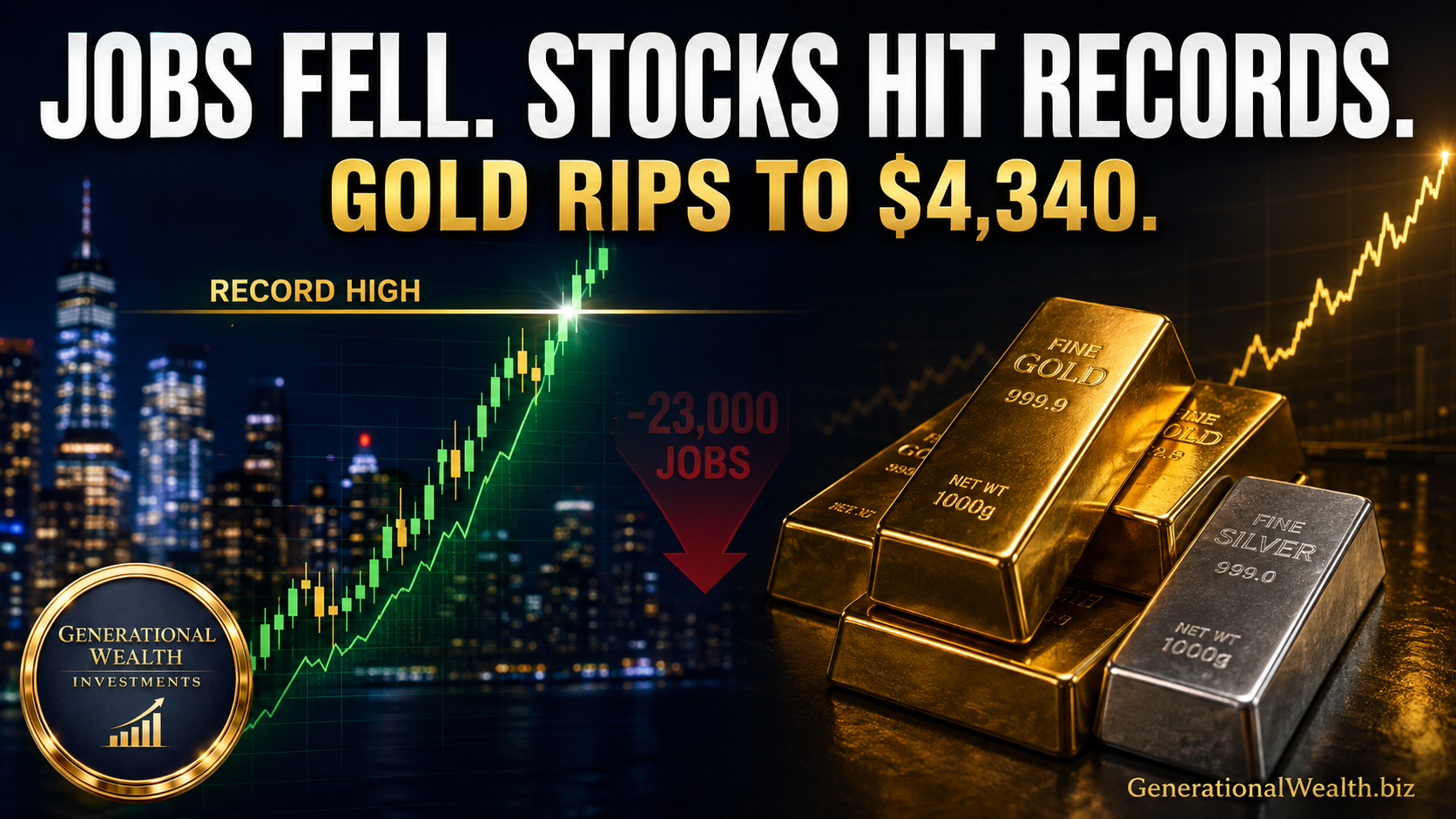
Stocks Hit Record Highs as Economy Loses 23,000 Jobs — Gold Rips to a 7-Week High
The economy unexpectedly shed 23,000 jobs in July — and Wall Street rallied to record highs anyway. With September rate hike odds falling from 57% to 44%, capital rotated into growth, chips, and hard assets while gold hit a 7-week high near $4,340. Here's the full breakdown of what drove Friday's session, why gold and the Nasdaq rallied together, and why Wednesday's CPI print is the whole ballgame.
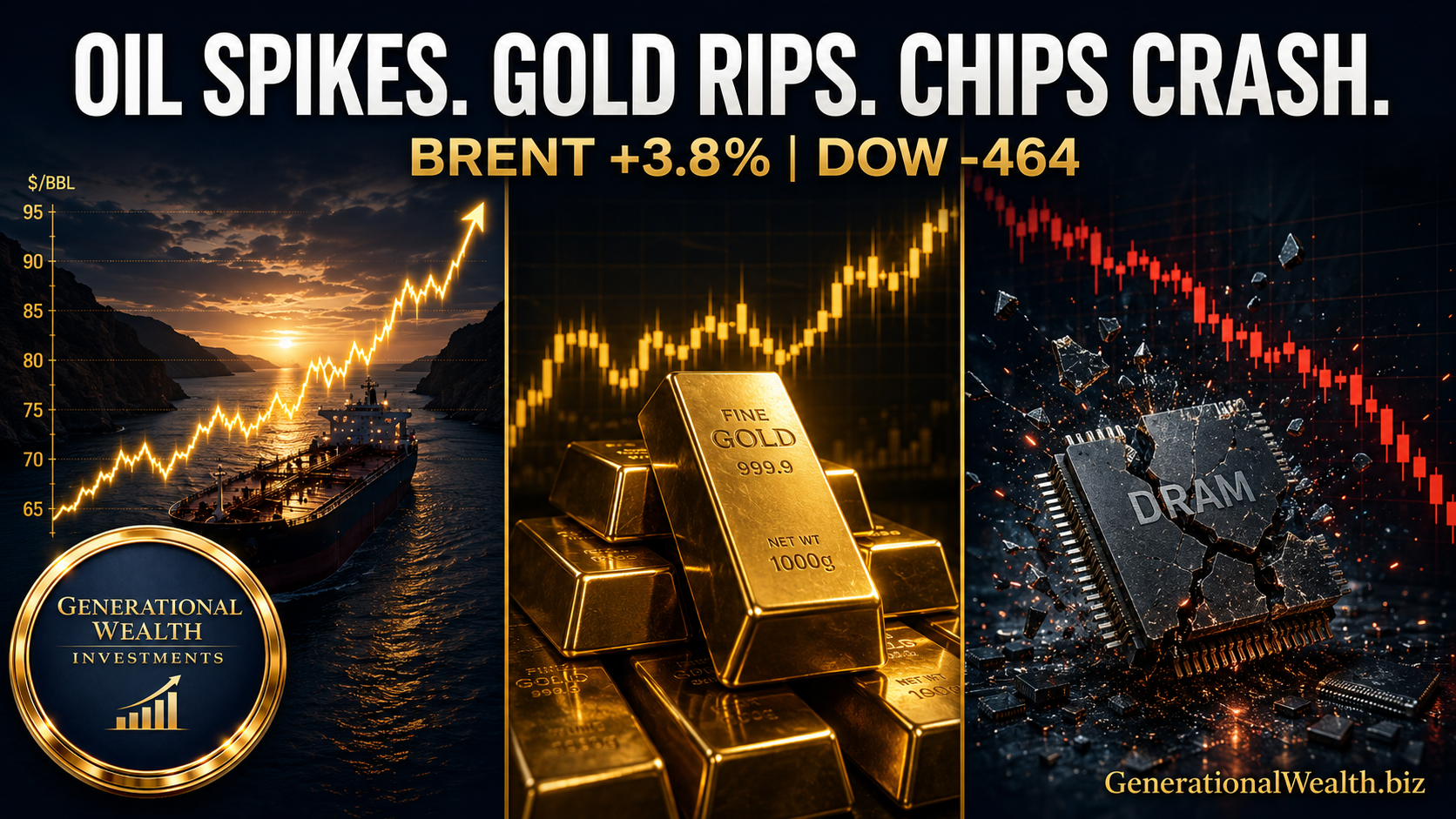
Oil Jumps 3.8% on Strait of Hormuz Document, Yields Spike to 4.67%, and Memory Chips Crater Despite Blowout Profits
A single Iranian document restricting Strait of Hormuz traffic sent Brent crude up 3.8%, lifted the 10-year Treasury yield to 4.67%, and ended the Dow's record streak with a 464-point drop. Meanwhile, gold is on pace for its best week since January and Western Digital fell 13% despite 44% revenue growth. Here's how the chain reaction unfolded — and why the July jobs report decides what happens next.