


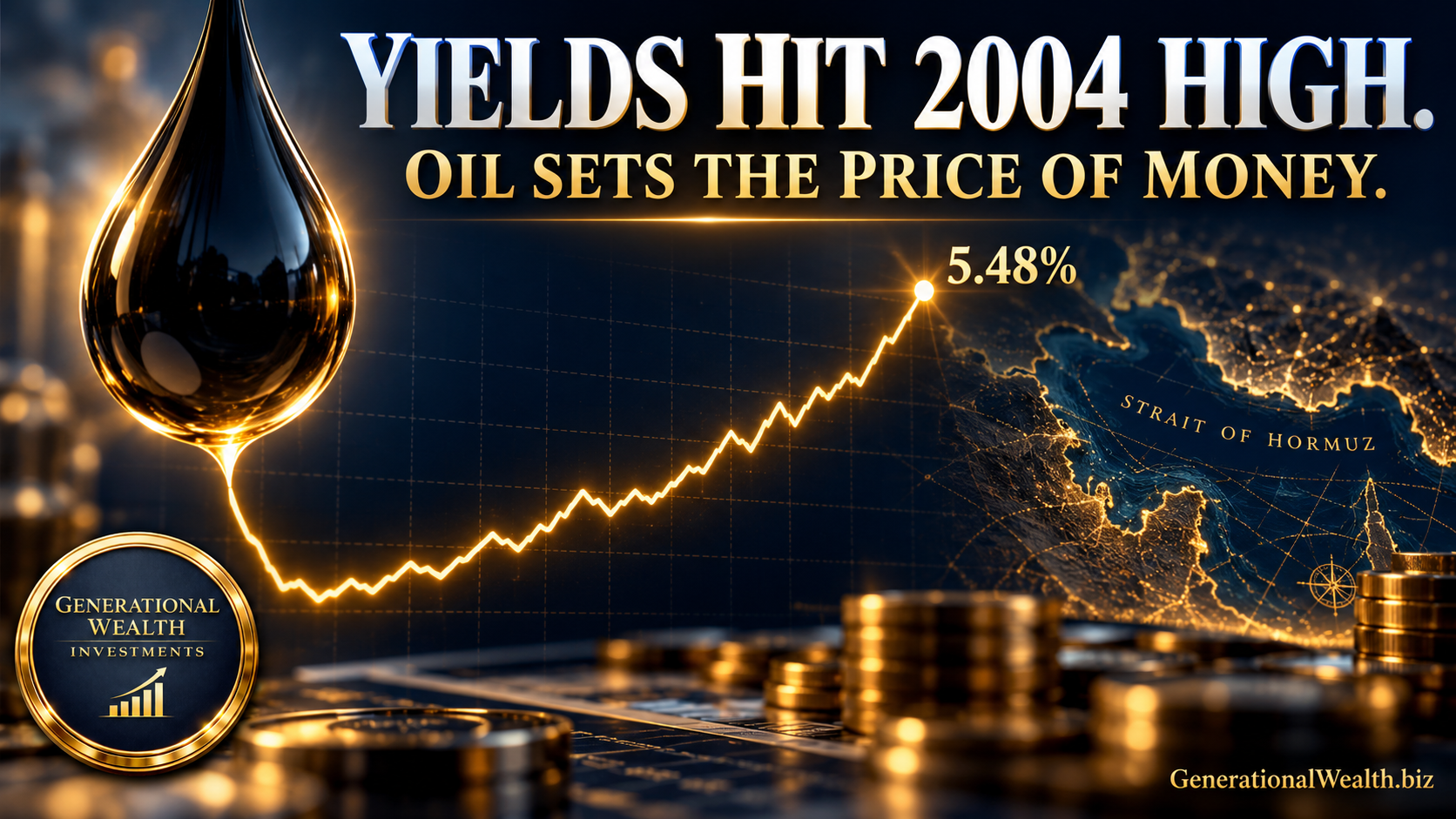
Oil Pushes the 30-Year Treasury Yield to Its Highest Level Since 2004
Oil just pushed the 30-year Treasury yield to its highest level since 2004. Then reports of U.S.-Iran talks on reopening the Strait of Hormuz knocked Brent $3 lower in minutes. Here's why the bond market is treating oil as an inflation problem, not a growth problem, and why next week's inflation data and jobs report could decide where yields go next.
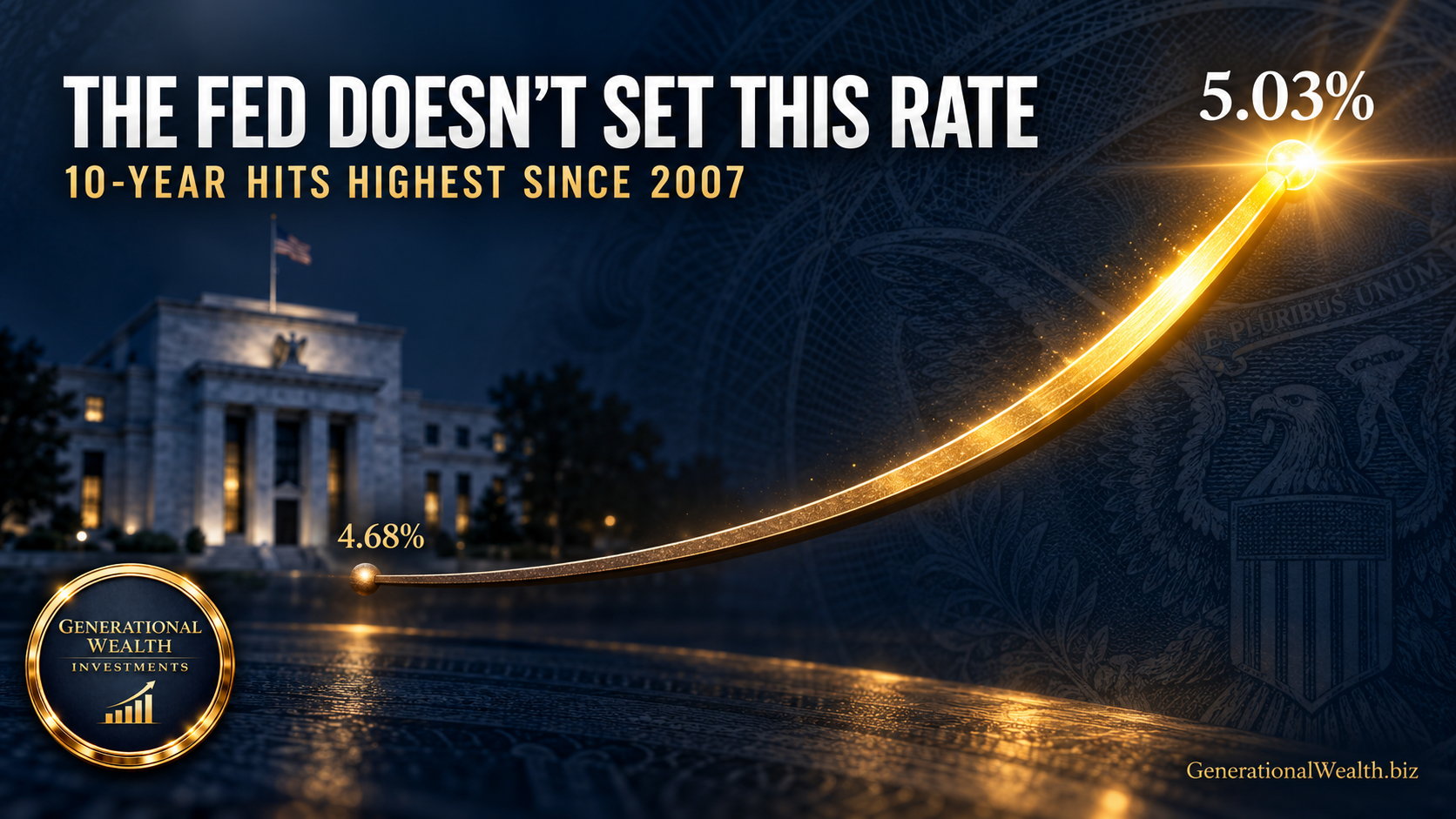
The 10-Year Just Hit 5.03% — And the Fed Doesn't Control That Number
The 10-year Treasury yield hit 5.03% overnight, its highest level since 2007 — and the 2-year barely moved. That gap is the whole story. Here's why an oil-driven inflation shock, not Fed policy, is repricing the long end of the curve, what it means for a 6.76% mortgage, and the 3 things in Wednesday's dot plot that decide whether this is one hike or the start of a cycle.
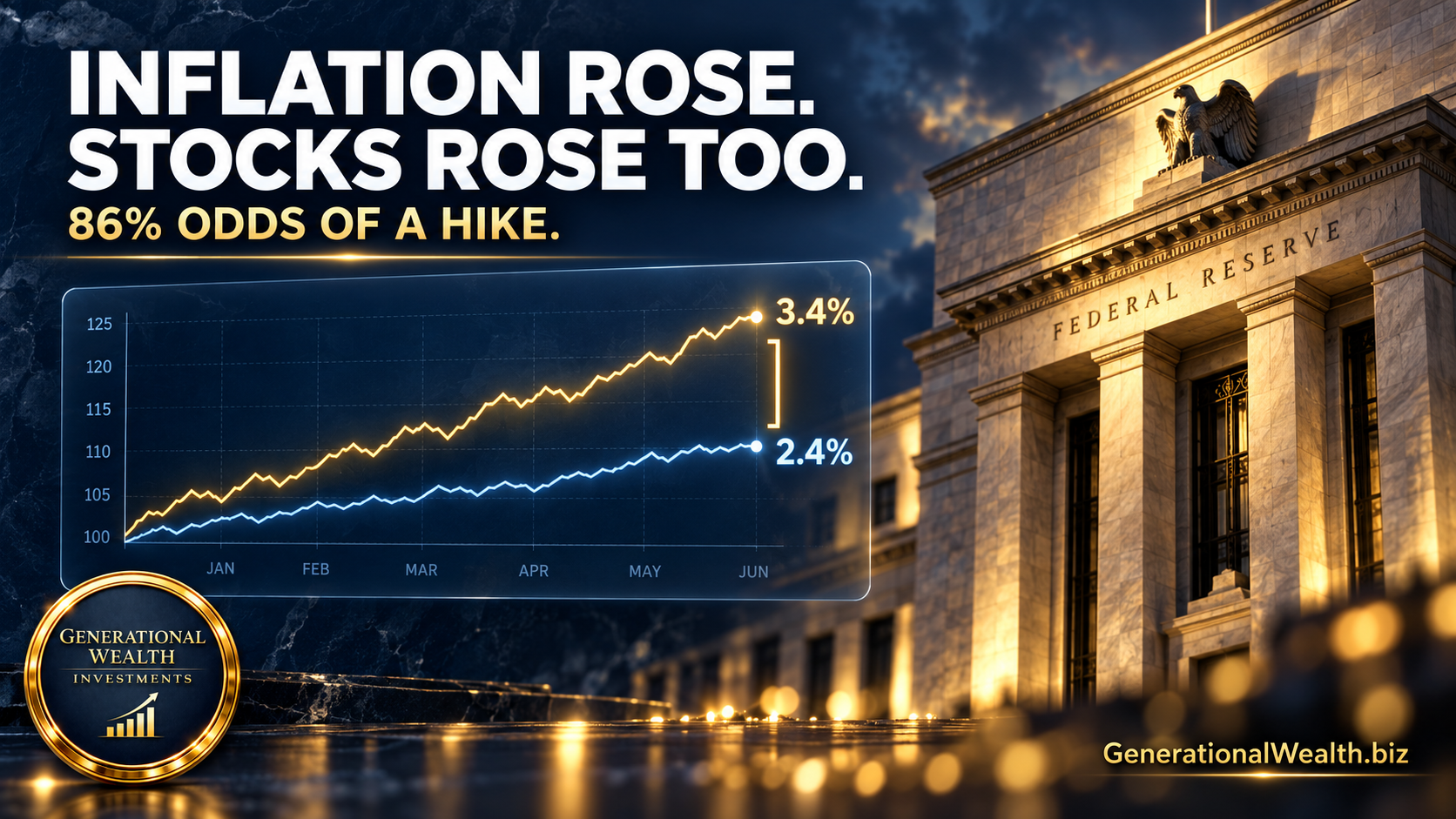
Inflation Accelerated, Rate-Hike Odds Hit 86%, and Stocks Rallied Anyway — Here's What Friday Actually Told Us
Consumer prices accelerated in August. Gasoline jumped 3.9%. Odds of a Federal Reserve rate hike surged toward 90%. And the S&P 500 closed up 0.9% anyway. That looks like a contradiction until you look at the 1-point gap between headline and core inflation — a gap that explains why markets treated this print as a supply shock rather than a demand problem. Here's the full mechanism, the three ways Wednesday's Fed decision can break, and the specific signals that would prove this read wrong.

Retail Sales Fell 0.6% and Small Caps Closed at a Record. The Bond Market Didn't Buy It.
The American consumer just posted the biggest spending drop in more than a year — and small-cap stocks closed at an all-time high the same day. The equity market saw cheaper money coming. The bond market pushed the 10-year to 4.68% and disagreed. Only one of them can be right, and Home Depot, Target, Lowe's, and Walmart start settling it this week.