

Gold Drops 3% as Oil Surges Ahead of PCE Inflation
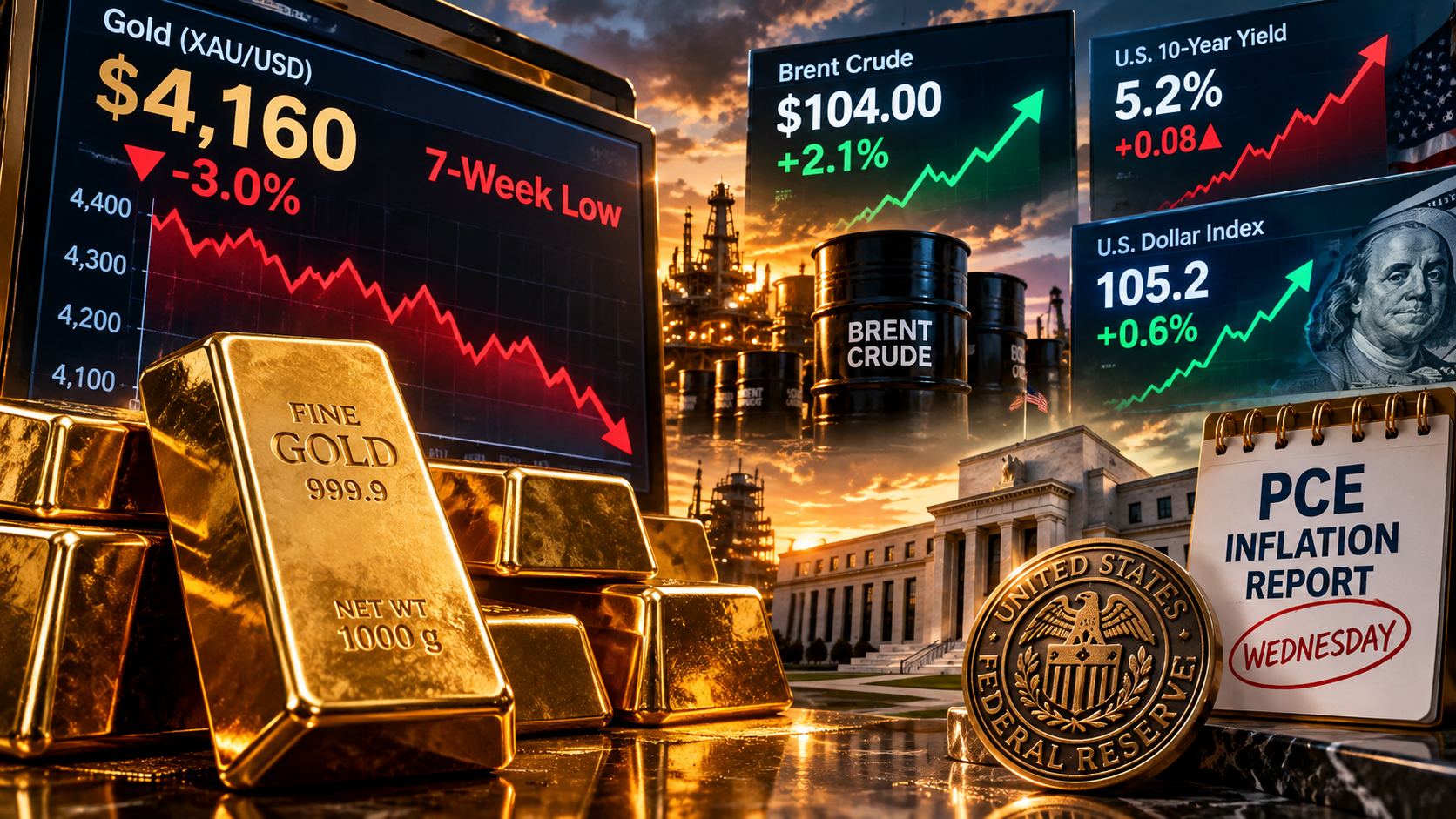
Gold dropped 3% to its lowest level in more than seven weeks even as renewed Middle East tension pushed oil higher. The contradiction puts Wednesday’s PCE inflation report, Treasury yields and the dollar at the center of the next move.
September 28, 2026
Gold Drops 3% to a 7-Week Low as Oil Surges: Why the Safe Haven Failed
Gold fell about 3% to around $4,160, its lowest level in more than seven weeks, even as renewed Middle East tension pushed oil higher. The unusual move shows investors are focusing less on gold’s traditional safe-haven role and more on inflation, Treasury yields and interest rates. Wednesday’s PCE inflation report is now the next major test.
Watch Today’s Market Breakdown
See why gold fell despite renewed geopolitical tension, how oil and interest rates are reshaping the setup, and why Wednesday’s PCE report could determine what comes next.
Today’s Market Setup
Gold’s decline is notable because renewed geopolitical stress would normally be expected to support safe-haven demand. Instead, rising oil, Treasury yields and the dollar are keeping inflation and interest-rate risk at the center of the market conversation.
Gold Fell to a 7-Week Low
Spot gold dropped about 3% to around $4,160, its lowest level in more than seven weeks. The decline came despite renewed Middle East tension, showing that traditional safe-haven demand is being outweighed, at least for now, by other macro pressures.
Oil Put Inflation Back in Focus
Brent crude rebounded more than 2%, keeping energy-driven inflation pressure in focus. Higher oil prices matter beyond the energy market because persistent inflation could reinforce expectations that interest rates need to remain higher.
Rates and the Dollar Are Pressuring Gold
Treasury yields and the U.S. dollar are both higher, creating two important headwinds for gold. Markets now price about a 70% chance of another Federal Reserve rate hike in October, making Wednesday’s inflation data especially important.
What Matters From Here
The key question is whether the forces pressuring gold continue after Wednesday’s PCE inflation report — or whether the current setup begins to shift.
- Does Wednesday’s PCE report keep inflation concerns strong enough to reinforce expectations for another Fed rate hike?
- Do Treasury yields and the dollar remain elevated, extending the pressure on gold?
- If geopolitical tension remains high, does safe-haven demand begin to reassert itself, or do inflation and interest-rate concerns continue to dominate the gold market?
The Headlines Are Only the First Step
The free Market Preview explains why gold fell while oil rose and why Wednesday’s inflation report matters. The members-only Daily Market Brief goes deeper into the catalysts, risks, confirmation signals and market relationships worth monitoring as investors reassess inflation, interest rates and the gold setup.
See What Members GetInside Today’s Members-Only Daily Market Brief
- The signals that could show whether gold’s current weakness is continuing or beginning to stabilize.
- How oil-driven inflation pressure, Treasury yields and the dollar are interacting with the gold market.
- Why Wednesday’s PCE report could strengthen or weaken expectations for another Federal Reserve rate hike.
- What to monitor next as investors decide whether geopolitical risk or interest-rate pressure becomes the stronger force for gold.
Go Beyond the Headlines
The public Market Preview tells you what happened. The Generational Wealth Community is designed for investors who want to understand what deserves attention next, what could confirm the current market setup, what risks could change it and which developments deserve continued monitoring. We don’t chase hype, we decode the market.
Unlock the Daily Market BriefEducational market research designed to help investors understand the setup — not chase headlines.
Your pathway from knowledge to legacy. We don’t chase hype, we decode the market.
Stay Ahead of What Matters Next
Gold’s 3% decline shows that geopolitical tension is not the only force driving safe-haven markets. Wednesday’s PCE report will provide the next major test for inflation expectations, rates and the gold setup.
Join the Generational Wealth Community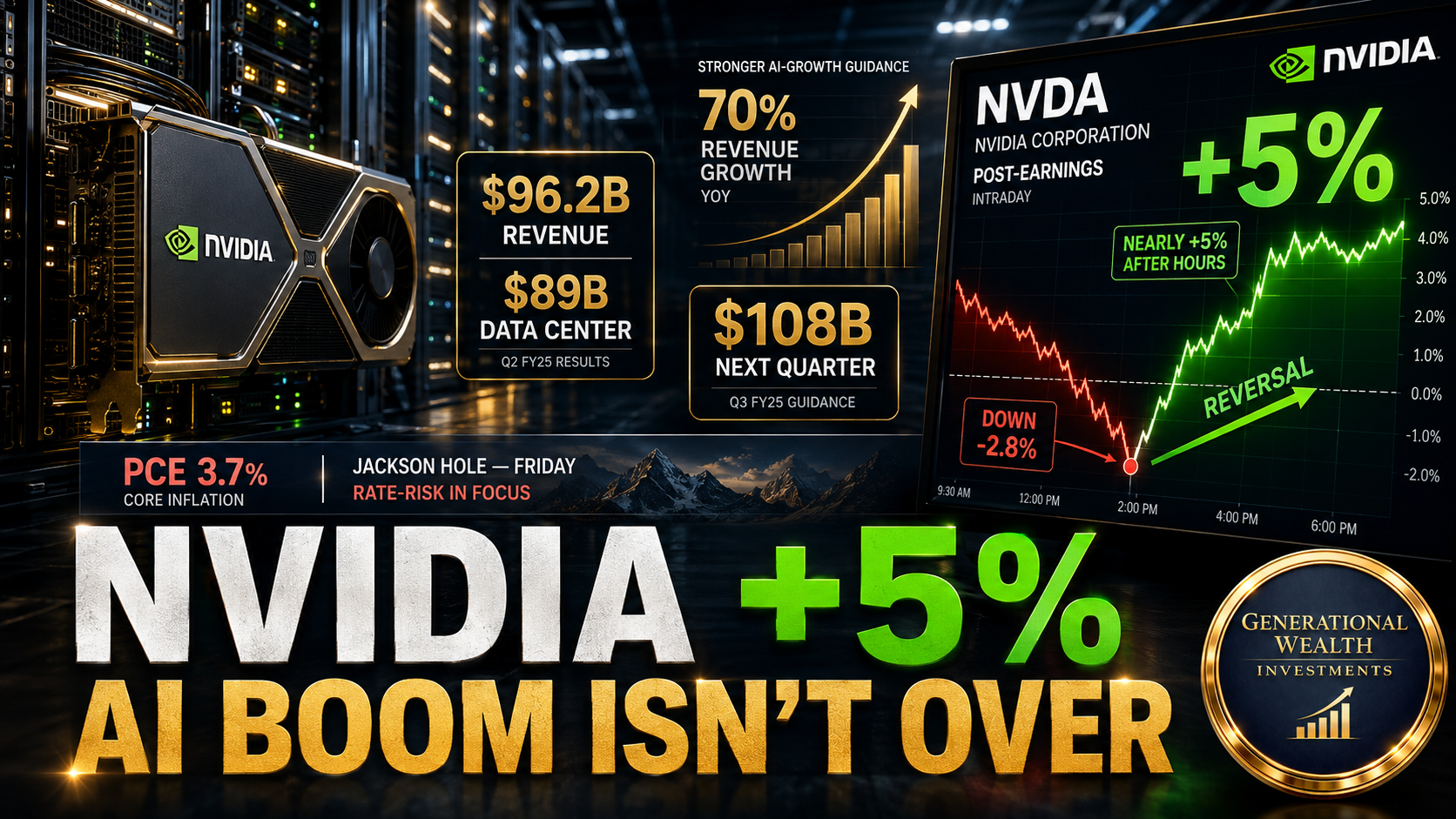
Nvidia Earnings Beat Sends Stock Up 5% on AI Outlook
Nvidia’s earnings sent the stock from an initial after-hours decline to a roughly 5% gain after management delivered a much stronger long-term AI growth outlook. Now investors have to weigh that renewed AI optimism against elevated inflation and Friday’s Jackson Hole signal on interest rates.
August 27, 2026
Nvidia Earnings Beat Sends Stock From Red to +5% as AI Outlook Surges
Nvidia delivered $96.2 billion in quarterly revenue, more than double a year ago, but the stock initially fell after hours. The reversal came after management said it expects about 70% revenue growth in the fiscal year ending January 2028, versus roughly 44% analysts had projected. Shares swung from down more than 1% to up roughly 5%. The question now is whether AI growth can keep overpowering a still-hot inflation backdrop.
Watch Today’s Market Breakdown
See what changed during Nvidia’s earnings call, why the stock reversed higher, and how inflation and interest rates still complicate the AI trade.
Today’s Market Setup
Nvidia strengthened the long-term AI growth story, but the market is still balancing that optimism against inflation and the cost of money.
Nvidia’s Growth Remains Enormous
Nvidia reported $96.2 billion in revenue, more than double a year earlier. Data-center revenue reached $89 billion, up 117%. The numbers reinforced how rapidly AI infrastructure demand is still growing — while also showing why expectations around Nvidia remain unusually high.
Guidance Changed the Reaction
The stock initially fell more than 1% after hours before reversing sharply. Nvidia said it expects about 70% revenue growth in the fiscal year ending January 2028 and guided next-quarter revenue to approximately $108 billion. Shares then climbed roughly 5%.
Inflation Still Pushes Back
S&P 500 e-mini futures were up about 0.5% early this morning after the major indexes finished slightly lower Wednesday. But the Fed’s preferred PCE inflation gauge held at 3.7% in July, above forecasts, keeping interest-rate risk in the market.
What Matters From Here
Nvidia answered an important question about AI demand. The next issue is whether that strength can remain the dominant market force as investors reassess inflation and September rate risk.
- Can Nvidia’s stronger long-term growth outlook continue supporting the broader AI trade if inflation remains elevated?
- Does the positive reaction in S&P 500 futures develop into broader market strength after Wednesday’s slightly lower close?
- What signal does Fed Chair Kevin Warsh give Friday at Jackson Hole about September rates and the future cost of money?
The Headlines Are Only the First Step
The free Market Preview explains why Nvidia’s earnings, guidance and stock reversal matter today. The members-only Daily Market Brief goes deeper into the catalysts, risks, confirmation signals and developments worth monitoring as investors evaluate whether AI strength can continue to outweigh pressure from inflation and interest rates.
See What Members GetInside Today’s Members-Only Daily Market Brief
- The developments that could confirm whether Nvidia’s stronger growth outlook is translating into sustained confidence in the broader AI trade.
- How Nvidia’s earnings, data-center growth and forward revenue expectations fit into the larger AI spending narrative.
- Why elevated PCE inflation keeps the cost of money relevant even as Nvidia signals years of continued AI demand.
- What investors will be listening for when Fed Chair Kevin Warsh speaks Friday at Jackson Hole about the September rate outlook.
Go Beyond the Headlines
The public Market Preview tells you what happened and why investors are paying attention. The Generational Wealth Community is designed for investors who want to understand what deserves attention next, what could confirm the current setup, what risks could change it, and which developments deserve continued monitoring. We don’t chase hype, we decode the market.
Unlock the Daily Market BriefEducational market research designed to help investors understand the setup — not chase headlines.
Your pathway from knowledge to legacy. We don’t chase hype, we decode the market.
Stay Ahead of What Matters Next
Follow the catalysts, risks and confirmation signals that matter as markets weigh Nvidia’s AI growth outlook against inflation and the path of interest rates.
Join the Generational Wealth Community
Brent Crude Falls to $86 as Hormuz Talks Lower Yields
Brent crude has dropped more than 6% in two sessions as Iran and Oman discuss a temporary shipping corridor through the Strait of Hormuz. Treasury yields are falling too, but limited vessel traffic and this morning’s PCE inflation report will test whether the relief can hold.
August 26, 2026
Brent Crude Falls to $86 as Hormuz Reopening Talks Begin — Yields Drop Too
Brent crude has fallen more than 6% in two sessions as Iran and Oman discuss a temporary shipping corridor through the Strait of Hormuz and an agreement to clear mines. Oil is now around $86 a barrel, potentially easing a major inflation pressure as Treasury yields fall. But Hormuz is not fully open, and this morning’s PCE inflation report is the next major test.
Watch Today’s Market Breakdown
See why Hormuz reopening talks are moving oil, how falling crude connects to Treasury yields, and why PCE inflation matters next.
Today’s Market Setup
The market is reacting to the possibility that one of the world’s most important oil routes could begin reopening, but the physical shipping data still shows significant disruption.
Brent Crude Drops Toward $86
Brent settled down nearly 4% Tuesday and fell again this morning to around $86 a barrel. Iran and Oman are discussing a temporary shipping corridor through Hormuz, where roughly one-fifth of the world’s traded oil moved before the war.
Treasury Yields Move Lower
Lower oil can reduce a major source of inflation pressure. The 10-year Treasury yield fell about eight basis points Tuesday to roughly 4.63%, while the 30-year declined to around 5.16%. The S&P 500 gained about 0.3% and the Nasdaq rose roughly 0.7%.
Hormuz Is Still Far From Normal
Only five commodity vessels reportedly transited the strait Tuesday, far below recent normal levels. A tanker was also disabled near Hormuz after an unidentified projectile strike. The reopening narrative is developing faster than normal shipping activity has returned.
What Matters From Here
Falling oil and yields have changed the market setup, but the next signals will determine whether that relief is reinforced or challenged.
- Do the Hormuz discussions translate into meaningfully higher vessel traffic through the strait?
- Does this morning’s PCE inflation report reinforce the easing in oil and Treasury yields, or challenge it with a hotter reading?
- Can the stock-market response hold if shipping disruptions remain significant even as crude prices continue falling?
The Headlines Are Only the First Step
The free Market Preview explains why oil, Hormuz and Treasury yields matter today. The members-only Daily Market Brief goes deeper into the catalysts, risks, confirmation signals and developments worth monitoring as investors evaluate whether the current relief is becoming more durable.
See What Members GetInside Today’s Members-Only Daily Market Brief
- The shipping and vessel-flow developments that could confirm or weaken the Hormuz reopening narrative.
- How falling crude, PCE inflation and Treasury yields fit together in the current market setup.
- What continued disruption near the strait could mean for the relief already appearing across oil, bonds and equities.
- The next developments worth monitoring as markets test whether lower inflation pressure can persist.
Go Beyond the Headlines
The public Market Preview tells you what happened and why investors are paying attention. The Generational Wealth Community is designed for investors who want to understand what deserves attention next, what could confirm the current setup, what risks could change it, and which developments deserve continued monitoring. We don’t chase hype, we decode the market.
Unlock the Daily Market BriefEducational market research designed to help investors understand the setup — not chase headlines.
Your pathway from knowledge to legacy. We don’t chase hype, we decode the market.
Stay Ahead of What Matters Next
Follow the catalysts, risks and confirmation signals that matter as markets evaluate falling oil, Hormuz shipping conditions, inflation and Treasury yields.
Join the Generational Wealth Community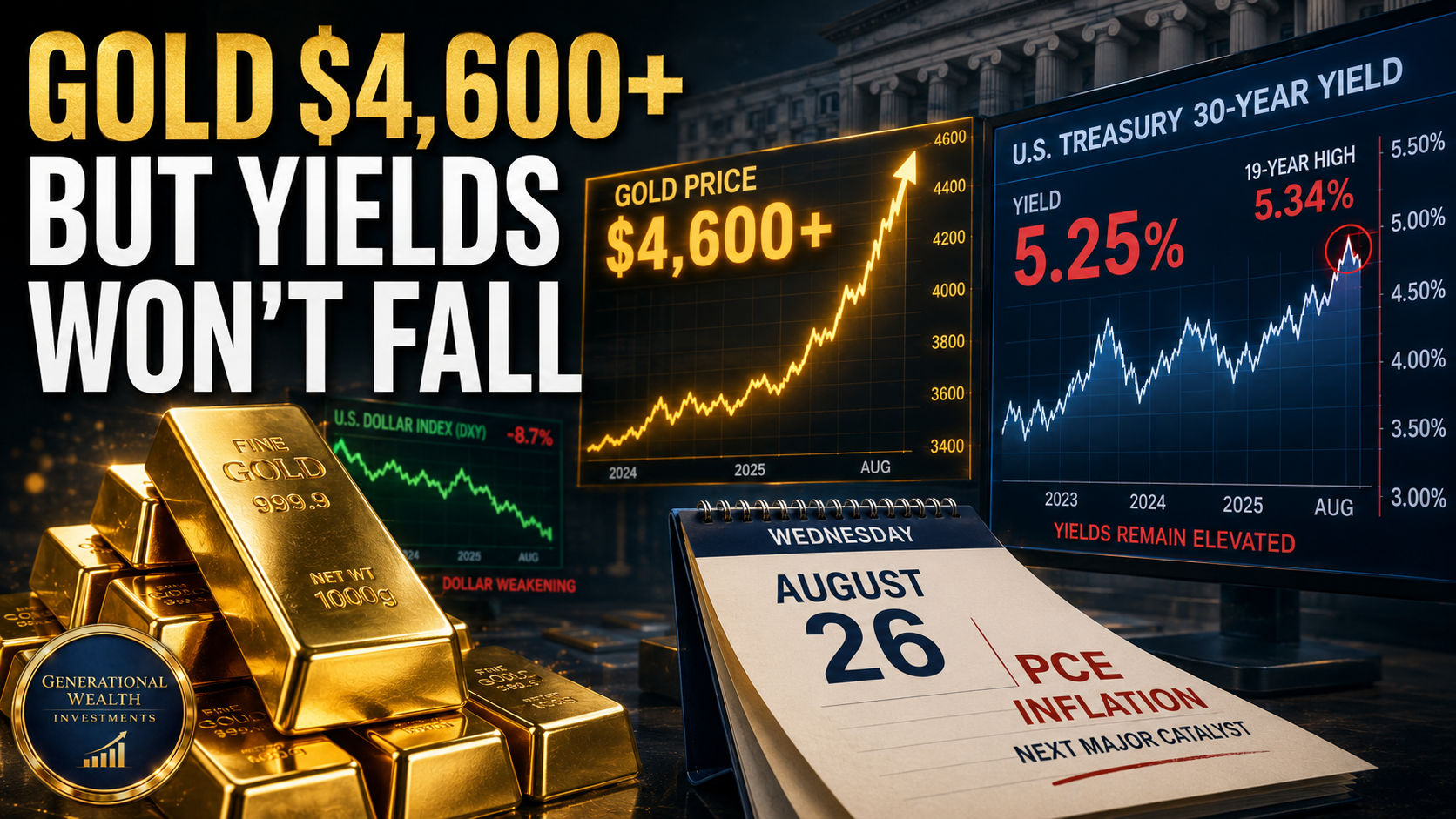
Gold Tops $4,600 as Treasury Yields Stay Near 19-Year Highs
Gold has climbed above $4,600 even as long-term Treasury yields remain near levels not seen in almost two decades. The next test is Wednesday’s July PCE inflation report—and whether rates, the dollar and oil begin confirming gold’s move or pushing against it.
August 24, 2026
Gold Pushes Above $4,600 While Treasury Yields Stay Near 19-Year Highs
Gold pushed above $4,600 Monday, with spot gold trading around $4,635 even as the 30-year Treasury yield remained near 5.25%. Elevated yields normally pressure an asset that pays no interest, making the combination unusually important. A weak dollar is helping the setup, but Wednesday’s July PCE inflation report could determine whether rate pressure returns or the rally gains stronger confirmation.
Watch Today’s Market Breakdown
See why gold is rising despite elevated Treasury yields, how Bitcoin and oil fit into the same macro picture, and why Wednesday’s inflation report is the next major test.
Today’s Market Setup
Gold is sending a strong signal, but the bond market has not fully relaxed. That tension makes rates, the dollar, oil and Wednesday’s inflation data more important than the headline gold price alone.
Gold Is Defying High Yields
Spot gold traded around $4,635 Monday, its highest since May 15, while the 30-year Treasury yield remained near 5.25% and close to its recent 5.34% peak. High yields normally increase the opportunity cost of holding gold, making the simultaneous strength notable.
The Dollar and Bitcoin Add Context
The dollar remains near multi-month lows after the Treasury said it would at least double long-dated bond buybacks to $4 billion per operation. Gold gained more than 5% last week, while Bitcoin is holding above $77,000 after gaining more than 21%.
Oil Keeps Inflation Risk Alive
Brent crude is down about 1.6% near $93 as traders await new U.S. sanctions on Iran. Lower oil helps ease immediate inflation pressure, but another spike could push inflation concerns and Treasury yields back into focus ahead of Wednesday’s July PCE report.
What Matters From Here
Gold clearing $4,600 explains what happened. The next question is whether the forces underneath the move begin confirming it or start working against it.
- Can gold hold its strength if the 30-year Treasury yield remains near 5.25% or moves back toward its recent peak?
- Does Wednesday’s July PCE inflation report ease rate pressure, or give the bond market another reason to keep yields elevated?
- Could another oil spike revive inflation concerns even if the dollar remains weak?
The Headlines Are Only the First Step
The free Market Preview explains why gold, Treasury yields, Bitcoin and oil are sending an unusual combination of signals. The members-only Daily Market Brief goes deeper into the catalysts, risks, confirmation signals and developments worth monitoring as markets approach Wednesday’s inflation report.
See What Members GetInside Today’s Members-Only Daily Market Brief
- The yield and dollar signals that could strengthen or weaken the case behind gold’s current move.
- How Bitcoin holding above $77,000 fits into the broader cross-asset market message.
- Why Brent crude and the next U.S. sanctions on Iran matter for the inflation and interest-rate setup.
- What to monitor around Wednesday’s July PCE report as markets test whether inflation pressure is becoming more or less important.
Go Beyond the Headlines
The public Market Preview tells you what moved and why investors are paying attention. The Generational Wealth Community is designed for investors who want to understand what deserves attention next, what could confirm the current setup, what risks could change it, and which developments deserve continued monitoring. We don’t chase hype, we decode the market.
Unlock the Daily Market BriefEducational market research designed to help investors understand the setup — not chase headlines.
Your pathway from knowledge to legacy. We don’t chase hype, we decode the market.
Stay Ahead of What Matters Next
Follow the catalysts, risks and confirmation signals that deserve attention as gold, Treasury yields, oil and Wednesday’s inflation report test the current market setup.
Join the Generational Wealth Community