

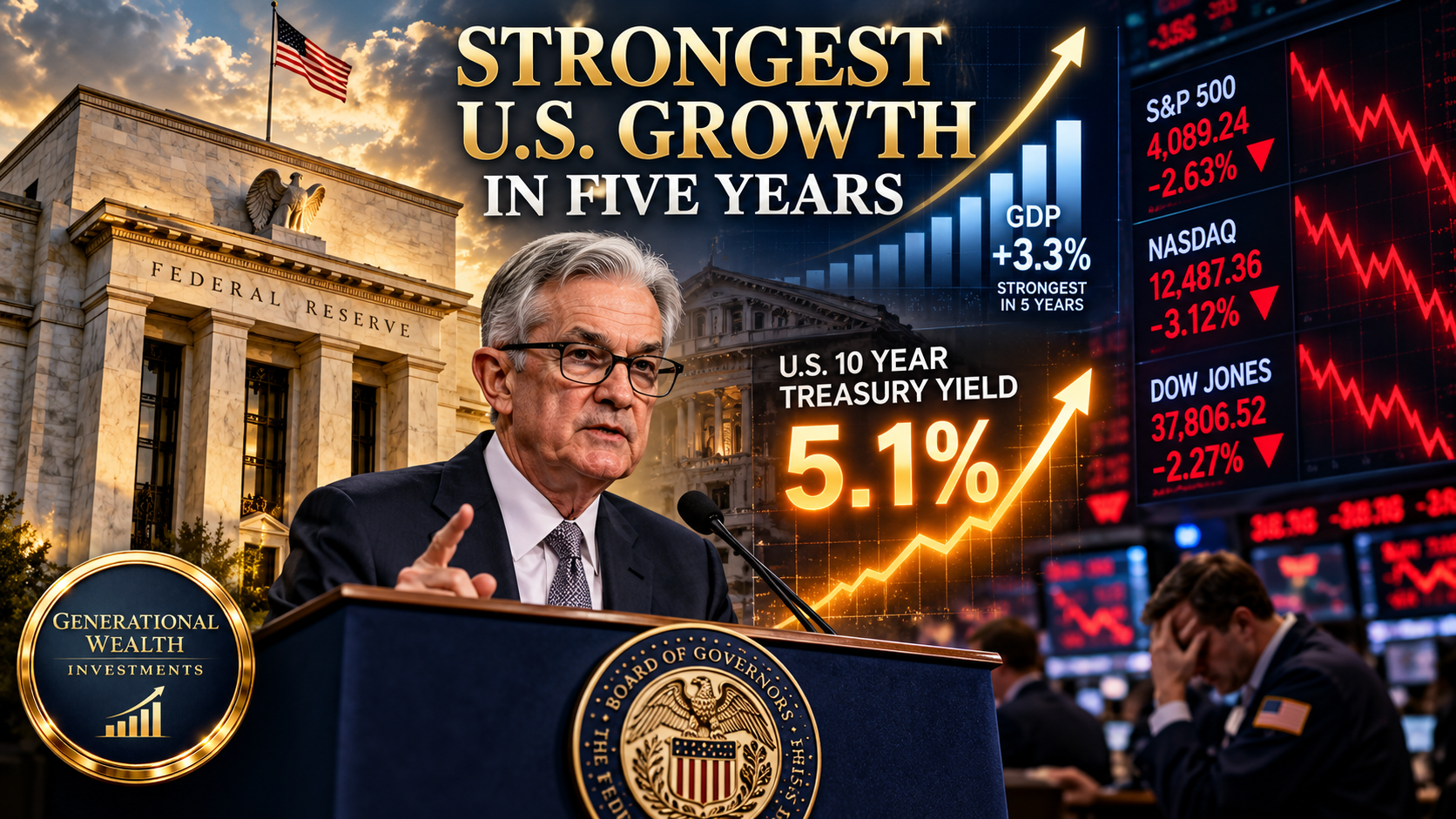
Strong Economy Sends Stocks Lower as Fed Hike Risk Rises
The strongest U.S. growth signal in more than five years sent Treasury yields higher and stocks lower as investors increased expectations for another Federal Reserve rate hike. Now attention turns to the next inflation report and whether it strengthens the case for another move in October.
September 24, 2026
Strongest U.S. Growth Signal in 5 Years Sends Stocks Lower
The economy just delivered its strongest growth signal in more than five years — and Wall Street sold off. U.S. business activity accelerated while business costs climbed at their fastest pace in roughly four years, strengthening the argument for another Federal Reserve rate hike. The question now is whether next week’s inflation data gives the Fed even more reason to tighten.
Watch Today’s Market Breakdown
See why stronger economic growth pushed Treasury yields higher, stocks lower, and expectations for another Federal Reserve rate hike higher.
Today’s Market Setup
Wednesday delivered a reminder that strong economic data is not always immediately bullish for stocks. When growth and inflation pressures rise together, investors also have to consider what that means for interest rates.
Growth Accelerates to a Five-Year High
A key September survey showed U.S. business activity expanding at its strongest pace in more than five years. Normally stronger growth is encouraging, but businesses also reported rapidly rising costs, keeping inflation concerns firmly in the market’s focus.
Treasury Yields Jump
The 10-year Treasury yield finished near 5.1%, its highest level since 2007. Higher Treasury yields can increase borrowing costs throughout the economy and raise the hurdle stocks must clear when investors compare potential returns with bonds.
Another Fed Hike Moves Closer
Traders moved to roughly a 70% probability of another Federal Reserve rate hike in October. The Nasdaq fell more than 1% as investors confronted the possibility that economic strength could keep monetary policy tighter for longer.
What Matters From Here
The market now has to decide whether stronger growth is durable enough to withstand higher borrowing costs — and whether inflation gives the Fed room to stop after its latest increase.
- Does next week’s Federal Reserve inflation gauge reinforce the case for another rate hike in October?
- Can stocks stabilize if the 10-year Treasury yield remains near its highest level since 2007?
- Can strong economic growth continue without creating even more inflation pressure?
The Headlines Are Only the First Step
The free Market Preview explains why unexpectedly strong economic data pushed stocks lower. The members-only Daily Market Brief goes deeper into the rate signals, inflation catalysts, risks and confirmation points worth monitoring as the market evaluates the possibility of another Fed hike.
See What Members GetInside Today’s Members-Only Daily Market Brief
- The interest-rate signals that could strengthen or weaken expectations for another Federal Reserve hike.
- What Treasury yields could reveal about whether tighter financial conditions are becoming a larger problem for stocks.
- The inflation developments that matter most ahead of next week’s key Federal Reserve inflation report.
- What could show whether Wednesday’s stock-market decline was a temporary reaction or part of a broader repricing of interest-rate risk.
Go Beyond the Headlines
The public Market Preview tells you what happened. The Generational Wealth Community is designed for investors who want to understand what deserves attention next, what could confirm the current market setup, what risks could change it and which developments deserve continued monitoring. We don’t chase hype, we decode the market.
Unlock the Daily Market BriefEducational market research designed to help investors understand the setup — not chase headlines.
Your pathway from knowledge to legacy. We don’t chase hype, we decode the market.
Stay Ahead of What Matters Next
Strong growth is usually good news. But when inflation and Treasury yields are rising too, the Federal Reserve can turn that strength into a new challenge for markets.
Join the Generational Wealth Community