


Articles
Markets and money, explained for families who want to steward well.
The newest articles appear first. We cover stocks, interest rates, the economy and digital assets with a steady focus on risk, patience and wise stewardship. Education, not trade calls.
Crypto archive: From August 2025 through July 2026 our articles focused mostly on digital assets. Those posts stay available for reference. Prices and facts in them reflect the date each one was written.

Your Credit Card Minimum Payment Is Not a Payoff Plan: The Math Behind the 19-Year Trap
Your credit card's minimum payment keeps your account current, but it was never designed to get you out of debt. On a $5,000 balance at 22% APR, paying only the minimum can take about 19 years and cost more than $8,000 in interest, because the required payment shrinks every time you make progress. We break down the math, show you the most valuable paragraph on your statement, and compare 3 payment paths side by side. The simplest one requires no extra money at all, and it could cut 14 years off your payoff. Here's how to find it on your next statement.
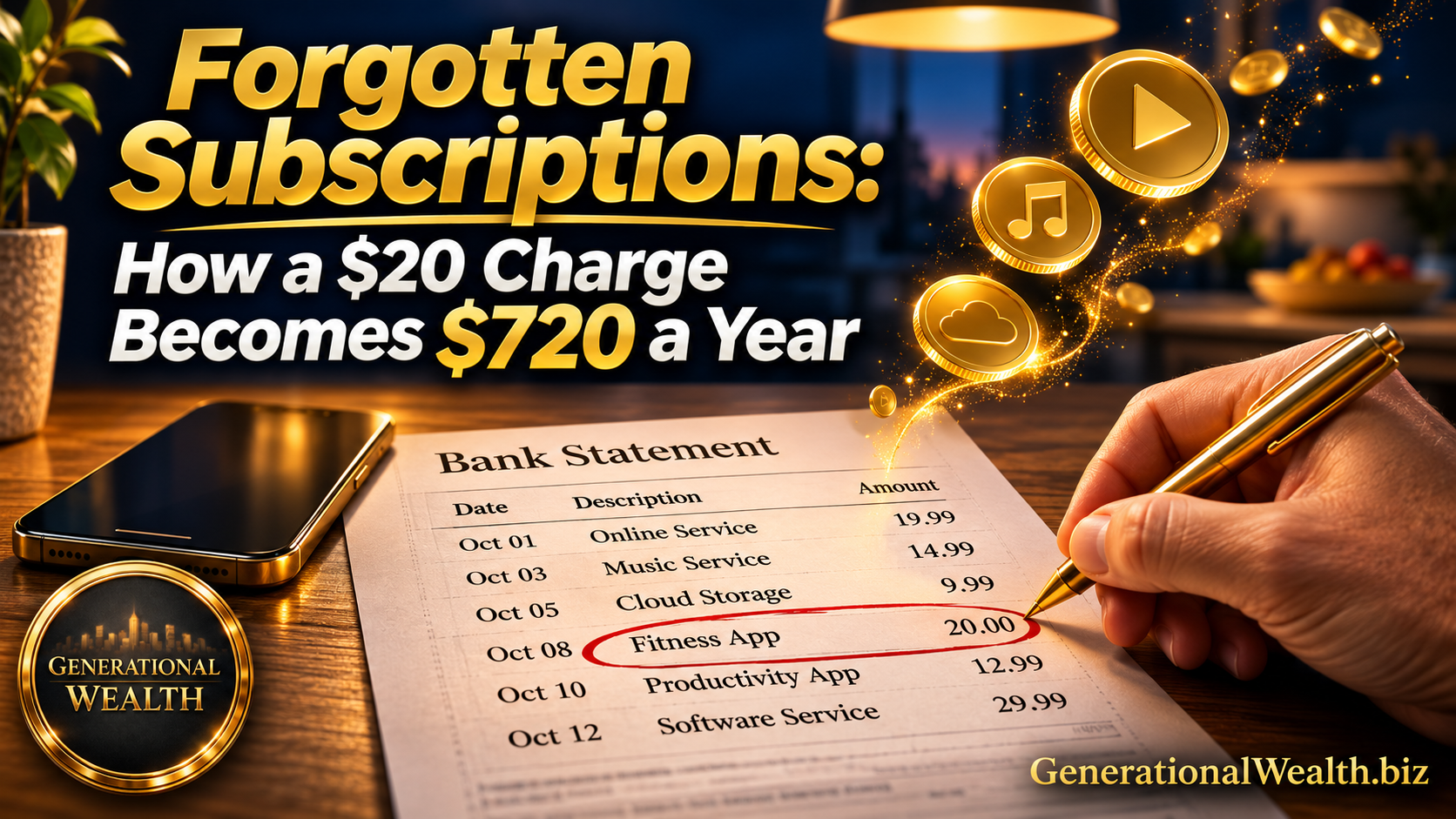
The $720 Leak: Why Forgotten Subscriptions Are the Easiest Raise You'll Ever Give Yourself
A $20 subscription feels like nothing. Three of them cost $720 a year, and the real cost isn't the price, it's the default that keeps you paying without ever deciding again. Here's the mechanism behind subscription creep, what that money could become if redirected, and the simple 1-charge challenge that could change how your family keeps what it earns. Your statement is waiting.

Investment Time Horizon: Ask "When Will I Need This Money?" Before "What Should I Invest In?"
Most investors start with "What should I buy?" But the question that quietly decides whether a plan works is "When will I need this money?" A 30% decline is a speed bump for a 2050 retirement fund and a disaster for a 2028 down payment. Same investment, different fit. Here's how to match your risk to your timeline, and the 15-minute exercise to do this week before the market forces the question for you.

Your Calendar Is a Budget. Audit It Like One.
A recurring meeting feels too small to question, until you do the math: 30 minutes a day adds up to 182.5 hours a year. Your calendar works like a budget, but it never sends you a statement. So which of your standing commitments would you actually approve today? A 7-day time audit will tell you.

An Emergency Fund Isn't Idle Money. It Buys You Time.
An emergency fund won't win a return contest, and that is not its job. When the car breaks down or income drops, cash keeps a hard month from turning into high-interest debt, a costly retirement withdrawal, or a forced sale. So how do you build one without feeling it? It starts with 1 small transfer on your next payday.
Democrats Swept Congress. Why Did Stock Futures Fall, Then Recover?
Democrats swept Congress, and stock futures sold off hard before erasing their losses. The reversal wasn't random: investors were weighing tougher scrutiny of AI, data centers, and crypto against the limits of divided government. So which force wins? The first real answer may come from how technology stocks and Treasury yields behave after the opening bell.

Apple Beat Wall Street, Then Warned on Margins: Why Record Revenue May Not Mean Record Profit
Apple just guided to the biggest revenue quarter in its history, yet its own numbers point to roughly flat operating profit. Memory costs are moving money from device makers to chip suppliers. Can pricing power close the gap when the cheap inventory runs out?

Oil Fell Nearly 4%, but the World's Energy Cushion Is Still Thin: Why Cheaper Crude Isn't the Same as Safety
Oil just fell nearly 4% on hopes for an Iran-Qatar breakthrough. But the world has drained nearly 1 billion barrels from its inventories, and a lower price doesn't refill them. If talks stall, how hard could the next shock hit?

South Korea's Chip Exports Surge 259%: Why the AI Buildout Is Real, Even If the Returns Aren't Proven Yet
South Korea's semiconductor exports jumped 259% in October, pushing total exports to $115.3 billion and the strongest growth since 1974. Even after adjusting for 2 extra working days, daily exports rose 76%. Wall Street is punishing AI spenders, but this is the other side of the ledger. Here's what it proves, what it doesn't, and what AMD's earnings on Tuesday could reveal next.
Big Tech Made a Record $542.9 Billion in Cash and Returned Just 9.3%: Why AI Means Earnings Growth Now Has to Be Earned
Microsoft, Alphabet, Amazon, Meta, and Oracle generated a record $542.9 billion in operating cash, yet returned just 9.3% to shareholders, the lowest share in at least 15 years. AI spending now exceeds the cash these companies produce, and buybacks have nearly vanished. Here's why that changes how per-share growth works, and why 2027 capex guidance is the number to watch next.

Binance's $6.3 Billion Hack Isn't a Bitcoin Story: It's a Lesson in Counterparty Risk
Crypto just suffered the largest hack in its history, at the biggest exchange in the world. Binance says about $6.3 billion was hit, $3 billion is frozen, and every customer loss will be covered. But leaving crypto on an exchange means trusting a company's security, liquidity, and operations, not just the asset. Here's what that means for your portfolio, and why the real test comes when withdrawals reopen.

Alphabet’s Cloud Revenue Doubled and Its Stock Still Fell 10%: Why the AI Race Is Now a Cash-Flow Test
Google Cloud revenue more than doubled, and Alphabet’s stock still fell about 10%. The reason was negative $9.1 billion in free cash flow, while Microsoft spent big on AI and still generated $18.6 billion. Here’s why investors now judge AI spending by whether it pays for itself, and what to watch when Amazon reports tonight.

OpenAI Reportedly Plans to Buy Google's AI Chips: Why the AI Chip Market Is Turning From a Monopoly Into a Marketplace
One of Nvidia's biggest customers just went shopping somewhere else. OpenAI reportedly plans to buy Google's TPU chips, and Oracle will offer them on its cloud starting in 2027. Here's why AI companies want more than one source of compute, what it means for Nvidia's leverage, and what to listen for when Alphabet reports tonight.

Anthropic IPO Filing: $80.7B Loss, but the Real Number Is $693M
Anthropic's IPO filing shows an $80.7 billion net loss, but its actual operating loss was just $693 million. The gap comes from an accounting charge that grew because the company's valuation soared. Here's what the filing really says about Claude's maker, and what final IPO pricing will reveal about what investors will pay for AI growth.
SpaceX Raises $40B in Debt for AI Chips: The AI Credit Shift
SpaceX just borrowed $40 billion to buy AI chips, and Elon Musk says it could only do it because of Starlink and launch revenue. Lenders are now separating diversified AI players from data-center-only companies, and that split could reshape the entire AI trade. Here's what it means, and what to watch when Microsoft, Alphabet, and Amazon report this week.

China Pushes Back on New U.S. Tech-Investment Rules: Why Geopolitics Now Decides Where Your Capital Can Go
The U.S. Treasury wants to restrict American investment in Chinese biotech, supercomputing, and hypersonic systems, and Beijing says it may retaliate. It’s not a ban on Chinese stocks, but it could reshape where capital is allowed to flow. Here’s what the rule does, what it doesn’t do, and the signal that would turn rhetoric into real market risk.
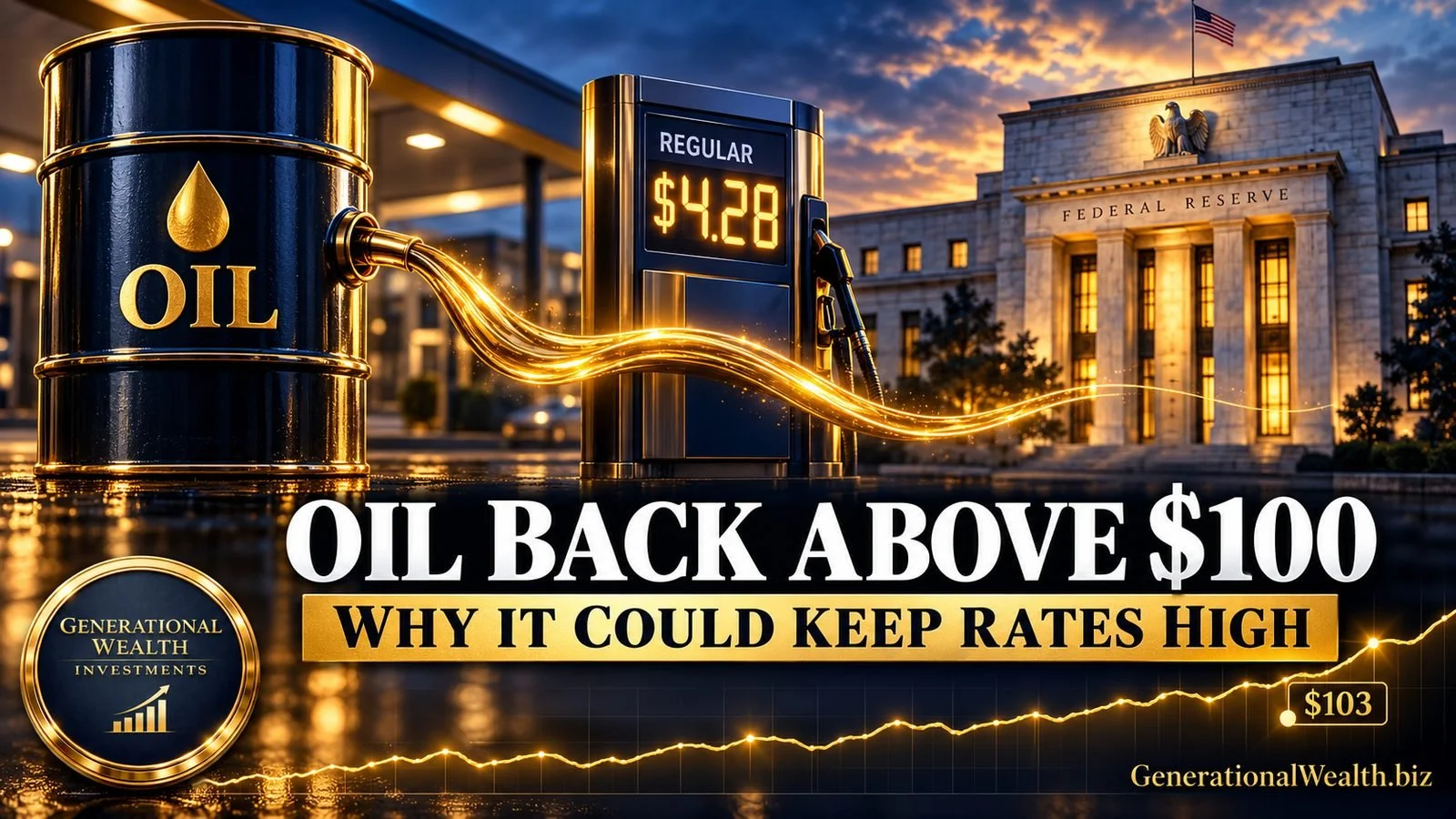
Oil Back Above $100: Why Energy Inflation Could Keep Rates High
Oil just jumped back above $100, with Brent hitting its highest settlement since April after Houthi attacks in Saudi Arabia. But the real risk isn't the gas pump. It's what a sustained energy shock does to inflation expectations, and what the Fed might do about it. Here's how a barrel of crude reaches your borrowing costs, and what to watch when the Fed decides on October 28.

Jobless Claims Near 57-Year Low: Why Low Layoffs Keep Rates High
Layoff headlines are everywhere, yet U.S. jobless claims just fell to 194,000, near a 57-year low. The catch: hiring is stalled, and a job market that isn't firing gives the Fed room to keep fighting inflation. Here's what that means for your mortgage, your credit card, and your business loan, and what to watch when the Fed decides on October 28.
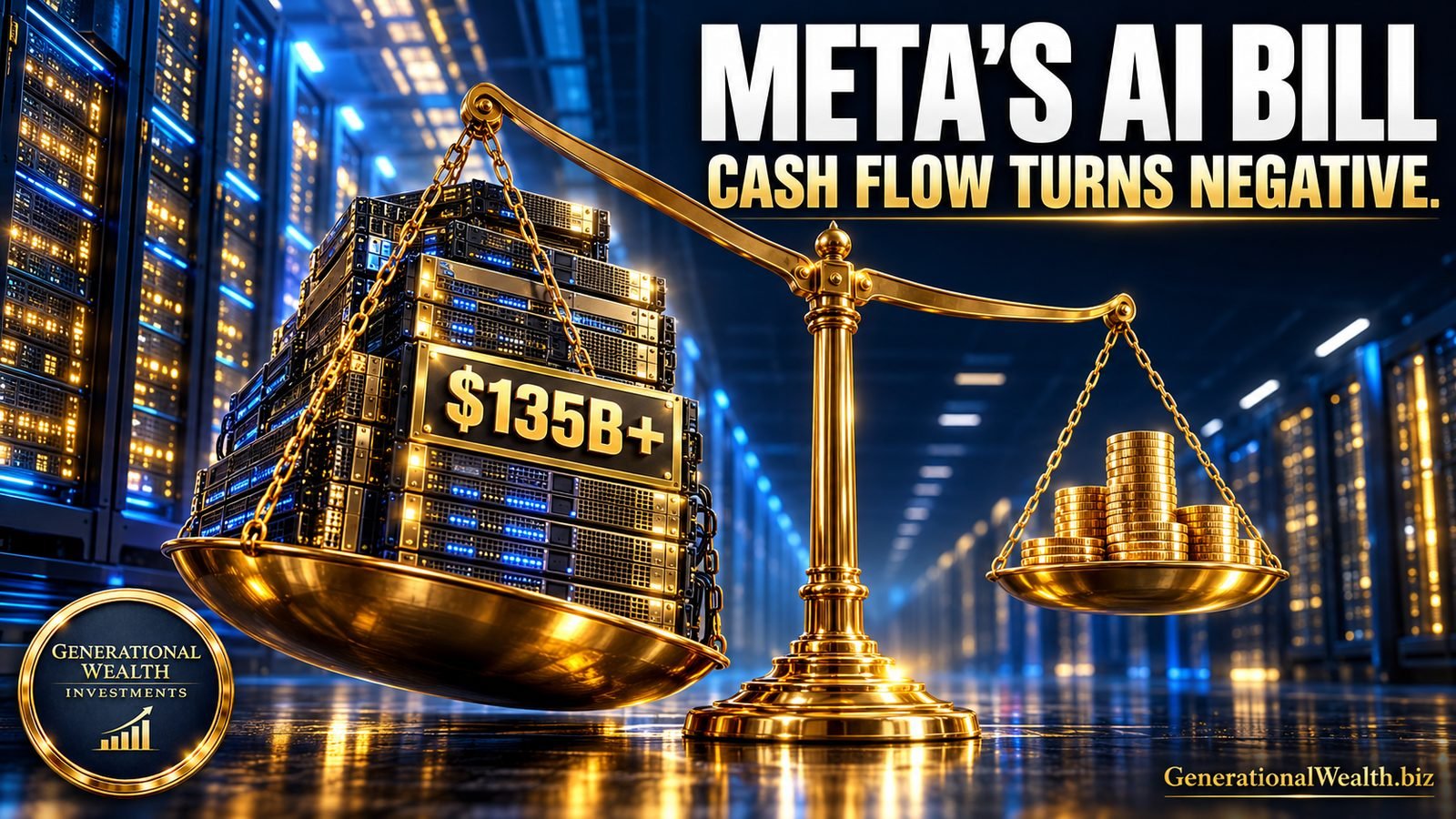
Meta's $64.6 Billion Quarter Hides the Real Story: The AI Race Just Started Costing More Than It Earns
Meta just posted a 26% revenue surge to $64.6 billion, yet the number that matters most went the other way. Free cash flow turned negative as AI spending outran the ad business for the first time this cycle. The Q4 math suggests the bill is about to get even bigger. So how long will investors keep paying?
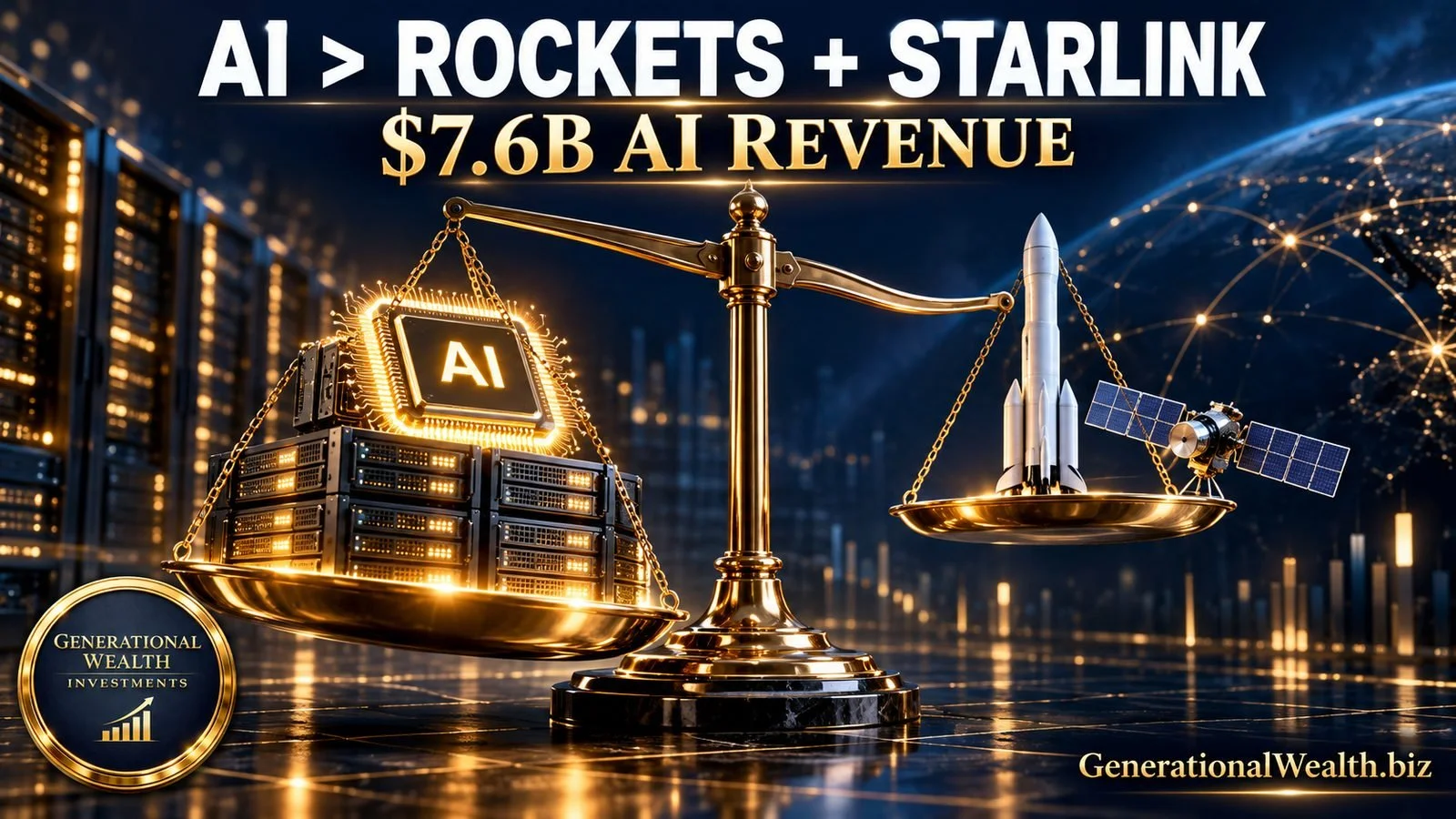
SpaceX Now Makes More Money From AI Than From Rockets and Starlink Combined
SpaceX’s AI business just outearned its rockets and Starlink combined, bringing in $7.6 billion of a $14.6 billion quarter. But the AI buildout is costing almost $20 billion a quarter, and Elon Musk has now put a Tesla-SpaceX merger on the table. Here’s what the numbers really say, three scenarios for what comes next, and why Tesla’s earnings tonight could be the next big signal.